By Sheridan Wimmer on October 29, 2026
War Horses For Veterans Provides Support Through Equine Therapy
War Horses for Veterans provides support and community for combat veterans and first responders through mounted equine therapy
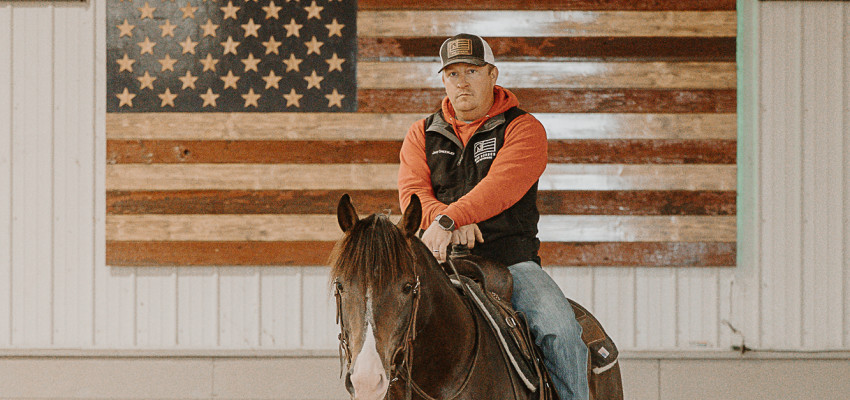
Horses have been revered by humans for millions of years. Hieroglyphs depict horses as drivers of chariots and symbolize them as noble, strong and spiritual animals. They’ve been used to fight wars, plow fields for crops and race at events where the biggest hats are on display. Horses have proven themselves worthy companions, a force in strength and a notable part of America’s past and present.
While horses used to carry soldiers into battle, today, a program in Stilwell is helping bring soldiers out of a different kind of battle.
A Different Deployment
South of Kansas City and east of U.S. Highway 69 is Johnson Countybased War Horses for Veterans (WHFV). The nonprofit program started by Andy and Patricia Brown is now in its 12th year and aims to help combat veterans and first responders heal through horses. The equine therapy effort is the only one in the U.S. to offer programming of its kind.
“We bring first responders and veterans from across the United States into a performance horse immersive ride program, where participants learn to ride and manage high-performing equine athletes,” Sarah Davis, WHFV director of development, says. “Our focus is on growth rather than revisiting the past. We frame this as post-traumatic growth (PTG). We want participants to grow from their experiences, not remain in their trauma or see it as a hindrance to their future endeavors.”
The program is unique in its ability to take participants from having no experience with horses to roping dummies at a gallop in just five days.
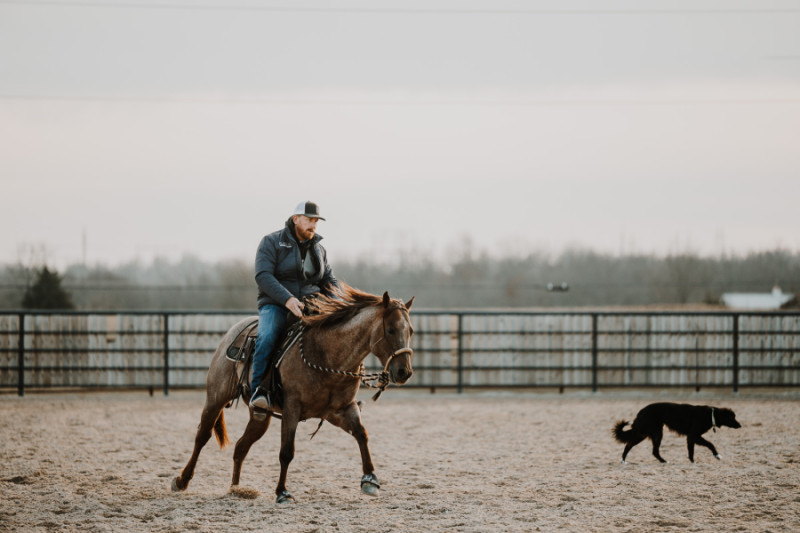
“Participants begin by working with horses in a round pen without equipment, gradually progressing to performing reining and cutting maneuvers and even roping a steer dummy by the end of the week,” Davis says. “None of this is possible without learning to work through stress and anxiety — both with one another and alongside our team throughout the program. The transformation these horses help bring about is difficult to put into words, but it is truly remarkable to witness.”
The Hidden Wounds of Service
Professionals like military service members and first responders must have a high amount of physical and
mental fortitude. Like farmers, the stereotype is to be tough and rugged, to “slap some dirt on it” and move on. That mentality is commendable, but it isn’t sustainable. According to the Department of Veterans Affairs, the average number of veteran suicides per day was 17.5 from data collected in 2023. First responders also have a higher suicide rate than the general population. Serving our country, state and communities comes with an immeasurable emotional, physical and
mental toll.
That’s why organizations like WHFV are imperative for the men and women struggling for peace.
Bret Cortright, executive director of WHFV, first came to the organization as a participant with 12 years of experience as a law enforcement officer.
“Personally, this program changed my life,” Cortright says. “I came through as another lost soul like, I think, most of our participants. The program is challenging, it’s edgy and we push the limits. Being able to challenge people who are used to risk and being uncomfortable is where the program thrives. It’s a community, a village and a network. But mostly, the participants and everyone who works here becomes family.”
Life After the Firefight
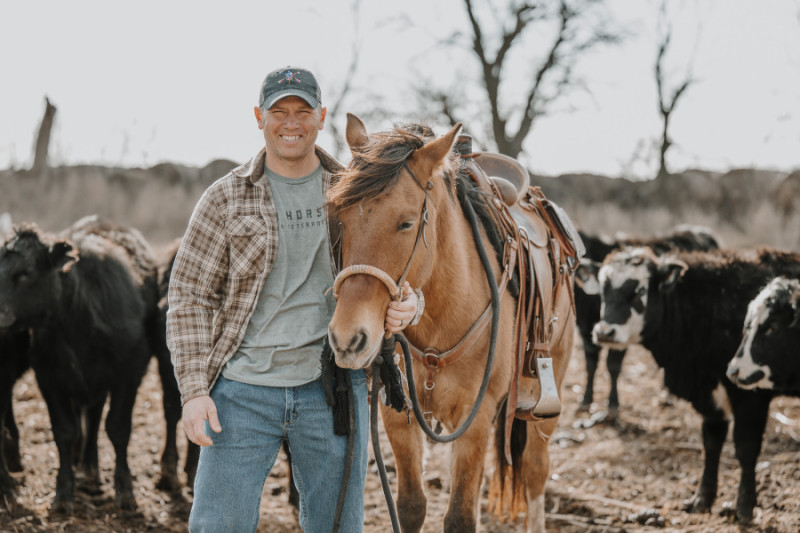
Heath Patrick is a former WHFV participant and is passionate about the organization’s work. Patrick has served 15 years in the Army and now lives in Lindsborg with his wife, Ashton, and two young children, Everett and Willa.
Patrick started his military career as an infantry officer after graduating from the U.S. Military Academy (known as West Point), then progressed into Special Forces after completing the qualification course at Fort Bragg. He served on active duty for more than 10 years, with assignments at Fort Riley, Fort Bragg and with the 7th Special Forces Group in Florida, deploying multiple times to Afghanistan and the Horn of Africa, plus shorter missions to countries like Armenia, Azerbaijan, Paraguay and Panama. He has seen more than 100 firefights in his military career.
“The first firefight I was in, training took over,” he remembers. “Afterwards, it was a sheer, massive adrenaline high. But during the last one I was in, I noticed the adrenaline never came. It was just a calculated part of the job.”
After leaving active duty, he joined the 19th Special Forces Group in the Colorado National Guard and later transferred to the Kansas National Guard, where he now serves as commander of the Officer Candidate School in Salina while farming and ranching full time with his family.
Patrick participated in WHFV in 2022 and has since become an advocate for the organization by sharing his story and returning to the Stilwell location to help mentor veterans.
“War Horses helped me realize it’s OK to feel things again,” Patrick says. “I had found myself becoming numb to certain things, and the program turned that around. It made me realize God gave us emotions for a reason; not to drive us, but to let us feel things. War Horses helped me see some of the things I was closing off. Sharing things and getting them off my chest has allowed me to have more empathy with my family and understand their point of view.”
The experience Patrick had with WHFV seems to be the same for others who participate. From combat firefights to emergency situations first responders see daily, providing a community of those who understand is the basis of WHFV’s mission.
“Everybody has been through a traumatic experience,” Jake Greenlief, director of operations for WHFV and Marine Corps veteran, says. “Everybody gets exposed to it one way or another, and it’s with us for the rest of our life. But how do you allow that trauma to visit, and what do you do when demons come racing in? You process it, right? Process it in a healthy way and walk away from it and continue walking down that road. Because people just get stuck in the darkness. For the War Horse community, we’re building a light to help get out of the darkness.”
“War Horses helped me see there are so many people out there who have shared very similar experiences to mine,” Patrick says. “I found people at War Horses who understood me, and it’s become a new family. I always try to figure out the right words for War Horses, and I feel like I always fall short because of what they provide for all the veterans and first responders and the community out there.”
The Horse that Chose Him
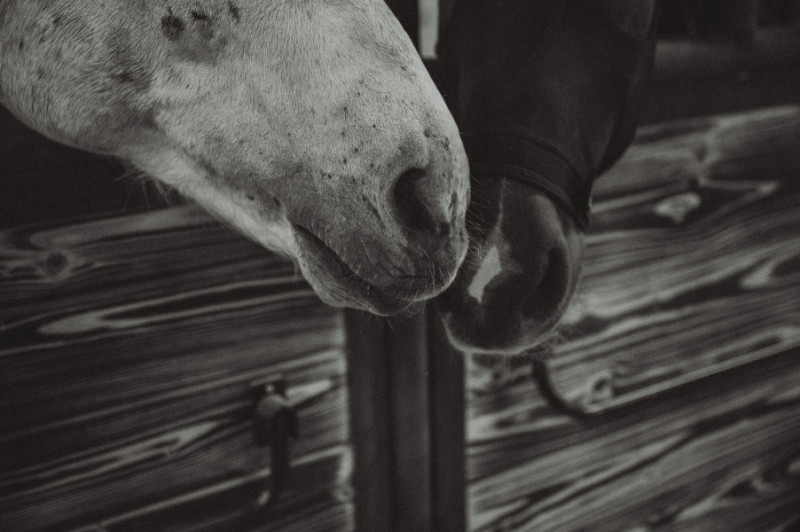
Patrick’s experience with WHFV was so inspiring, five days in the program wasn’t enough time with a horse for him.
In Hutchinson, the Wild Horse program has been operating since 2001. The program allows minimum-custody inmates at Hutchinson Correctional Facility to care for and train horses provided by the Bureau of Land Management. The mutually beneficial program helps inmates gain skills for when they are released from the facility while also training wild horses to become adoptable. The program was recently in jeopardy of ending but in September was extended for another five years. Patrick took advantage of the program by adopting a horse.
“The Hutchinson Wild Horse program means a lot to me because that’s where I got my boy, Quanah,” Patrick says, who named his horse after Quanah Parker, a war leader of the Kwahadi band of the Comanche Nation. “I’ll never forget the day I got him because he picked me. There were several veterans there to adopt a horse from the program, but Quanah, this mustang who survived the austere terrain of Utah, came right up to me. I knew I didn’t have to look anymore. He was the one I wanted. He was my horse. I know this program does incredible things to help bring a sense of peace to the inmates, just like how War Horses for Veterans did for me as a veteran. I’m so glad to hear it’s being extended.”
Like Horse, Like Rider
The 14 horses at WHFV are cow horses, which are athletic, intelligent and possess a natural ability to work with and among cattle.
“We like the cow horse because they’re so in tune with the rider,” Cortright says. “With a cow horse, riders can just say, ‘Whoa,’ and you get a stop. The capabilities of a cow horse, their skill set, what they’re trained to do, is safer to put inexperienced riders on. These types of horses are also versatile. Not only are their skills and natural abilities important for our program, but also horses that you can tell have grace, forgiveness and patience.”
The horses are incredibly well cared for — clean stalls, regular exercise and caretakers who are vigilant in their attention to the horses as well as the participants who depend on them.
“We’re meticulous about these horses,” Greenlief says. “We see them every day, so we know when something is off — and we’re aggressive about addressing any problems we see in them.”
The care for the horses and the uses they are accustomed to make them ideal for a program as important as WHFV. A patient, calm horse translates to a patient, calm participant. And vice versa.
“Horses sense everything we feel — often on a magnified scale,” Davis says. “By engaging participants in every aspect of preparing and partnering with their horses, we help them step away from the noise of daily life and the sources of their stress. Many share they haven’t experienced that sense of joy or calm in a very long time, and it becomes a powerful roadmap for carrying those feelings back into their everyday lives with family and loved ones.”
The Long Road Home
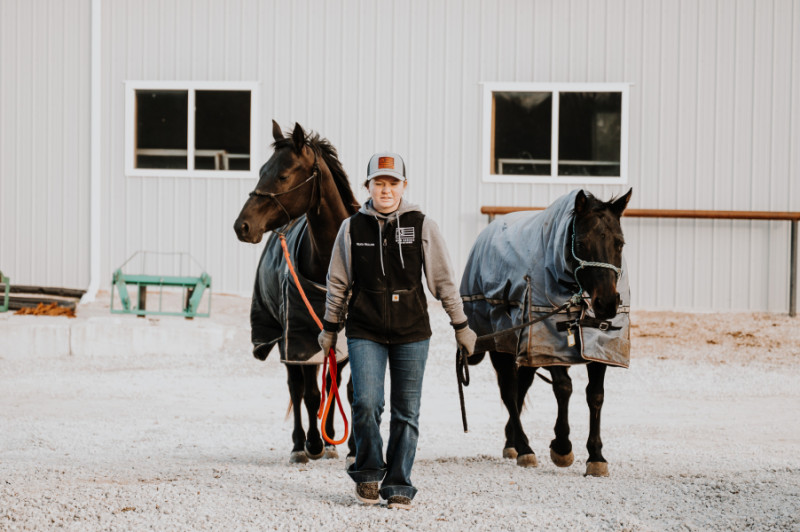
The team at WHFV have experienced different transitions in life and varied traumas. But those differences in experiences are still transitions and traumas — creating a unique opportunity to help others in similar situations. From the staff at WHFV to the participants and the horses, the bond is special, strong and empathetic.
“I think all of us at the end of the day, we want to know that we’re changing lives,” Cortright says. “We have several years of phenomenal data or information that shows the change in people, but we want it to be lasting. We want people to not necessarily think of our program as therapy or mental health but more as quality of life. We give people a week to feel again, to take a breath they maybe haven’t taken in 20 years, and help them develop a plan to improve their lives beyond the five days they spend here.”
At WHFV, sometimes healing doesn’t come with words, but rather with caring for something bigger (literally and figuratively) than yourself — like those with four hooves and a long mane. While horses used to carry soldiers into battle, now, at War Horses, they’re carrying them home. Thank you for your service.
FAQs about War Horses for Veterans
What programs does War Horses for Veterans offer?
One-day programs are geared more toward a team, like a firehouse. Five-day programs bring in combat veterans and first responders for an in-depth training.
Who qualifies to participate in a program?
Participants must have a first responder credential of some sort, whether in firefighting, emergency medical services or police. Military service members must have seen combat.
What is the application process?
The application opens as a 60-day window Sept. 1, 2027, for 2028 groups.
Do I have to have previous experience with horses?
No, previous experience isn’t required. Most participants have had no experience with horses.
What is the cost?
Everything is 100 percent free for the five-day course. The one-day course requests a $75 fee per participant.
How can I support War Horses for Veterans?
The nonprofit organization accepts donations at its website, www.warhorsesforveterans.org. The War Horse Warriors program is a recurring donation you set the amount for. Sharing its story is another way to support the cause.

Sheridan Wimmer
Born and raised in Kansas, Sheridan Wimmer has an appreciation for the state’s agricultural diversity. Representing the best interests of Kansas farmers and ranchers is Sheridan’s jam (or jelly, no discrimination). Great food and wine are at the top of Sheridan’s sustenance list and she knows it wouldn’t be here... Read more