By Sheridan Wimmer on October 2, 2026
Executive director of United Way of Harvey and Marion Counties receives award for mental health advocacy
Dalton Black supports an all-encompassing approach to supporting mental health programming and services
Impacting change in mental health isn’t an overnight, silver bullet, one-size-fits-all approach. The conversations surrounding stress come from a multitude of life challenges, opportunities and the ultimate pursuit of happiness. Access to healthy food, safe and affordable housing and proper overall healthcare culminate in one’s ability to manage their stress. While it’s important to have conversations and ask our friends and neighbors how they’re doing, meaningful, long-term mental health advocacy comes from progressive change in systems impacting stress.
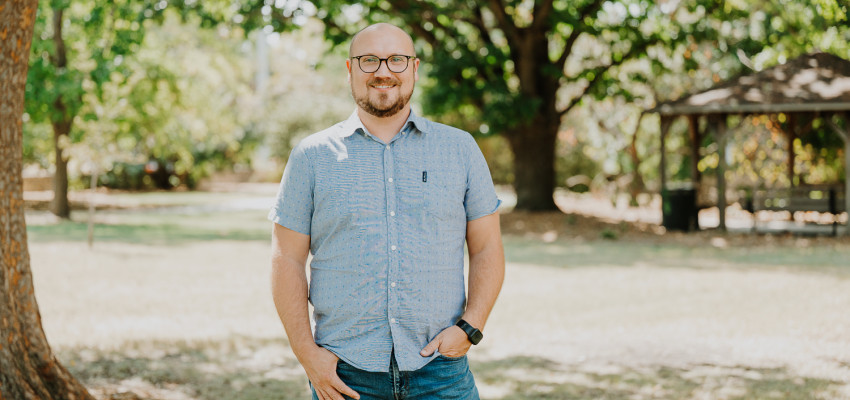
Dalton Black, the executive director of United Way in Harvey and Marion counties (UWHMC), believes in an all-encompassing approach to bettering the lives of residents in the counties he works for and those across the entire state.
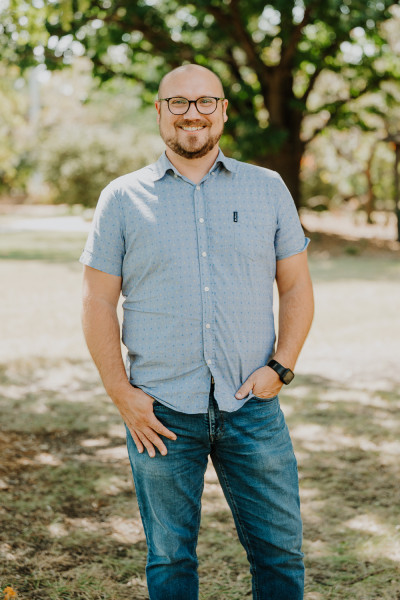 Black’s work to connect services crucial for individuals and families to thrive and improve mental health earned him the 2026 Kansas Farm Bureau Rural Minds Matter Young Advocate of the Year Award — an honor created to celebrate individuals who are working on cultivating resilience and well-being among farmers, ranchers and rural communities.
LIFTING ALL BOATS
“There’s that saying about a rising tide lifts all boats,” Black says. “My work is built on a conviction that rural mental health can’t be separated from the rest of a person’s life. A farmer whose tractor broke down can really cause financial strain, a parent who can’t find childcare to get to work, a family choosing between groceries and the gas it takes to reach a clinic. All those factors impact mental health — so I work on both fronts at once.”
Black wrote and secured a $50,000 community-based suicide prevention grant from the Kansas Department of Aging and Disability, which brings free Question, Persuade, Refer (QPR) trainings to Harvey and Marion counties. The grant also supports social service clients to screen for suicide risk, develops a bilingual awareness campaign focused on rural families, farmers and ranchers and puts 988 Suicide and Crisis Lifeline materials into at least 40 community partner sites.
“These grant dollars are helping us do some of our work surrounding mental health, but we’re helping to spread the mission of other organizations at the same time because we don’t provide direct services to folks who need therapy or counseling — our partners do. We're leading some of the boots on the ground things, which is what we excel at, while supporting those who are doing some more of the intense case management.”
NAVIGATING AND GUIDING
Each community has a percentage of residents who fall below the ALICE threshold. ALICE stands for Asset Limited, Income Constrained, Employed, and is a research-driven initiative created by United Way Worldwide that describes individuals and families who work but can’t consistently afford necessities like housing, childcare, food, healthcare and transportation. In Harvey County, 35 percent of the population falls within the ALICE threshold, while in Marion County it’s 39 percent.
“You're looking at more than one in every three households,” Black says. “It's your neighbors."
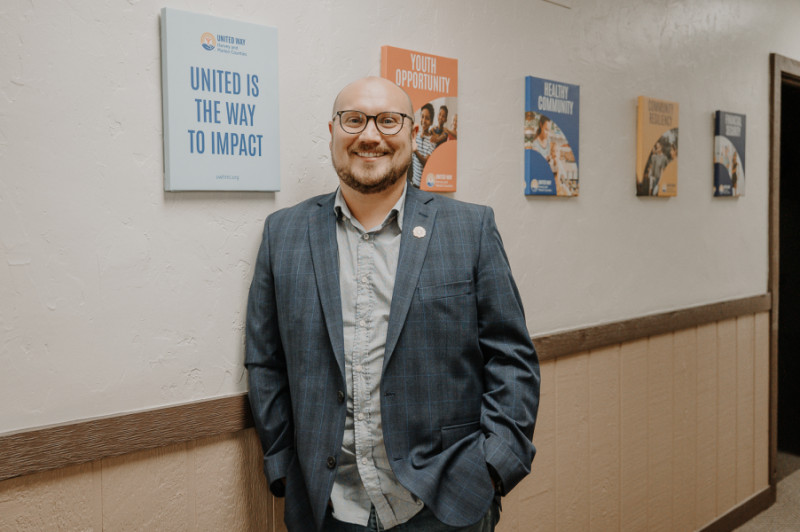
In 2025, Black launched a free service based out of the Newton Public Library to help residents navigate additional needs.
"It's a partnership between UWHMC and the library, and anybody who needs anything really can come in,” Black says. “They don't have to have a diagnosis. They don't have to have a referral. They can just access our social worker there, and she helps folks navigate our systems."
This resource helps residents with housing instability, food insecurity, utility debt and mental health needs. The impact of the service has served nearly 90 clients and made more than 200 referrals. Mental health-specific reported needs were connected to crisis services and behavioral health providers. Housing the resource at the public library was a strategic decision, based on Black’s approach to stress prevention and wellness.
“I housed the resource navigation service in the library as a deliberate way to encourage anyone to utilize it,” Black says. “The public library is a trusted, non-clinical setting. Someone who would never call a therapist will ask for help with a utility bill. Once trust is built, a warm referral to behavioral health care is a natural next step instead of a frightening leap.”
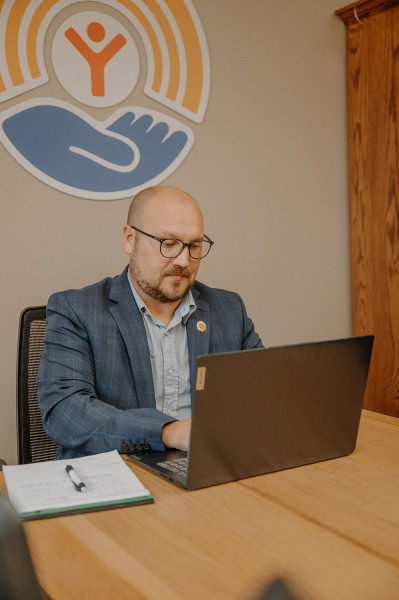 Black says the approach works. Only two people declined services out of nearly 90 clients — a near-perfect engagement rate.
“The proof really lies in the unprompted feedback we sometimes get,” Black says. “One told us, ‘Thank you for being a light when I needed it most!’ There’s really nothing better than hearing words like that from people in hard circumstances who felt helped.”
KEEPING THE CREW TOGETHER
Additionally, Black is involved with several local groups supporting the needs of the community. He’s in the Healthy Harvey Coalition, the Housing Alliance of Harvey and Marion counties and the Harvey County Child Care Task Force. He’s also secured a Kansas Healthy Food Initiative grant and an Emergency Solutions grant, which included a Spanish-speaking navigator.
“None of us can do this in our own silos,” Black says. “So I ask myself and other community leaders how we can make sure we’re speaking the same language, coming from the same knowledge base and providing the best care for each other.”
While Harvey County has a mix of urban and rural population (an approximately 60-40 split, respectively), Marion County is 100 percent rural. Black says Harvey County’s suicide rate is 16 per 100,000, which is above the national average. In Marion County, there is only one mental health provider per 1,299 residents.
“I think mental health is the direct correlation to suicide prevention,” Black says. “You can't have strong suicide prevention without integrating that mental health piece and advocating for more accessible services.
“The barriers to this work are the same ones our clients face: scarcity and distance,” Black says. “Building prevention capacity in places that already exist like libraries, churches and in community events lessens the burden surrounding those two elements. The other barrier is cultural. In farm county, asking for help sometimes can feel like a failure. Twenty-six of our own clients named fear, anxiety or shame as a barrier to care. Every program I’ve built through UWHMC is designed around that reality rather than in denial of it.”
A LEADER AT HOME AND WORK
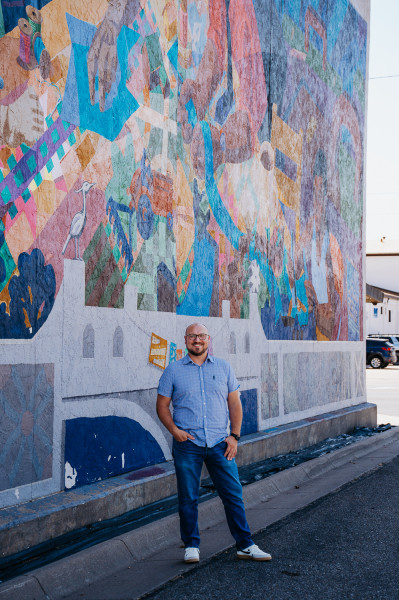
Black’s personal experience with mental health doesn’t end when he leaves the brick-and-mortar United Way, housed just a block west of Newton’s Main Street. He and his husband adopted three kids from the foster care system and have learned from them about how to be their advocates.
“We had to figure out a lot of things in navigating through trauma with them,” Black says. “We work through mental health challenges every day as a family and with trained staff who walk alongside us. For me, seeing the struggles of my kids and making sure mental health part of our everyday conversation is what I’m most proud of.”
From the doorstep of his home to the front door of his office and even to the storied halls of Washington, D.C.’s government buildings, Dalton Black is constantly advocating for mental health access, support and change. His strategies, procedures and heart make this work meaningful for him — but more importantly, to the people he supports.
“I know that the work that we're doing would not be possible without my team doing a lot of the great things,” Black says. “This is the beginning of the work, not the summary of it. Rural Kansas doesn't need more reports about the mental health crisis in farm country. It needs people building the systems to answer it. That's what my team and I do every day.”
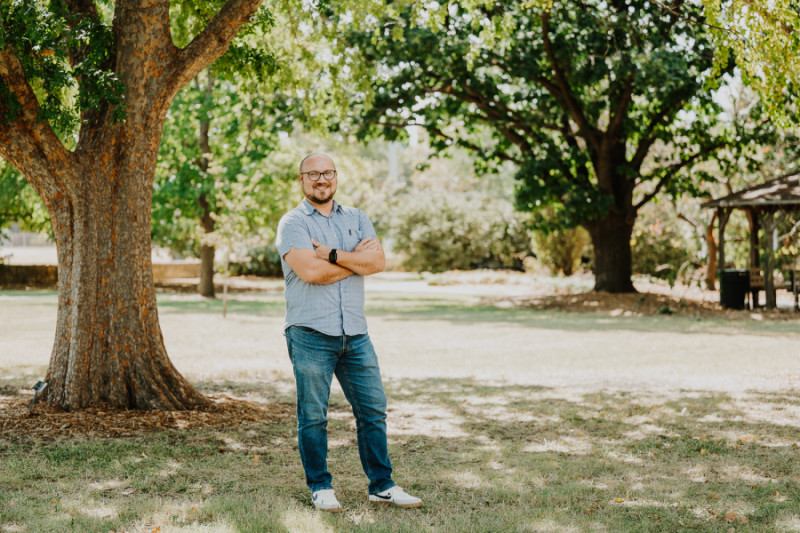 Learn more about Black and at United Way of Harvey and Marion counties at www.uwhmc.org. If you or someone you know is experiencing a difficult time, please reach out to 988. For other resources and to learn more about mental health initiatives, visit www.kfb.org/ruralmindsmatter. Applications and nominations for the 2027 Rural Minds Matter Advocate of the Year Awards will open in January 2027.
RELATED ARTICLES:


Sheridan Wimmer
Born and raised in Kansas, Sheridan Wimmer has an appreciation for the state’s agricultural diversity. Representing the best interests of Kansas farmers and ranchers is Sheridan’s jam (or jelly, no discrimination). Great food and wine are at the top of Sheridan’s sustenance list and she knows it wouldn’t be here... Read more