By Kansas Living on April 21, 2026
Meet the Neville Farm Family
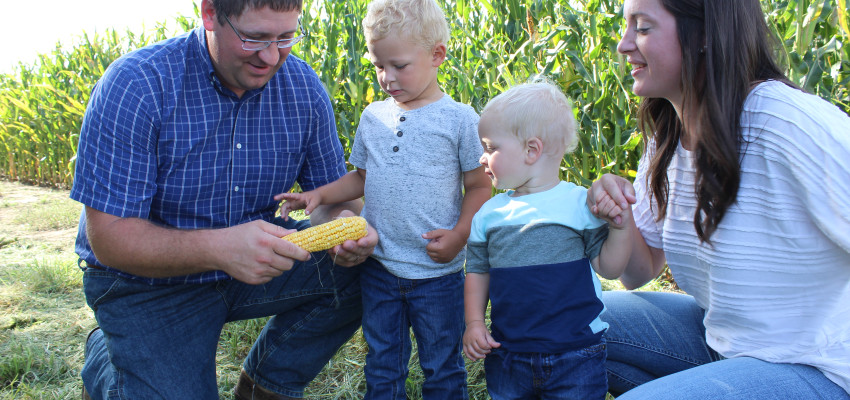
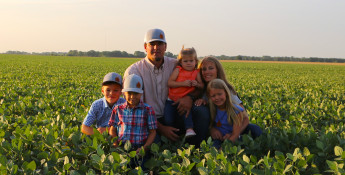
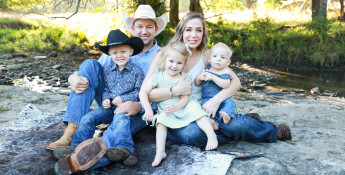
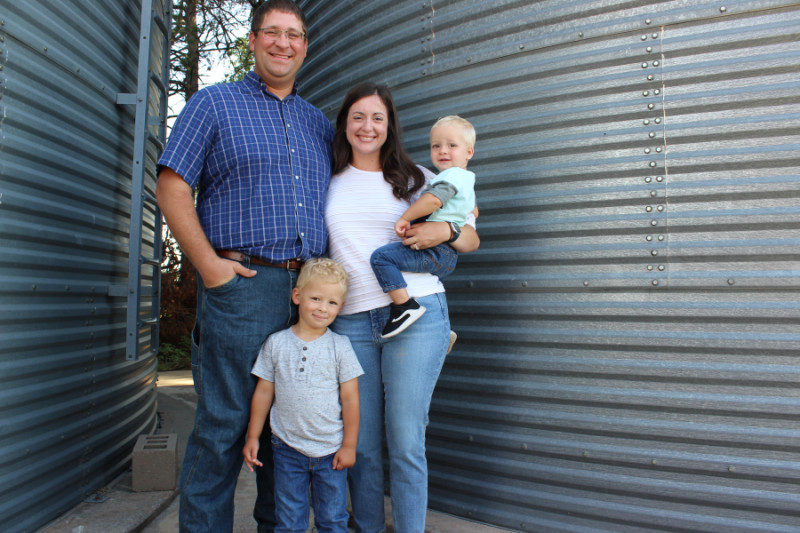
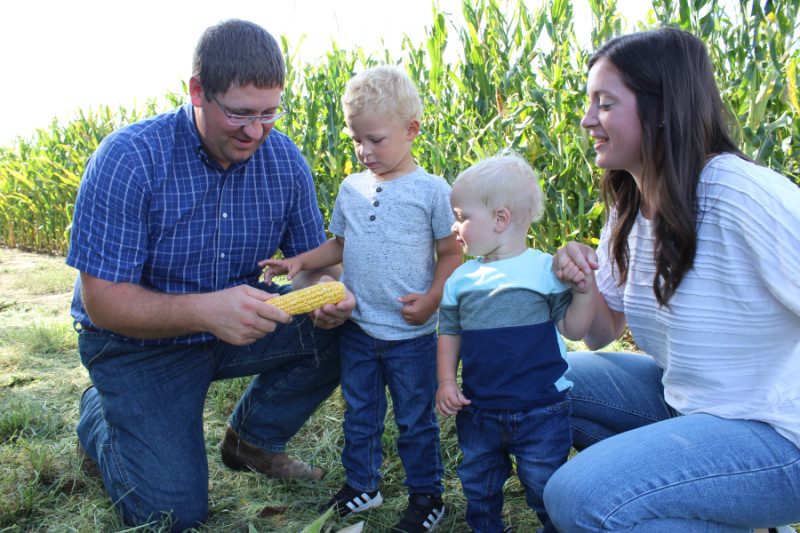
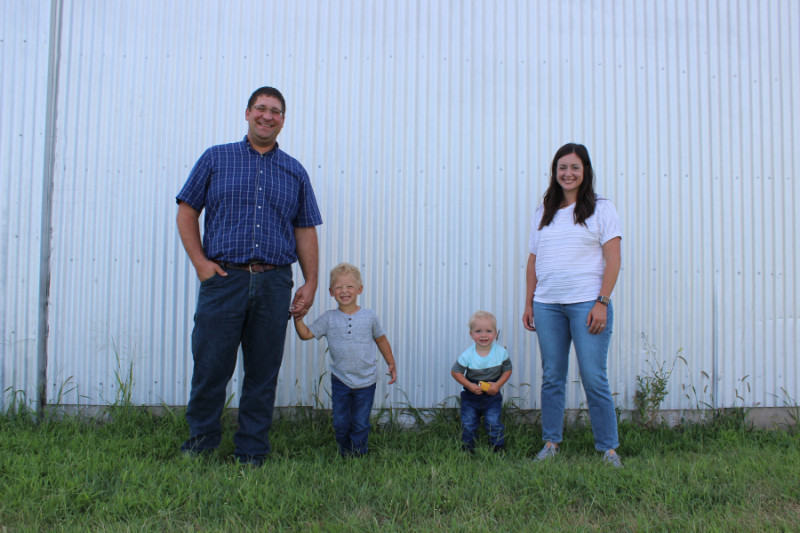
Joseph and Theresa Neville work and farm in Sedgwick County and have two boys, Nathaniel and Simon. Theresa is an occupational therapist for the Wichita school district, and Joseph is the fifth generation on his family’s farm. They grow corn, soybeans, wheat, milo, cotton, sunflowers, cover crops and hay and have a cow-calf operation, plus feed some stockers (weaned calves). Joseph’s mother, Jane, and older sister, Jackie, are heavily involved with the operation: Jane oversees the books, and Jackie is in charge of the cattle. Joseph also started a Beck’s Superior Hybrids dealership in 2022.
What made you want to become farmers/ranchers?
I am the fifth generation on our farm. I grew up helping out and growing my love for the work and the lifestyle. I never really imagined doing anything else. I thrive on the organized chaos of the busy seasons throughout the year and love the opportunity to be close to God’s creation and work with family every day.
What three things matter the most to you as a farmer/rancher?
1: market for our products
2: fair prices for inputs, machinery and commodities
3: protect and preserve our legacy for the next generation
How do you teach your kids about farming/ranching and the value of hard work?
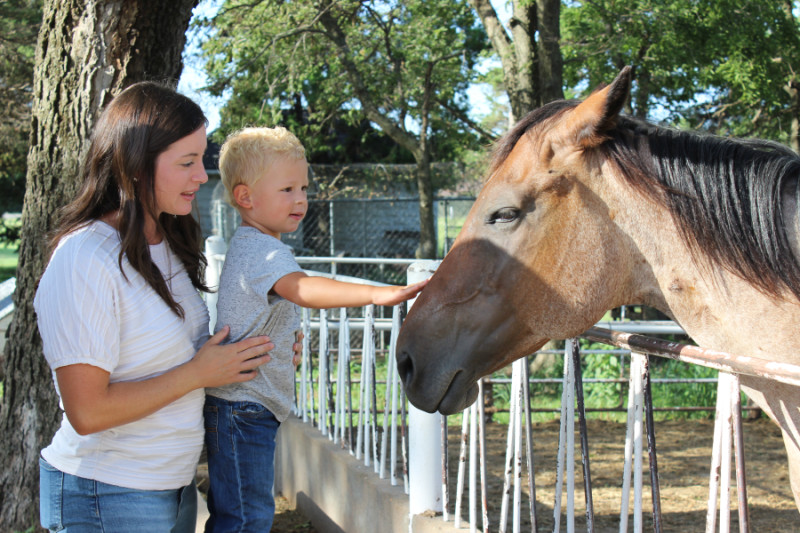
Our boys are still young, but right now, we’re leading by example. They see Theresa and me, my mom and my siblings all working together. That is the beauty of the work we do — being able to work with family. We emphasize the lessons and rewards of hard work, but we also prioritize family and downtime when we can.
What does summer look like on your operation?
Wheat harvest is the main event, but we are also planting the last of the full-season corn, soybeans, cotton, milo and sunflowers and getting the double crop in — where we plant a second short-season crop after harvesting wheat. Putting up hay is spread throughout the summer, and taking care of the cattle on pasture. We plant summer cover crops not only to improve our soil biology and get all the other benefits that come along with it, but also to have feed in the winter for the cattle to graze. The season is full of crop scouting, irrigating and fixing equipment. We start calving at the end of summer in August.
How do you handle extreme weather? Droughts/floods/blizzards, etc?
It comes down to our faith. Faith that the Lord will provide; faith that, while I want or think we need rain, the Lord has a plan and will bring it to us when he’s ready for us to have it. It’s still very hard when you can’t seem to catch a break. You’re in an extreme drought for the 4th year in a row and the rain just misses you or there’s not a cloud in sight, it’s difficult. Without it though, we wouldn’t appreciate when we do get it or when the weather is good. Some of the weather, like extreme heat or cold/snow, we just put up with it and do the work because that’s what we do and have a job to get done, regardless. We keep the cows comfortable, the best we can, knowing it is just part of it. Realistically, we live in an area where we don’t get an abundance of rainfall every year, we are a lower elevation, where we have hot days and nights, so we try to have realistic expectations and manage it best we can. Through no till and cover crops, we have been able to improve our soils and reduce our evaporation rate, which helps us get to the next rain. I used to pray for more rain, less rain or whatever weather I thought best, but I now pray and put it on the Lord’s shoulders to provide and help me to accept the outcome knowing I don’t know what is best and he has a plan, and if that having no crop or a poor crop is the result then there must be something to learn or a reason beyond me.
What is the hardest and best part of your job as a farmer/rancher?
At different times, both family and weather. There are hard times working with family, but it’s also one of the biggest blessings. Weather is difficult to accept at times, but it’s so rewarding to work with Mother Nature.
What is the best advice you've ever received about ranching or farming?
How do you eat an elephant? One bite at a time. A professor told us this about crops judging when it felt like we were drinking from a fire hose. I believe it's applicable to farming as well. There is so much that needs to be done and can be done that it is overwhelming and sometimes it's just putting one foot in front of the other and keep chipping away.
How do you balance tradition with innovation in your operation?
It’s definitely a balance of learning from and knowing where we’ve been and what has been successful. As technology in equipment, seed and other aspects of the operation develop, it is important to not think you know everything. Once you have “arrived” and think you know it all is when you and the operation fall apart. As I have returned to the farm and dug into different aspects of the operation, I have found the more I know, the more I don’t know. As I dig into new things, I expand my knowledge but also learn about all these other things that I don’t have a clue about, which is the fun thing about it — always something new to learn.
What’s the best advice you’ve ever received about ranching or farming?
Don’t worry about things you have no control over.
What does sustainability mean to you?
To me, sustainability means being able to remain viable and profitable to preserve my family’s legacy. To be able to grow and adapt into the future so the following generations can have the opportunity to farm as well. My hope is my ceiling is my kids' floor to build on.
What methods do you utilize to protect the environment?
There is no one better than farmers in protecting the environment. We try to work in conjunction with nature to grow the best crop we can. We take soil samples to monitor the soil’s health and the nutrients available. That way, we can continue to improve the soil and be able to give the plants what they need. We work to prevent weeds hindering the crop and do all we can to keep the crop fed, healthy and protected. No till/thoughtful tillage and cover crops have helped us in the journey to protect the environment.
Where do you see the future of your operation going?
God willing, be profitable, add acres and be successful to pass on to the next generation to continue the legacy if they wish.
What’s one thing you’ve changed on your operation since you started?
Since I returned to the operation in 2017, we have changed to no till and cover crops and have diversified and incorporated sunflowers and cotton into our rotation.
What’s one thing you wish consumers knew about your operation?
We are all human and make mistakes or are misled, but we do all we can in our power and with our knowledge to care for the crops, livestock and environment the best we know how. We live in the same area and eat the same things you do.
We are not just financially invested, but emotionally invested as well. We know who the calf’s mom and dad are (often we have names for them), we know their genetics and demeanor, and we have so much anticipation and excitement for their future with the herd, the cover crops they’ll graze and all the benefits they’ll provide to the soil — as well as their utility and all they can provide not only to us but to other consumers.
YOU MAY ALSO ENJOY: