By Greg Doering on February 3, 2026
Werner Creek Farm in Cowley County becomes thriving business
Werner Creek Farm evolves from backyard garden to thriving business with year-round offerings

When Gage and Sarah Werner built their home on a “funny strip of land” in 2008 on ground that had been in Gage’s family for generations, they knew it was steeped in history, secluded and would offer space for gardening. They had no intention of turning the roughly 9-acre parcel into the thriving business it is today.

Werner Creek Farm sits near the confluence of Timber and Cedar creeks, just a few miles north of Winfield in Cowley County. The homestead feels private because of the surrounding timber and the narrow bridges that make conventional farming nearly impossible.
“It’s kind of a funny little strip of land to use for commodity crops,” Sarah says.
Gage adds, “As equipment got bigger and bigger, a 9-acre patch of grass was not worth the trouble (to farm).”
The small size of the land and the difficulty of reaching it with modern equipment meant it didn’t make sense to continue using it for production agriculture. Still, the fertile bottom ground made for an excellent place to grow a variety of vegetables and what started as a simple home garden expanded with a surplus of homegrown produce.
“After a few years, we had more than we could use or process,” Sarah says. “I’ve always loved farmers markets so we thought, let’s give that a try.”
The Werners found ample demand for their produce and eventually started treating their bounty of fruits and vegetables like a business, one that has grown to include an on-site commercial kitchen to create a range of canned and fresh foods for a retail store in Winfield.
“We didn’t intentionally set out to start a business but after a few years it became evident there was an appetite from customers for local foods,” Sarah says. “Over the years, we’ve expanded from growing produce and specialty crops to adding in processing, value-added items like jams and jellies, salsa and pasta sauce.”
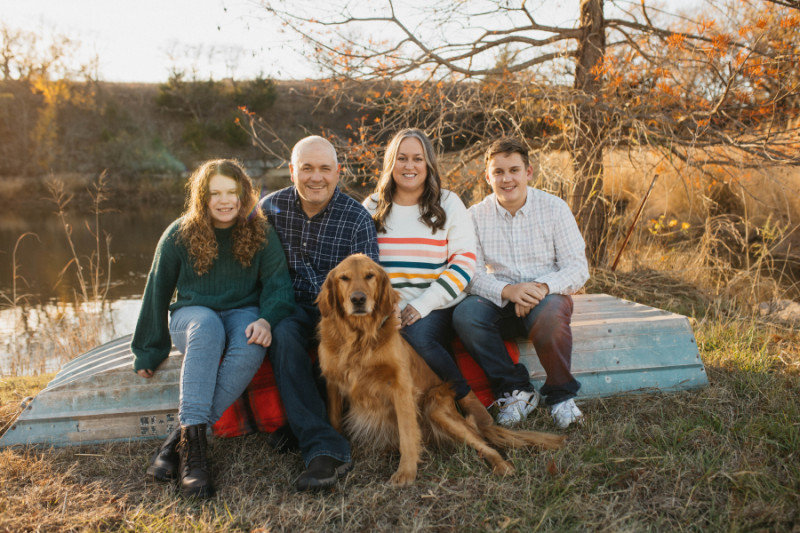
A former teacher, Gage now manages the day-to-day activity like crops and staff on the farm while Sarah helps with bookkeeping and some kitchen tasks in addition to her work as the CEO of the Winfield Chamber of Commerce. Their children, Bruce and Willa, also help out when they’re not in school or busy with other activities.
DOWNTOWN FARM STAND
If Werner Creek Farm is secluded, its farm stand is anything but hidden in downtown Winfield near the corner of Sixth and Main streets, tucked alongside Ladybird Brewing.
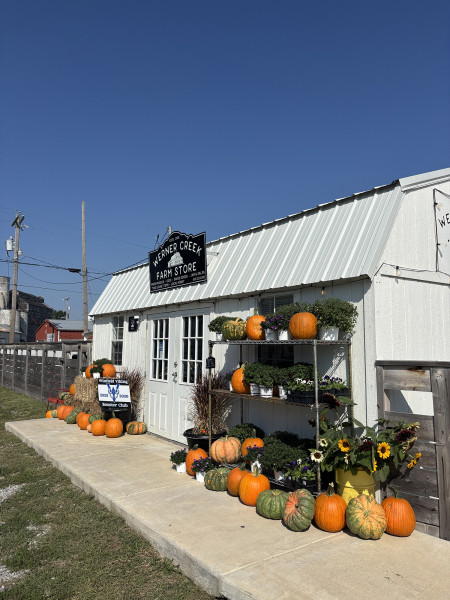
“Eighty percent of the produce in our store we grow,” Sarah says. “In the springtime, especially, we’ll supplement from other growers. It just depends on the year. Last year was a really good growing year for us so we had a good supply and diversity of produce all summer long.”
The storefront is a cross between a roadside stand and a farmers market booth, selling all the preserves, sauces, soups and baked goods that originate in the Werner’s on-farm kitchen. Other produce, like sweet corn, is contracted from other growers in the area. The one-room shop also features Kansas products the Werners can’t or aren’t interested in producing, like popcorn and cheese.
“We don’t have any ambitions of adding cheese making to what we do,” Sarah says with a smile. “We’re spread pretty thin already.”
MEETING DEMAND
While a surplus of garden produce led to Werner Creek Farm’s first seasonal sales at farmers markets, running a year-round business means there’s usually a shortage of something they have to supplement with other growers nearby. Tomatoes are always in demand, both from customers and the salsa and pasta sauce sold in the store.
“It depends on what the growing season looks like,” Sarah says. “We sell a lot of tomatoes at our store, but we also use a lot of them for the products we make. Last year we didn’t have to find another source for tomatoes.”
Gage says the abundance of tomatoes wasn’t necessarily planned; it was just a product of an excellent growing season for the crop, most of which is an indeterminate variety that continues producing new fruit until frost kills the vines.
“We tried to sneak some tomatoes in early but on the last frost date we lost about 300 plants,” he says. “After picking tomatoes all summer long, I’m glad we lost those.”
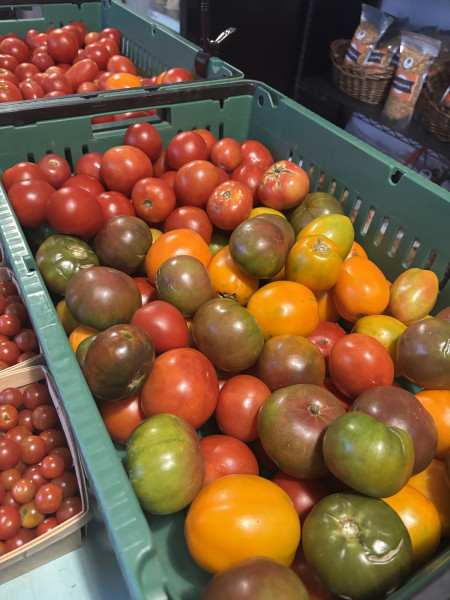
The demand for tomatoes also makes onions an important crop, especially for salsas, soups and take-and-bake items like lasagna, chicken pot pies, bierocks and sausage kolaches.
“We can’t grow enough onions to keep up with just what we need in our kitchen with salsa and our take and bakes,” she says.
On most items, they usually find equilibrium after the novelty wears off.
“New items are always popular,” Gage says. “We added cinnamon rolls and it took two years before it stabilized.”
SEASONAL CYCLE
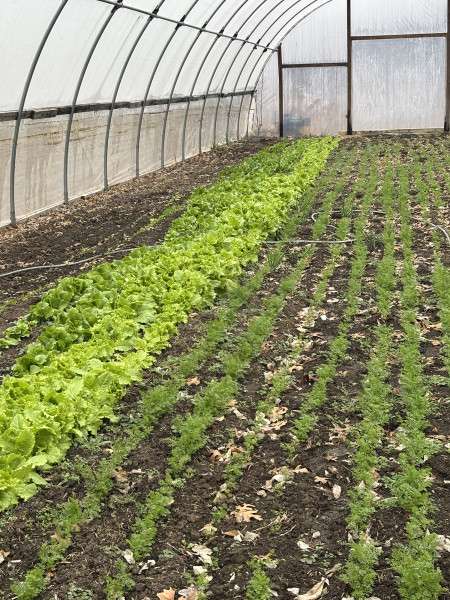
With growing demand, the farm has expanded to satellite locations to cover roughly 15 acres, though it’s difficult to judge its actual size since some plots grow multiple crops over the course of a year and high tunnels extend the growing season year-round.
There’s no offseason at Werner Creek Farm, just a brief respite shortly after fulfilling all the holiday pie orders.
“It really doesn’t shut down and start up,” Gage says. “It’s kind of like the seasons — always changing. By the time you get tired of doing one thing, it’s time to focus on the next. Hopefully you have enough time to forget about the previous thing so when you come back to it next year, you’re excited about it again.”
One of Gage’s methods for keeping his enthusiasm is to come up with an experiment each year.
“I’ll have a pet project every year where I try to grow something different,” he says.
He also varies growing methods for stable crops, switching between cultivated and no-till sites or using natural or plastic mulch to keep weeds in check.
“I grew some watermelon last year,” he says. “We really don’t have the right soil type for that, and I don’t know what I’m doing. I had a really nice crop of watermelon, but I really couldn’t guarantee which ones are ready to eat.”
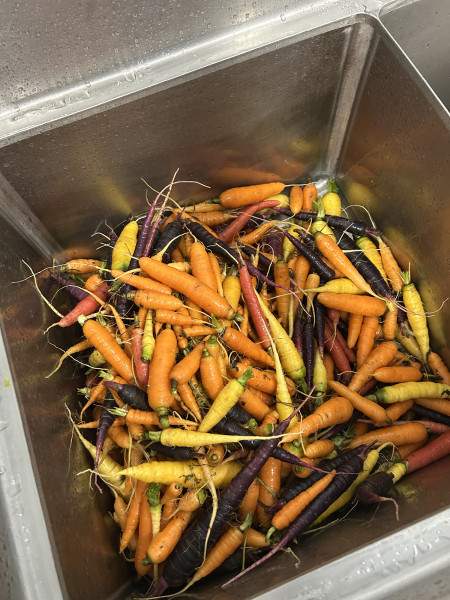
While every season is busy, spring is the beginning of a sprint that starts with harvesting crops like winter spinach and carrots in addition to preparing planting an assortment of produce, tending to berry bushes and hiring summer help.
SEASONAL LABOR
Like any farm, the tasks at Werner Creek are never ending, especially in late spring and early summer when hired hands are needed to tend to the crops, harvest them and process for sale or use. Up to eight people are on-site during the height of production, including two workers in the kitchen who work year-round.
The seasonal help is usually made up of students from the nearby high school or college, and they have a variety of backgrounds ranging from growing up on farms to being city slickers.
“It takes a certain kind of kid to want to do that,” Sarah says. “We’ve been pretty fortunate because it’s not easy work. Getting out in a high tunnel in the summertime, you can’t be out there past 10 a.m. because it gets too hot.”
Some of the recruiting happens through the loyalty the Werners have built with their customers and want their kids to develop a farm-based work ethic.
In addition to having several workers return each year, the Werners tend to look for people who are busy enough that working early in the morning means they can still fit in other obligations like weightlifting for sports. They also tend to hire more help than needed to account for the inevitable conflicts that will arise over the course of a summer like family vacations or other obligations.
FAILURE ON THE FARM
There’s a risk of failure when trying anything new, but on a farm, catastrophe happens only slightly less often than success. Crops are susceptible to all sorts of perils at the hands of Mother Nature — from late season freezes and early heatwaves to more mundane menaces like weeds and wildlife.
“We can’t grow sweet corn,” Gage says. “We’ve tried it over and over. There’s timber all the way around us so raccoons and deer … there’s no stopping them on sweet corn. It looks good right up until it’s ready then it’s just gone.”
Plans made in winter and spring for the peak of the growing season are sometimes derailed, but that’s not always a bad thing.
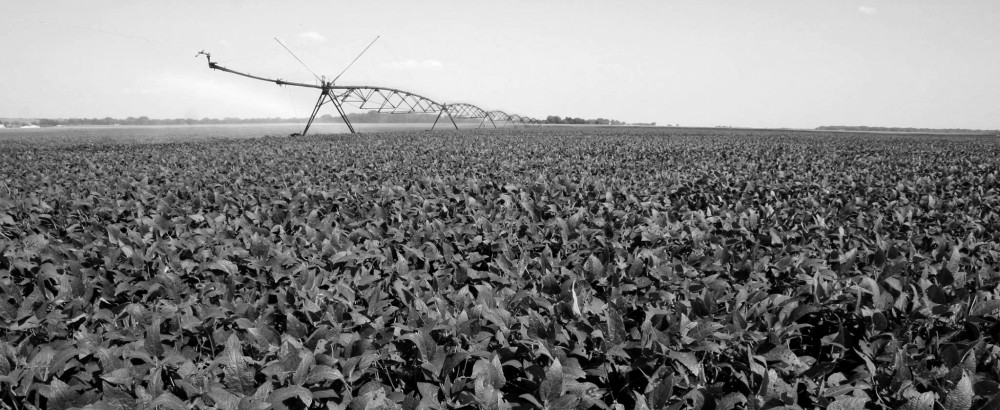
“Last year, halfway through the year I felt like I had the best handle on irrigation that I’d ever had,” Gage says. “I ran all kinds of drip lines and had it all set up. Then it just rained all summer. I literally had irrigation out that I never turned on.”
SELLING SIMPLICITY
When Werner Creek Farm added a commercial kitchen in 2022, it went beyond providing locally grown produce to customers to a fuller discussion of what food is.
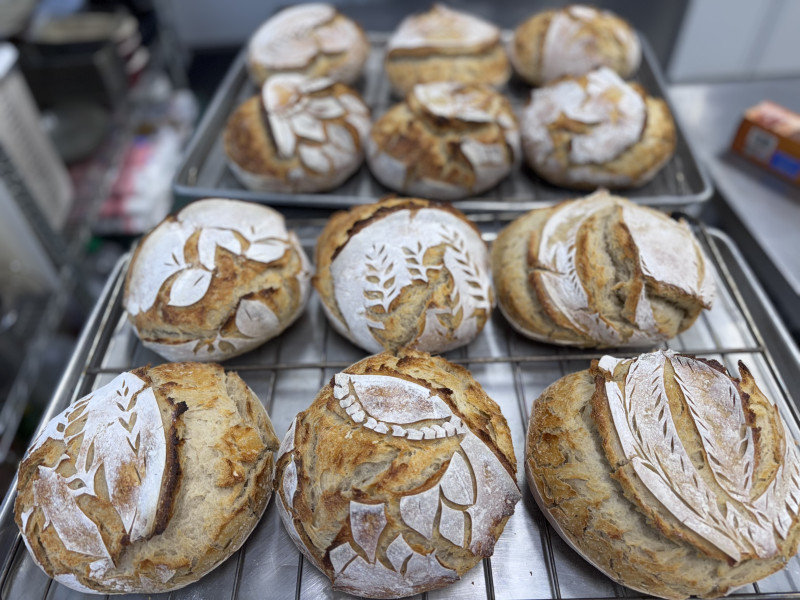
“Being local isn’t the most popular part of it,” Gage says. “I think a big draw is the products we make here are simple. Our breads don’t keep very long because the ingredients are flour, salt and water.”
Simplicity is part of the process on the farm, where there’s a desire to use as few pesticides and herbicides as possible partly to save money and also because it offers peace of mind.
“We’re conscientious with our crops and what we put on them,” Sarah says. “This is where we live, this is what we’re eating. We want to feel comfortable with what we’re applying on plants and feeding to our kids.”
When the Werners planted their first garden at their homesite hemmed in by creek beds, success was just a good harvest. Now they’ve cultivated a community by taking something that would otherwise go to waste and gave it a purpose. It started with the land where Werner Creek Farm sits today and extends to the crops they grow, process and market in their storefront in downtown Winfield.
Visit www.wernercreekfarm.com for more information.
Shop Kansas Farms
Werner Creek Farm joined Shop Kansas Farms (SKF) near its inception in spring 2020 and has found success, especially through SKF’s Market of Farms events held throughout the state.
“It’s really important for small-scale growers and producers who sell directly to their customers,” Sarah says. “The Market of Farms, which we tell people is a statewide farmers market, has been huge for us to reach new customers. The one in Andover was probably the most beneficial for us because it’s 30 minutes away.”
Gage adds those statewide farmers markets also offer important networking among growers, and they’ve discovered several products they now feature in the Werner Creek Farm store by attending Market of Farms and connecting with other producers.
To learn more about Shop Kansas Farms and any upcoming Market of Farms events, visit shopkansasfarms.com.