By Kansas Living on January 27, 2026
Meet the Coover Farm Family
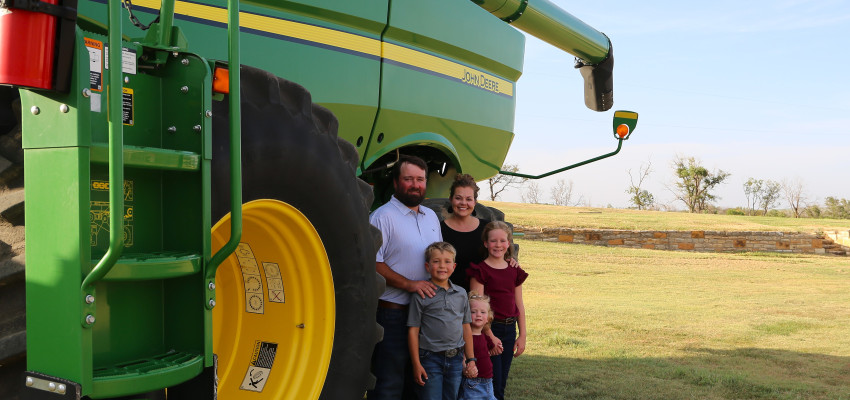
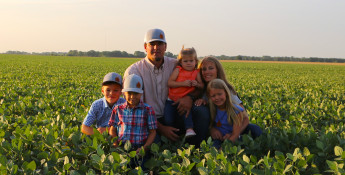
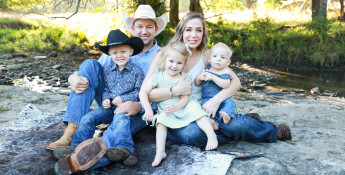
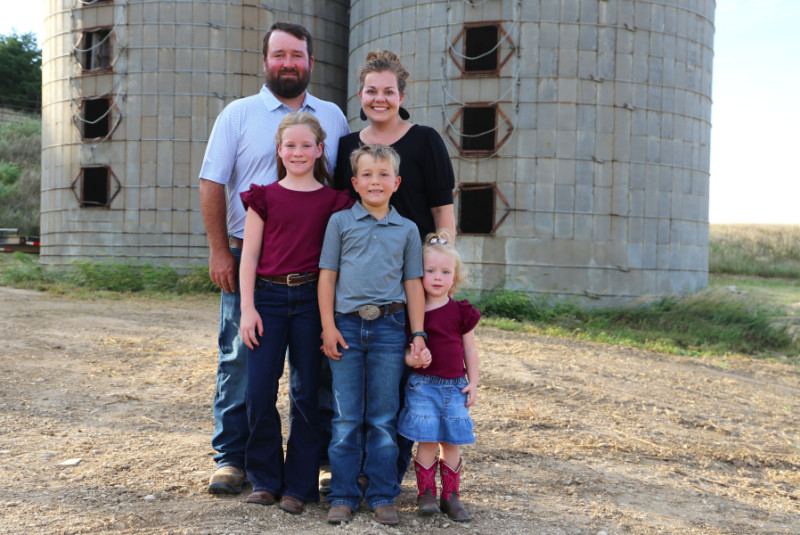
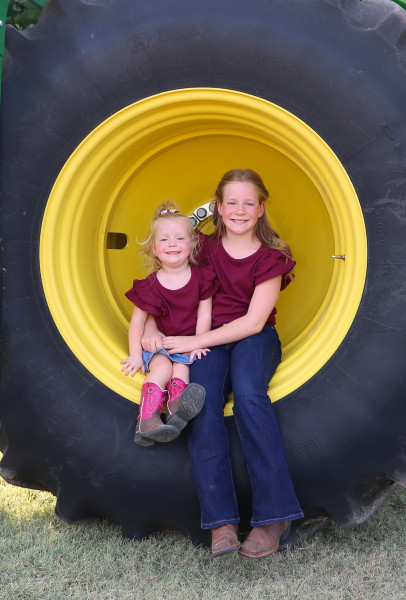
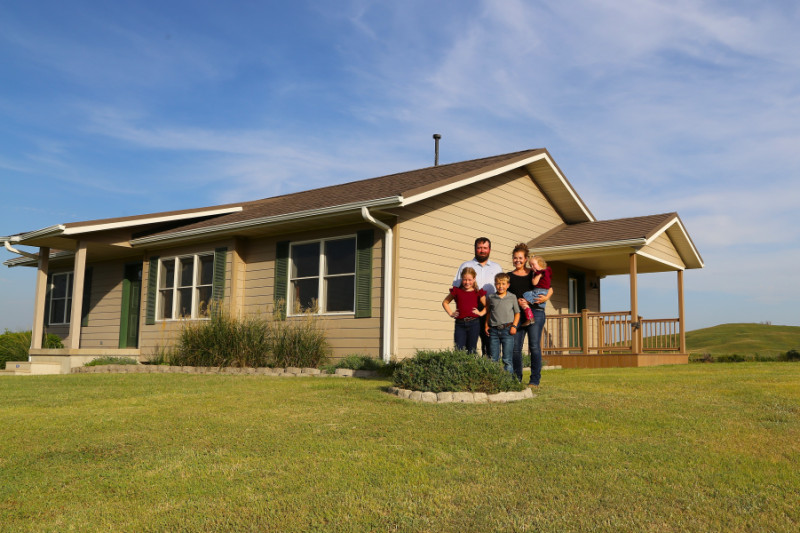
Jason and April Coover live in Lincoln with their three kids, Joy, Jed and June. April works part time as a pharmacist at the local hospital and pharmacy. Their farming operation is in northern Lincoln County near Barnard, and they recently purchased a ranch with a house and plan to move there as soon as they can complete an addition to the house.
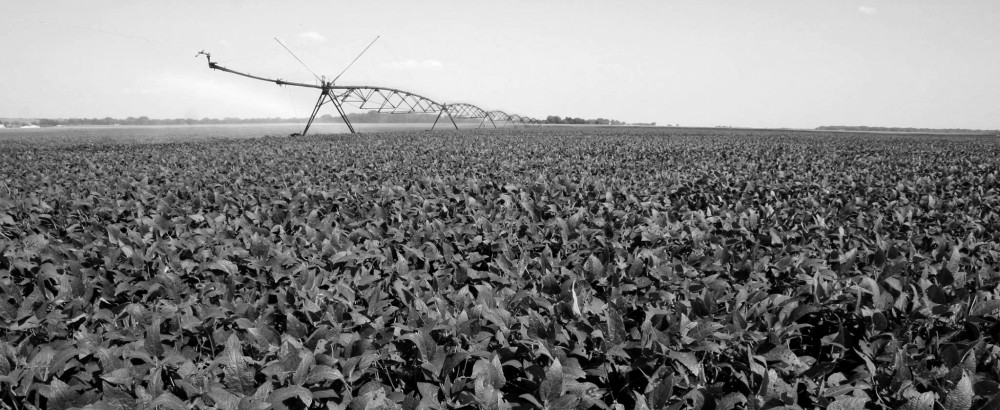
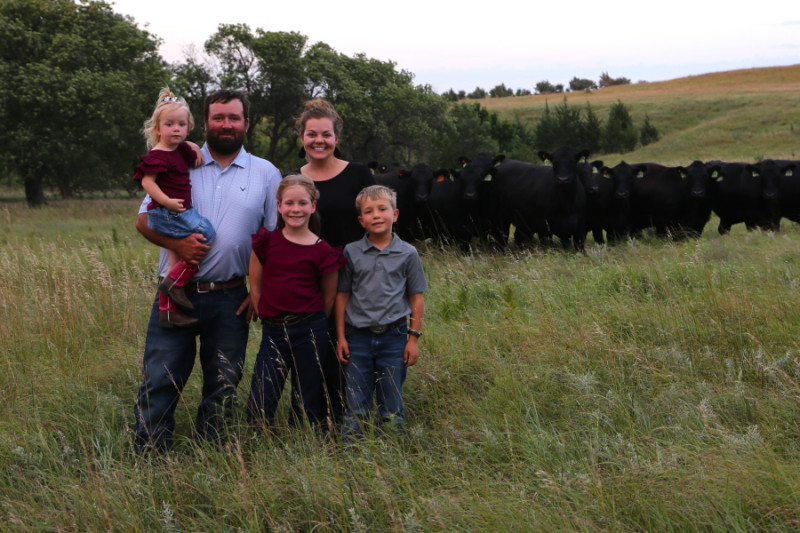
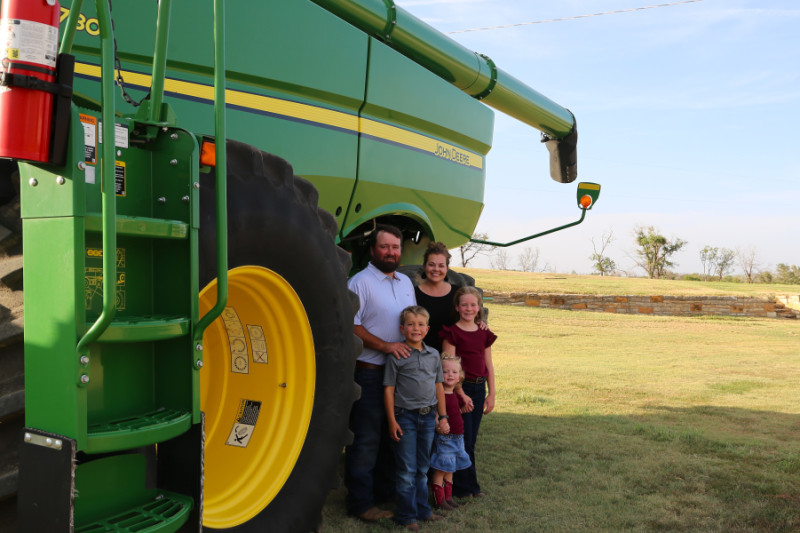
The Coovers grow wheat, milo, corn, soybeans and forage crops and have a commercial cow-calf herd. They farm alongside Jason’s dad and brother and share labor and resources.
Learn more about this family.
What made you want to become farmers/ranchers?
I am a fifth-generation farmer and continue to operate land that was homesteaded by my ancestors. Farming has always been in my blood, and I am thankful to be raising the sixth generation if they choose to follow that path.
What three things matter the most to you as a farmer/rancher?
One thing that is important to me is maintaining and building upon my family’s legacy so I can pass it on to the next generation.
I believe it is important to take care of our land and resources, even if it means spending more time and money in the short term; it will pay off in the long run. My grandmother always said if you take care of the land, it will take care of you.
I know I’m just a small part of the big picture, but I take pride in knowing that what we produce on our farm helps feed people all over the world.
What does spring look like on your operation?
Our calving season is late February through April, and we also background our yearling calves, so taking care of cattle takes up most of my time during this period. As time allows, I try to get caught up with equipment and land maintenance (terraces, waterways, pasture clearing, fencing, etc.) as well so we’re ready for spring planting in May.
What methods do you use to protect the environment?
We are 100 percent no-till on our cropland to help conserve moisture and reduce erosion. A majority of our cropland is also terraced. I have been slowly adding cover crops into our rotation to help improve the soil as well as provide grazing for cattle. We also use rotational grazing on some of our pastureland.
How do you care for your animals?
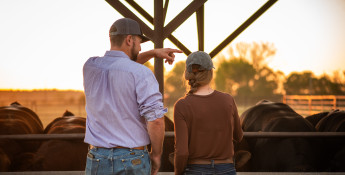
In the summer our cattle graze on native pasture, and we supplement them with minerals. In the fall and winter, they graze on crop residue or cover crops as well as supplemental feed. During calving season, the cows are in their winter pasture with windbreaks and tall cover, which provides protection from the elements for the baby calves. We have calving pens and a calving barn with bedding for when extra care is needed. I am in the process of building a heated room in the barn for calves on frigid nights, although I have been known to bring calves in the house for the night. All our cattle receive routine vaccinations and antibiotics when needed.
How do you teach your kids about farming/ranching and the value of hard work?
Our kids are still on the younger side to be extensively involved, but they each have their own bred heifer, and this spring they will be expecting their first calf crop. It will be up to them to care for and manage them. I believe in helping them and giving guidance when they need it, but I want them to make decisions and do things on their own, even if they make mistakes. You always learn more from mistakes than from successes.
How do you handle extreme weather — droughts, floods, blizzards, etc.?
There’s not a whole lot you can do about the weather. We try to be as prepared as possible for whatever comes and adapt to the challenges that we face.
What is the hardest and best part of your job as a farmer/rancher?
The hardest part for me is probably managing time/labor. Sometimes it seems there are a million things to do with a short amount of time. Trying to balance all that out with family time can sometimes be a struggle.
What’s the best advice you’ve ever received about ranching or farming?
Don’t worry about things you have no control over.
How do you balance tradition with innovation in your operation?
I try to keep the same work ethic generations before me had, while at the same time trying new things in order to be more efficient and productive.
What does sustainability mean to you?
Sustainability means doing things in ways that allow me to be productive and profitable year after year. Some years it’s hard to be profitable, but in the long run if I’m not profitable then it’s not sustainable.
Where do you see the future of your operation going?
I want to continue our cropping rotation but add more cover crops and forages so we can expand our cattle herd. Land is expensive, so I would like to find more ways to be more productive on our current acres.
What’s one thing you’ve changed on your operation since you started?
Since I started, we have made the switch to 100 percent no-till as well as using precision technology (GPS, mapping, etc.) This has allowed us to be more productive by covering more acres in less time with less labor.
What’s one myth about agriculture you’d like to bust?
From time to time, I hear farmers are hurting the environment. Farmers earn their living from the environment, so anything that is detrimental to the environment is also harmful to the farmer’s bottom line. I try to do what I can to improve the land and environment so in turn it will be beneficial for me as well.
YOU MAY ALSO ENJOY: