By Sheridan Wimmer on November 18, 2025
Hemp: How it’s Different from Cannabis
Hemp farmers work to set the record straight on a misunderstood crop
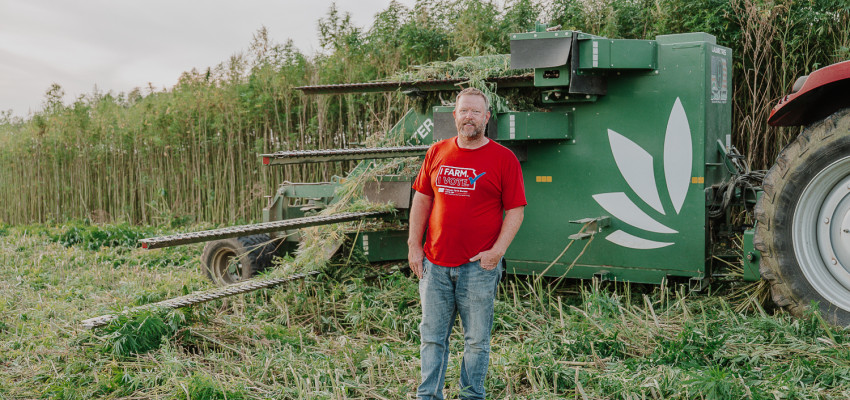
Kansas is mostly known for its wheat, soybeans, sorghum, corn and cattle, but there’s another crop popping up in a few rows around the state — hemp. While the hemp industry sometimes elicits negative connotations, growers of industrial hemp like South Bend Industrial Hemp in Barton County and John McKee in Republic County are advocating for the product and correcting misconceptions.
A new crop with the same machinery
As fourth-generation farmers in Kansas, Melissa Nelson-Baldwin, her husband, Aaron Baldwin, and her brother-in-law, Richard Baldwin, were looking for ways to diversify their operation. With Aaron and Richard’s experience as farmers, and Melissa’s knowledge as a crop scientist, they created a new venture in 2019.
“With our blend of backgrounds, the three of us created South Bend Industrial Hemp and started growing hemp for fiber production,” Melissa says. “Our focus has always been on the fiber production side — and since there weren’t any nearby processors of hemp, we opened our own.”
Growing hemp in Kansas seemed to be a natural addition to their farm, according to Melissa. The family already had equipment for other crops and could utilize the same machinery for hemp.
“It was a low-risk way to get into a new industry,” Melissa says. "The biggest learning curve was really seed selection since there isn’t a lot of research or data for industrial hemp so we utilized my research background. We were able to fast-track and lessen our learning curve because we could use a data-driven approach and figure that out. We’ve tried out more than 30 varieties on our farm and homed in on what worked well."
John McKee in Republic County is a farmer who utilizes the same machinery to harvest hemp seed on his acreage near Scandia. The setup with a traditional header works with a few adjustments.
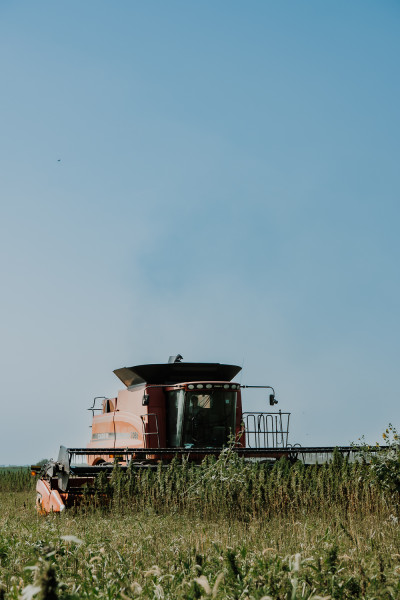
“It takes a little bit of time to get the settings right, but it works pretty well,” Brayden Carlgren, who helps McKee harvest hemp, says. “You do have to be cognizant of any fibers that may get wrapped up, but if you’re watching it, it’s not a big issue.”
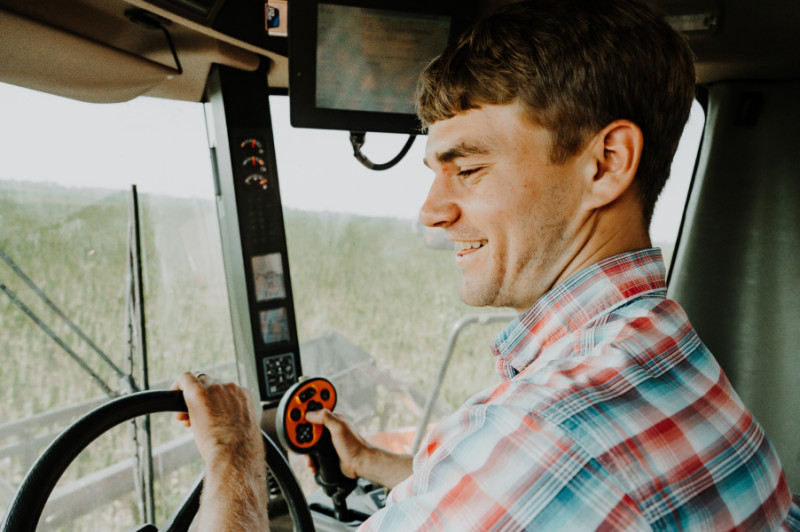 There’s also a difference depending on the end use of hemp. For seed, McKee’s system works well. For fiber, a different system is more efficient.
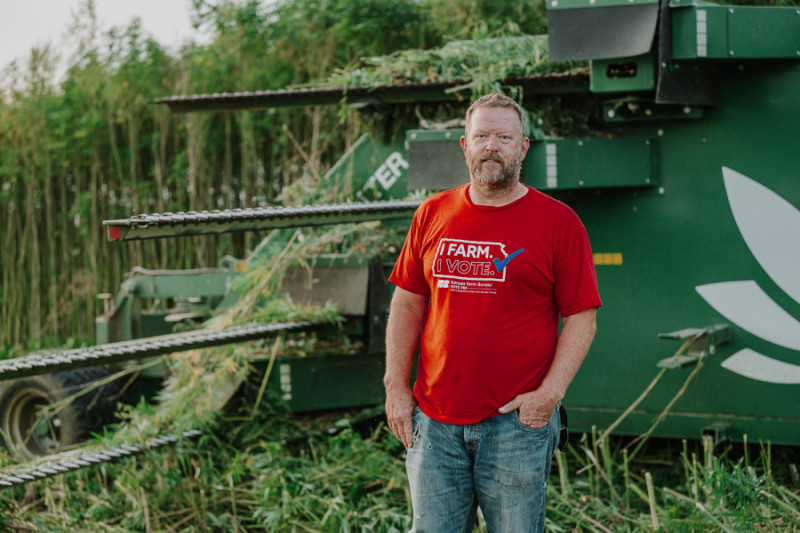
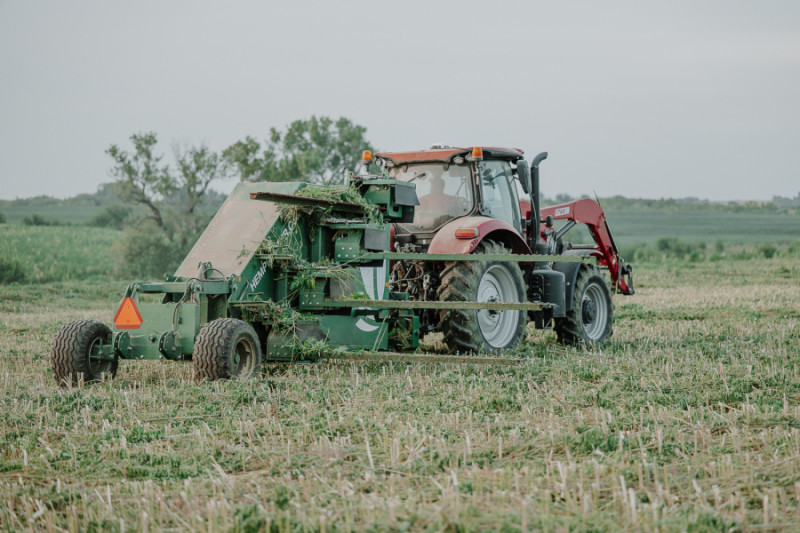
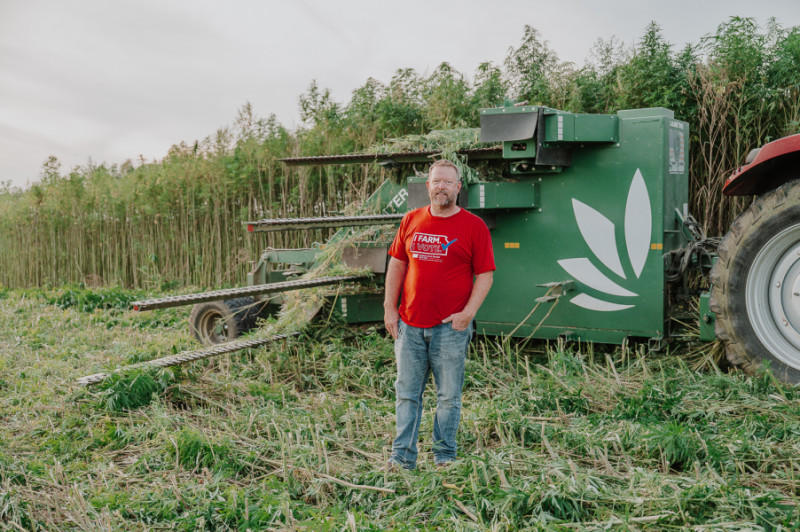
While utilizing the same machinery farmers use to harvest typical Kansas crops like corn or soybeans is an attractive option, South Bend Industrial Hemp offers custom cutting on farms who partner with them and use a machine designed specifically to cut hemp for fiber.
“It’s a bit medieval,” Aaron Baldwin says of the machine they use.
The machine has blades at different heights to accommodate the variance in hemp growth.
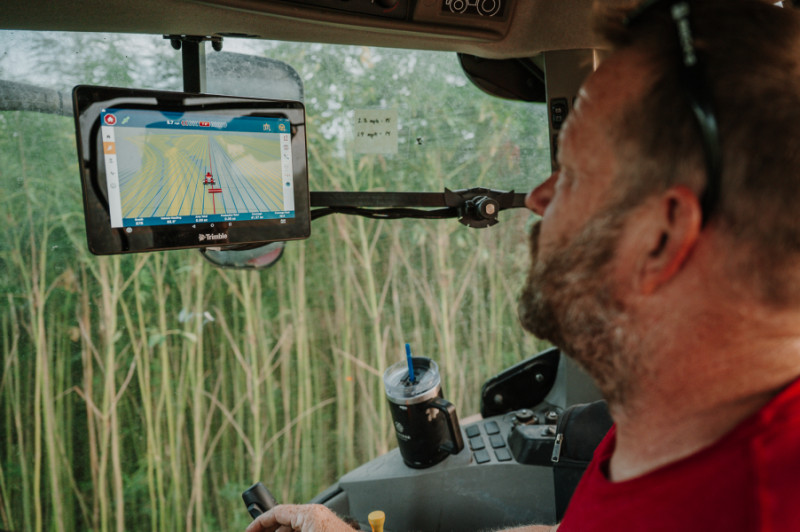
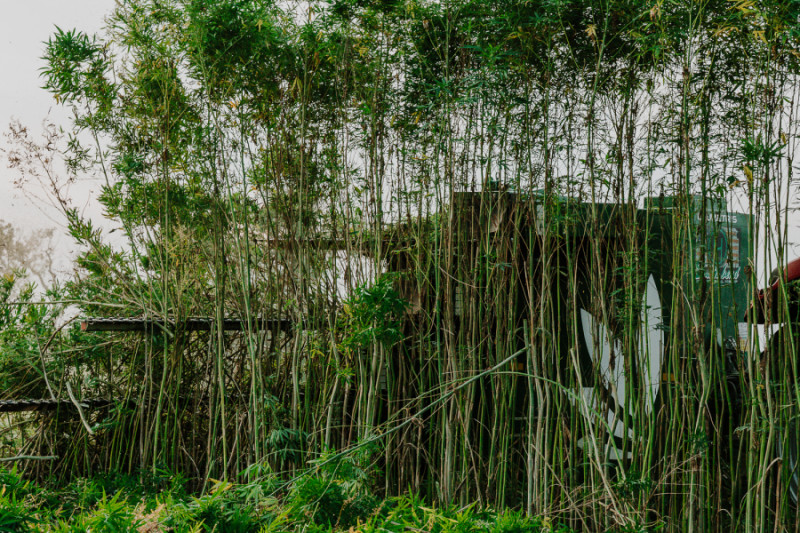
“This field has some really tall hemp, as you can see,” Aaron says. “And typically, it’s best to go at this fast. Once the stalks are cut, they’ll lay in the field for around two weeks to dry down since this is ultimately used for fiber. Then the farmer comes in later and bales the hemp.”
Diversification is key on farms
In 2019, crop prices for traditional row crops like corn and soybeans were low — much like they have been the last couple of years. For South Bend Industrial Hemp, the decision to add the product and learn about it was all because of economics.
“The crop prices in 2019 looked about as sad as they do currently in 2026,” Melissa says. “We were asking ourselves back in 2019, ‘How do we keep our farm moving forward? How do we stay in business?’ We had to diversify that risk and pull some acres out of the traditional crops.”
A unique factor about hemp production is the price doesn’t fluctuate like corn and soybean prices.
“As the processor, we’re signing our contracts before any seeds go into the ground, and we know exactly what we’re going to get on a price per ton basis,” Melissa says.
Diversifying with hemp is catching ground. McKee decided to transition some of his traditional cropland to hemp as a bit of a research project at first to see if switching to hemp would improve the soil health.
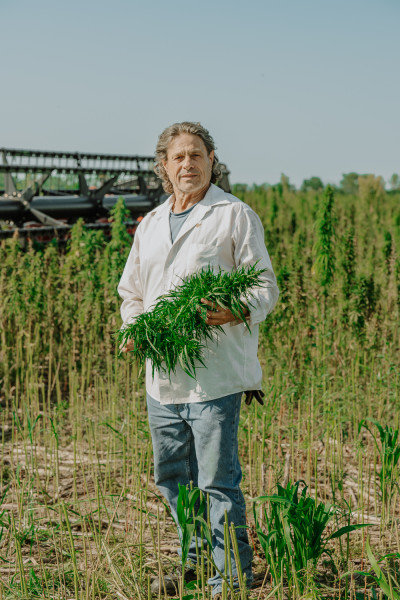
“My original intent was to rehab the land and not worry so much about the profitability,” McKee says. “Four years in, and now we’re starting to look at profitability because at the end of the day, that is part of a sustainable operation too. If a farmer can get a little extra income out of their land, if you can get an extra crop in, or if you can get two commodities — take the seeds out, then we come back and take the stalks out — we’ve got two products.”
Not THAT kind of cannabis
Historically, hemp and cannabis were generally included together in the definition of marijuana federally. The 2018 farm bill changed that and hemp was excluded from the definition, giving farmers the ability to cultivate hemp. In the 119th Congress, for FY26, the House and Senate deliberated a provision to re-criminalize many hemp-derived products. However, industrial hemp differs from the products the government is banning.
Products made by hemp growers like those at South Bend Industrial Hemp and on McKee’s land are used for non-intoxicating uses — think fiber, seed and oil. The plant variety Melissa, John and many other hemp growers raise has less than 0.3 percent tetrahydrocannabinol (THC), which is the threshold set by the federal government.
“That’s a common misconception in the public,” Melissa says. “There are two very different types of cannabis, and the 0.3 percent is the dividing line between marijuana and industrial hemp. The varieties we’re growing have had THC bred out of them — it’s not even a thing.”
Starting Nov. 12, 2026, a new federal definition changes how THC is measured and puts new restrictions on certain hemp-derived products, but it continues to recognize industrial hemp grown for fiber, grain, oil and other non-cannabinoid uses as hemp.
Melissa and the whole team at South Bend Industrial Hemp are transparent about their growing methods and have welcomed more than 100 tours per year on their farm and processing facility.
“We’re posting all the time on our social media platforms about the good, the bad, the challenges,” Melissa says. “We want to bridge the gap on what fiber production is and have our visitors see the products made from the hemp we grow like hardwood flooring, insultation, rope and more. I make an analogy about hemp where I talk about going into a grocery store and you need a pepper. You’ve got your bell peppers and your jalapeno peppers. They’re both still peppers but two very different types of peppers. That is what industrial hemp and marijuana are like.”
The regulation of the industry
With a background established in farming and a love for their community, Melissa, Aaron and Richard learned all they could about growing hemp so they could help others who were interested in the industry.
“I am so passionate about getting farms to the next generation” Melissa says. “If that’s something farmers want, sometimes they have to find a different way and they have to think big picture.”
Even through the challenges, Melissa says 2026 has been a good year for hemp growers.
“This year was really gratifying to see farmers have some really good yields,” she says. “We have a great lineup of farmers who are just excellent at their craft, and so it was really fun to see a lot of profitability on those farming acres and seeing the farmers reap the benefit.”
McKee, too, is a proponent of his freedom to grow hemp for seed on his land, citing the nutritional value of the product.
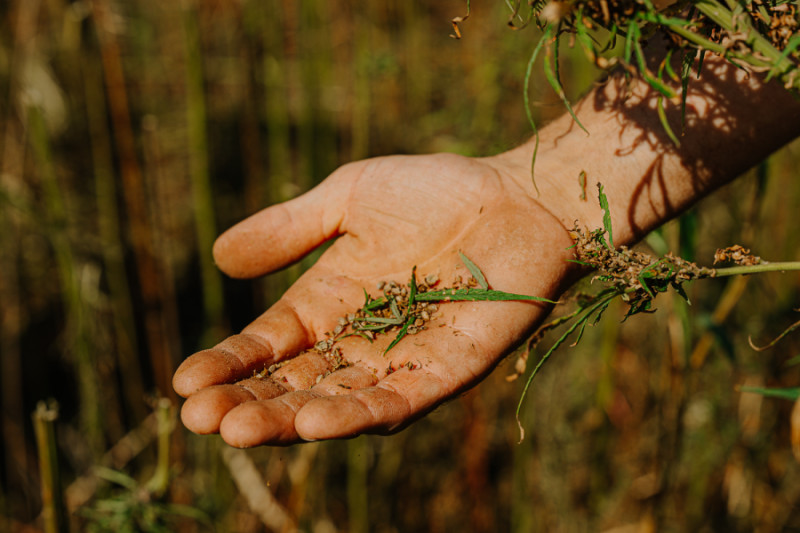
“I’m hoping people will eventually learn the benefits of hemp seed,” he says. “I encourage folks to try it out. You can buy hemp hearts in several grocery stores. There’s a lot of protein in hemp and it has a great crunch and nutty flavor.”
 To learn more about South Bend Industrial Hemp, visit their website here and their Facebook page here.
YOU MAY ALSO ENJOY:

Sheridan Wimmer
Born and raised in Kansas, Sheridan Wimmer has an appreciation for the state’s agricultural diversity. Representing the best interests of Kansas farmers and ranchers is Sheridan’s jam (or jelly, no discrimination). Great food and wine are at the top of Sheridan’s sustenance list and she knows it wouldn’t be here... Read more