By Kansas Living on October 28, 2026
Meet the Mentzer Farm Family
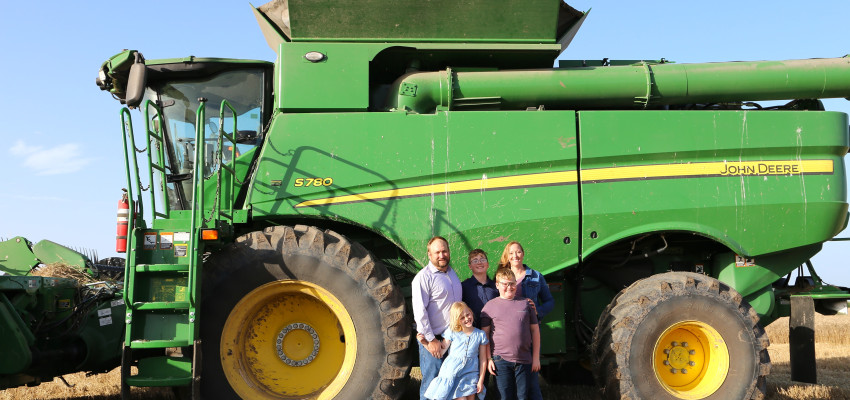
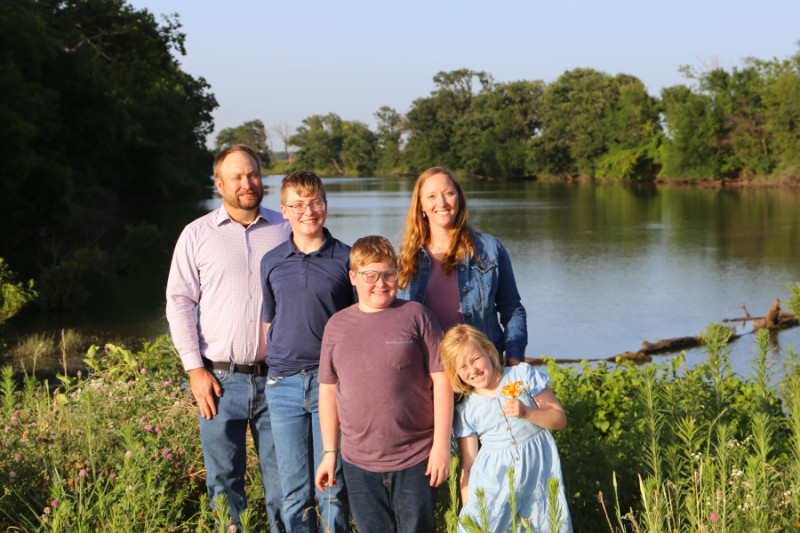
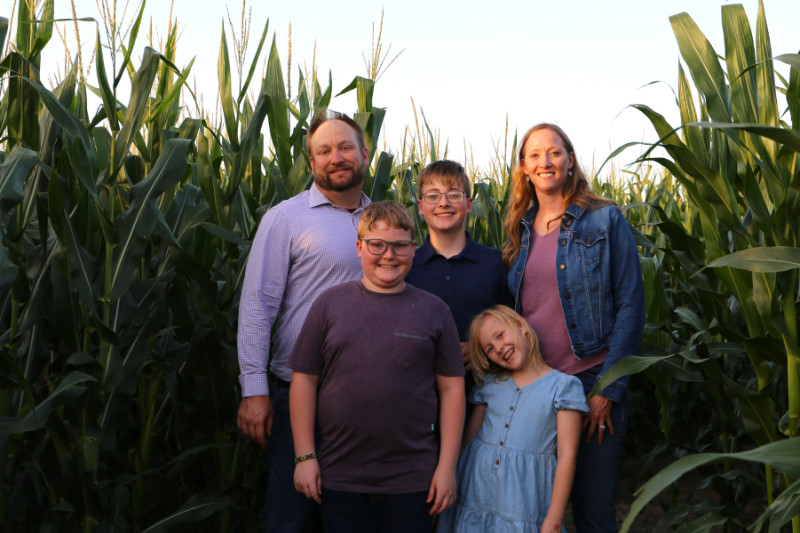
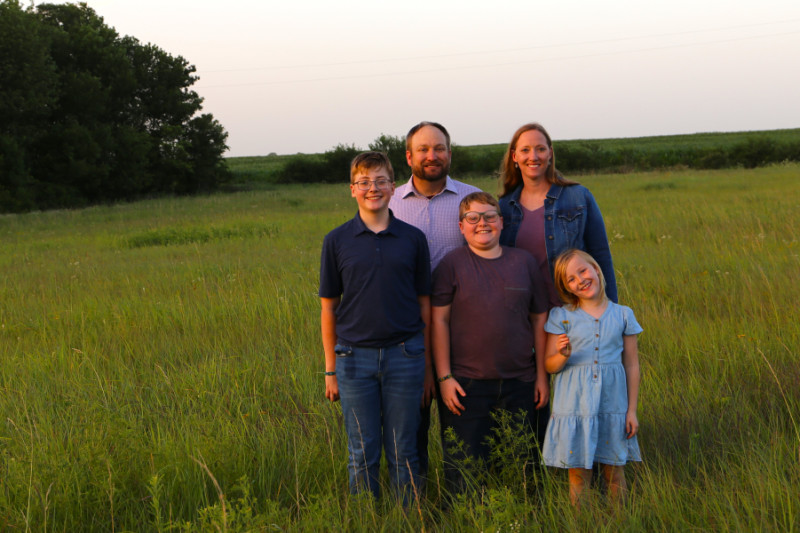
Nathan and Heather grew up in respective long-standing farming families. Heather comes from a fifth-generation farm in Rooks County and Nathan grew up as the fifth generation in Allen County. They grow corn, soybeans and wheat and incorporate cover crops and minimal tillage practices. The Mentzers are actively participating in nutrient management, cover crop and timber management programs to maintain both healthy soil and wildlife habitat areas on their farm. They also manage an Angus and Red Angus fall-calving herd. They are also raising three children, Elijah, Case and Jeanie on their Allen County farm and ranch and are very active in their community through church, 4-H and sports.
What made you want to become farmers/ranchers?
We both grew up in farming families, and while strong family ties and pride in our farming heritage played a role in our decision to begin farming on our own, the desire to own and operate our own business, as well as to raise our family in an environment similar to the ones we grew up in were probably the biggest driving factors. At the time we made the transition to the farm, Nathan was working 50-60 hour weeks in a management role for his company and was frequently away from home for meetings and work travel. He once made the comment that if he was going to be working that much, he might as well be working for himself. We also realized when we had free time we usually spent it returning to the country to visit family and explore the outdoor spaces where we grew up. We sat down and made a list of pros and cons for our family and future goals, then decided to make the leap and transition to farming.
What three things matter the most to you as a farmer/rancher?
Stewardship – Our responsibility to respect, repair and rebuild what God has provided; managing our resources well.
Community – building relationships and recognizing our responsibility to help our local communities grow and thrive through supporting local economics.
Family – Working as a team, sharing life and growth experiences and being a family-first farm. Honoring tradition, learning about the world around us and valuing local history and heritage.
How do you teach your kids about farming/ranching and the value of hard work?
Aaron Alejandro, the director of the Texas FFA Association, once defined the 3Rs of Agriculture as Respect, Responsibility and Resiliency, saying that in agriculture, “If we don’t do our job, something dies”. That point comes home loud and clear when you’ve left the chicken coop door open overnight and come outside to find one of your favorite birds dead or missing the next day. We’ve tried to help our kids recognize the importance of farming/ranching and the value of hard work by involving them in the process as often as we safely can, celebrating special farm moments together and giving them their own responsibilities. As they get older, they are able to help in new and different ways, and they are excited for the chance to take on larger responsibilities. We view the Resiliency piece as especially important as they grow, challenging them to take on hard things and helping them to learn through both successes and failures.
We also look for opportunities to expose them to diverse agricultural opportunities wherever we go, whether it is viewing a drone demonstration and talking about the way technology and farming intersect, visiting a lavender farm in New Mexico, picking apples in a one 100-year-old orchard in Utah, learning about heritage farming practices or making a meal from ingredients purchased at an urban farmers market.
What does winter look like on your operation?
Winter is time for setting goals, updating records, making repairs, taking advantage of learning opportunities and preparing for the busy times to come. Feeding livestock is a daily priority. Since we calve in the fall, we work cattle in the late fall and move them to winter pasture. Other activities include nutrient evaluation and application, pasture/timber management and field drainage projects. Evaluating the last year’s business decisions and developing new marketing and input plans, as well as reviewing test plot and trial results are good activities for cold days. We attend Farm Bureau or other farm conferences to continue to learn and become better managers. It is also family time, with holidays and all of the kid’s birthdays happening during the winter months.
How do you handle extreme weather – droughts, floods, blizzards, etc.?
Prayer, for one thing. Preparation is also important, such as having fields in good shape with draining fixed and cover crops planted, water way and water gap maintenance. We farm along the river, so we are more prone to flooding than some other areas. Repairing trouble areas, getting feed out ahead of a storm and the timing of planting, chemical and fertilizer application is huge. Risk management decisions, such as crop/hail insurance, grain input contracting and making sure we have adequate feed reserves for livestock is also important. It is not a matter of “if” extremes come, it is a matter of “when”, so having a plan and being prepared for the hard times helps us sleep better at night.
What is the hardest and best part of your job as a farmer/rancher?
The hardest part is putting in all of the hard work and effort and then watching crops struggle or decline due to poor weather conditions or a bad storm that comes through, then the mental anguish of dealing with a failed crop, financial stress and landlord expectations. There are some days we have to remind ourselves why we are in the business. The best part is seeing the fruits of your labors; watching crops, calves and kids grow, getting to work side by side and enjoying the variability of each day.
What’s the best advice you’ve ever received about ranching or farming?
Count your blessings each day, and remember that “the wheat’s going to grow again” – there is always a tomorrow. Your personal value is not defined by your successes or failures. In farming, you can do everything right and still have nothing to show for it at the end of the day. The farm may fail, but that doesn’t make you a failure — it is just an opportunity to try something new, and as long as you still have your family and your faith, the future is bright.
How do you balance tradition with innovation in your operation?
Tradition is usually based on the tried and true of what works, so it is often a good place to start. We both come from farms with a tradition of innovation and continuous improvement. Nathan is constantly researching and learning about new practices, their use and application in diverse situations. There are many innovative ideas out there, and it’s OK to try them out, but they still need to demonstrate success and make sense for the farming operation economically and logistically. We often will experiment with small trials before implementing anything on a larger scale. You also have to know your ground — what works on one field may not have the same results at another location. If a new practice shows proven value and makes economic sense, we are more likely to implement it across the farm. The key is to keep an open mind, be constantly learning, but weigh your decisions in the grand scheme of things.
What does sustainability mean to you?
Sustainability to us means to leave the farm better off than we found it. The operation needs to be economically sustainable (profitable), environmentally sustainable (understanding the impact of your action on the land and environment and making the best decisions for each different location), and relationally sustainable (prioritizing relationships with people and recognizing their diverse connections to the land).
Sustainability is multi-faced. The key is to establish your goals for each different field or pasture (ex: reducing erosion, reducing nutrient run-off, improving compacted soils, providing habitat for wildlife, benefitting pollinators, providing a family fishing pond, maintaining healthy timber stands, eradicating noxious weeds), then utilizing management practices that enable you to reach those goals.
What methods do you utilize to protect the environment?
When considering environmental management practices we try to ask ourselves the following questions: Am I willing to consume the products I produce? The fish, deer or plants caught/harvested locally? Am I willing to drink the water from our local water sources? If our production practices cause any of those answers to be a no, then it’s not an acceptable practice. We consume our own products (beef, corn, eggs, wheat) as well as live and play here too. Reducing nutrient runoff and erosion issues, utilizing filter strips, incorporating cover crops, using chemicals responsibly and operating as efficiently as we can are all ways we strive to protect our natural resources.
Where do you see the future of your operation going?
Agriculture will continue to evolve to meet consumer demand for food, fuel and fiber. The flexibility, ingenuity and efficiency of the American farmer will remain important, as trends and values change in future political, economic and geographical climates. Although we value the heritage of the farm and the preservation of the stories of those who came before us, we acknowledge that we do not farm the same way our ancestors did. Crop types, varieties and cultivation methods have all evolved and shifted over time, and will continue to do so into the future. Practices that increase production, improve soil health and create a higher quality end product should be our continued aspiration. Opportunities to add value to our standard products and processes will become increasingly important in helping small to mid-size producers continue to be profitable. Adoption of new technologies may also help to develop new uses for products, providing increased market opportunities.
We’re not fixed on producing any one product, and we’ll continue to embrace flexibility and innovation to meet the demands of the changing markets and to continue to be the best stewards of what we have. We will continue to evaluate and execute on new opportunities that come our way.
What’s a typical day/week/month look like for you?
I’m not sure there is such a thing as “typical” – ever day/week/month is different! During the school year, we get up early to get the kids ready for school. After they get on the bus we have a few minutes to drink a cup of coffee together and talk about the plans and possibilities for that day. Then our employees arrive and usually do cattle work while Nathan gets his engineering project team outlined for the day and takes care of his morning meetings. After that it just depends of the weather and the time of year. If it’s a slower season the guys will all come in for lunch. If it’s a busy season, they get a sack lunch to go. The employees head home sometime between late afternoon and evening (again, depending on how busy we are and the time of year), but Nathan often continues to work outside or finish up more engineering work until bedtime. Heather makes an effort to be home in time to meet the school bus and greet the kids with a snack after school. She usually does all of the town errands on Wednesday, ahead of the kids’ music lessons and church activities, but will make additional trips to town if equipment breaks down and parts are needed. Friday night is “Pizza and a Movie” family night, although there have been times that we’ve eaten pizza in the truck and watched a movie on an old laptop while sitting at the field. Saturday mornings are “Pancake days”, and often include 4-H or volunteer activities. Sunday is set aside as a day for church, family time and rest.
What’s one thing you’ve changed on your operation since you started?
We have now been farming for 10 years. The addition of cover crops and wheat into our planting rotation is one significant change. The addition of the cattle herd in 2022 is another change.
How do you care for your animals?
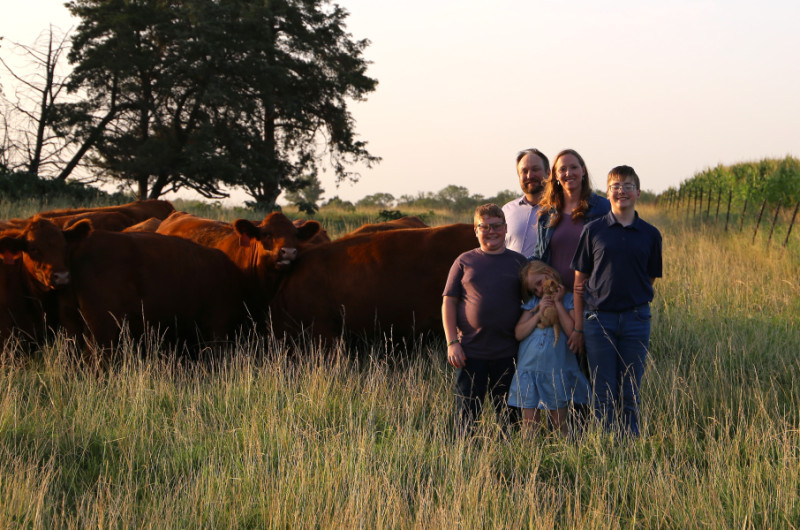
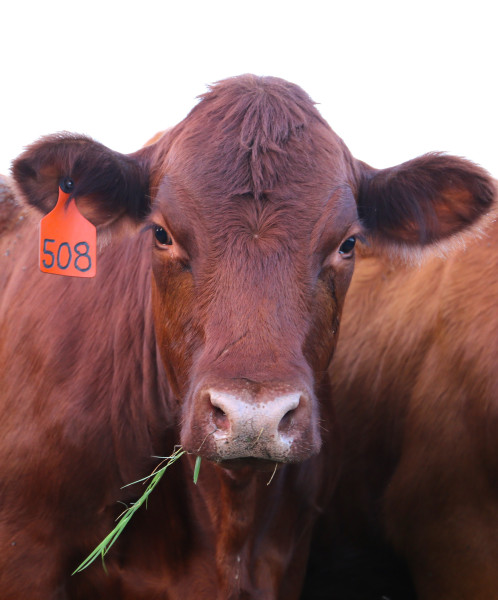
We have a small cow/half herd that is predominantly grass fed, supplemented by hay and protein pellets during the winter months. Cows and calves receive typical vaccinations and other vet care as needed. Calves are born in the fall (when it is not so cold!) and typically sold at weaning weight in the spring when we move the cows to summer pastures. Bulls are introduced to the herd in early December and pulled out in late March, to maintain a fall calving window. Our pastures are rotated between summer and winter grazing, and we are careful to maintain appropriate stocking rates and manage water availability. Cattle are often selected for disposition, and we have a docile and friendly herd.
What is one thing you wish consumers knew about your operation?
We wish consumers understood that farming is a small business, not a charitable food-production service. At the end of the day, we need to be a profitable business and make management decisions that help us sustain our operation financially. Consumers get to vote for what we grow with their dollars. If they are willing to spend more for locally produced or organic products and demand for those items to be grown, the American farmer will adapt to meet that need. We grow what we can market. Consumers often have a disconnect between their desire for cheap food and their understanding of the actual cost to grow, harvest and process local foods for consumer consumption, as well as where they actually are spending their money.
What’s one myth about agriculture you’d like to bust?
MYTH #1 - Farmers choose what the market demands. Farmers aren’t dictating what consumers consume. Farmers are growing that the market demands, and what is profitable. If there is not an accessible market for it, it doesn’t make sense to grow it. MYTH #2 – You can change your farming practices overnight. Farming is a complex business with lots of dollars involved. Production change can happen, but there are a lot of factors in play and it takes time and financial investment to make significant change feasible.
What would you do if you weren’t a rancher/farmer?
Nathan - continue as an engineering consultant, working with clients to help them get their ideas from concept to reality. Nathan has a great interest in helping start-up/entrepreneurial clients with new or challenging ideas.