By Greg Doering on August 7, 2026
Rural builders: Rural community members help to expand housing opportunities
A blueprint to expand housing one community at a time
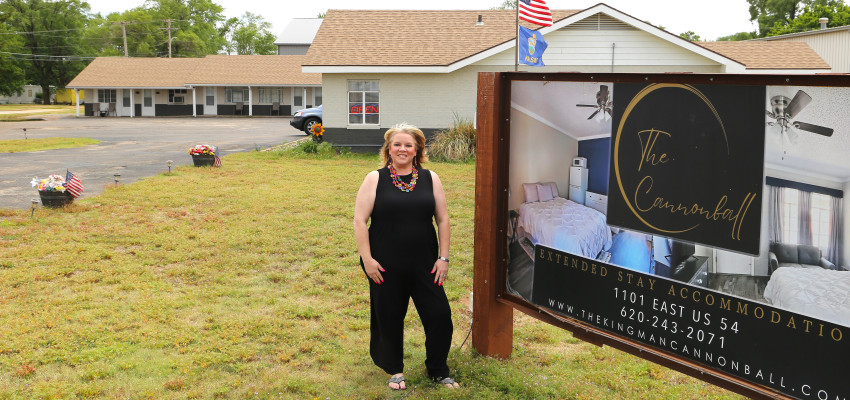
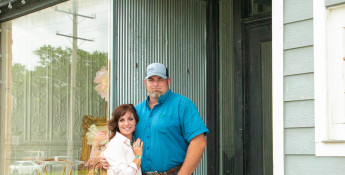
Julie Lyon doesn’t shy away from big ideas. The Kingman County commissioner — who sports a Home Depot tattoo — is working to turn a passion for rehabbing houses into a plan to add 30 homes in 18 months across south-central Kansas.
Adding housing is crucial for communities to retain and attract people like teachers, factory workers and health care professionals that make rural communities vibrant. Strong communities also help sustain the broader agricultural economy.
It’s not out of reach for Lyon, who is equal parts entrepreneur, public servant and the go-to person for anything related to housing in Barber, Comanche, Harper, Kingman and Kiowa counties, which face similar housing challenges as the rest of the state but are using a variety of solutions to address shortages.
While Lyon has long had a personal interest in fixing and selling homes, her expansion into facilitating development on a larger scale is relatively recent.
GRANDMA’S HOUSE
Lyon grew up in Kingman County, then left to “travel the world” before returning to Kansas and living in Stafford in 2015. A year later, she bought her grandparents’ home knowing she wanted to return to Kingman eventually so she and her husband rented it out for five years.
When they returned to Kingman, she had just purchased a local hotel at a tax sale, and they quickly decided her grandparents’ home wasn’t where they needed to be.
“It was bigger than what we needed and so we sold my grandma’s house at the peak of the market,” Lyon says. “If my grandparents knew what I could sell it for and I didn’t, that would have been more offensive than selling their house.”
The process of selling a longtime family property has helped Lyon understand funding isn’t necessarily the primary cause of housing shortages; rather human nature is a deciding factor in many decisions.
“In many of the housing circles I’m in, we talk about this a lot,” Lyon says. “How do you get people to turn loose of family property? You can’t make people do things they don’t want to do.”
Lyon’s experience with selling a family home helps her talk through the process with others, whether it’s an older person looking to downsize or an heir in no hurry to sell even if they aren’t planning to live in the home.
“In many of the things I do, I’m very much one to walk the walk, not just talk the talk,” Lyon says.
Proceeds from the sale were key to investing in the hotel, now the Cannonball Inn. That fed into turning the Kingman VFW into an events venue, revitalizing a former church into a three-unit rental and eventually Lyon’s push into rural housing.
CLEARING TITLES
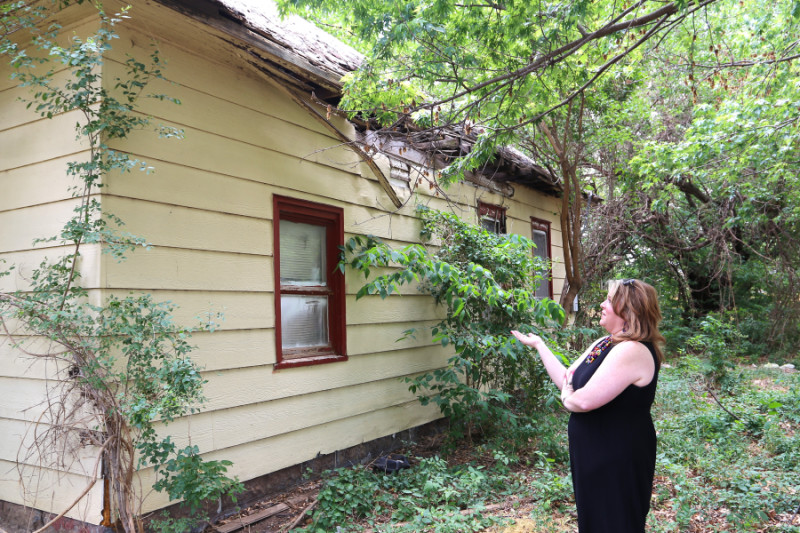
Lyon isn’t afraid to track down contact information for property owners of underutilized or vacant homes to inquire if the owners have any plans for the property.
“A lot of houses are sitting because they were inherited by someone who lives out of state or doesn’t have the money to fix them up,” she says.
While she claims not to know every vacant house in Kingman County, Lyon usually learns about most of them because she’s become known for her work in housing, having helped start several community land banks across south-central Kansas, which provide communities with the means to resolve things like back taxes without a significant cost to the owner.
But Lyon sees a land bank as a last resort. She’d much rather the process play out between private parties. That can happen more quickly in some cases, but Lyon discovered the hard way the various title entanglements that come with life such as debt, divorce and death.
“You should always do an owner’s and encumbrance report before you sign the deed,” she says. “When I go out to teach other communities about this process, I tell them, ‘This is where I messed up. Don’t do this.’”
MANUFACTURED SOLUTION
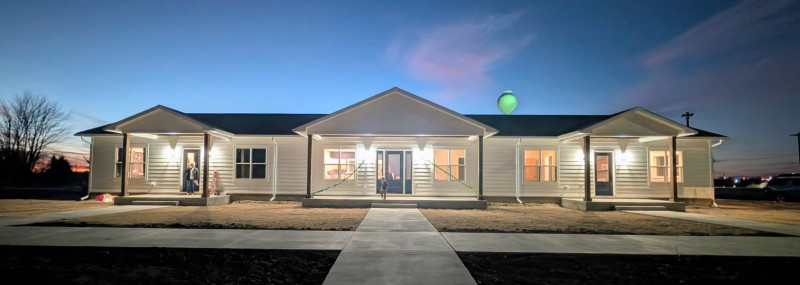
Lyon’s goal of adding 30 homes in south-central Kansas starts with the land bank in Kingman and is built on setting manufactured homes on permanent foundations, partly to add housing stock quickly but also to hit a price point that isn’t within reach of traditional homebuilders.
Her first project involved setting a five-bedroom, three-bathroom home on what’s now a vacant lot after a fire destroyed the original house. The city’s land bank acquired the property, tore down the fire-ravaged remnants and accepted proposals from the public before accepting Lyon’s offer.
“My goal is to offer a 2,300-square-foot home for less than $200,000,” Lyon says.
The manufacturer is in Arkansas City, and they can deliver the home faster and at a lower cost than traditional contractors, who are booked out months in advance. “Those who are willing to do stuff are busy,” Lyon says.
Like with most real estate ventures, the timeline for setting the first home has had a few delays, and Lyon says funding isn’t always the cause for shortages in rural housing, rather it’s the capacity to navigate all the varying rules and regulations.
“If you have land you can’t get a mortgage until a manufactured home is set on a permanent foundation,” she says. “There’s a gap, even for qualified buyers, that makes it hard. If I can bridge that gap and establish the home, then they can qualify for it.”
Lyon is working to reduce all of the snags in the process to replicate setting manufactured homes more like an assembly line process rather than the one-off nature of site-built homes.
“I want to try to keep them affordable,” she says. “If I can do it over and over, I don’t need the highest return.”
MODERATE HOMES
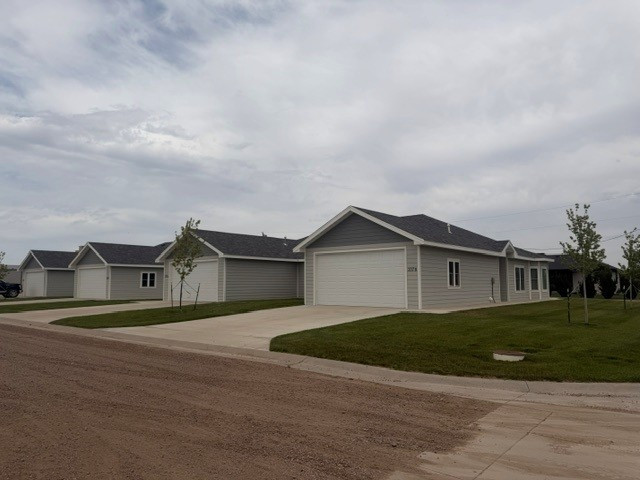
Lyon isn’t alone in taking action at the local level. As a business owner in Gray County, Heather Jantz knows how important housing is when it comes to hiring workers, and like Lyon, took matters into her own hands to address the shortage with the help of a state program.
“My brother and I own a construction company and manufacturing facility in Montezuma and we are of course always up against workforce dilemmas,” Jantz says. “We don’t have enough people to fill all the seats in the business. Part of the reason it’s hard to get employees in Montezuma is there’s nowhere for them to live.”
Jantz partnered with another local business owner, and they successfully applied for a Moderate Income Housing (MIH) grant from the state to build six units with rental rates targeted to households with an annual income between 60 and 150 percent of the area’s median income.
For Montezuma, that meant the three duplexes with two or three bedrooms could command rents ranging from $1,250 to $1,450.
“Everybody thought the rent was too high,” Jantz says. “But they were filled immediately and we’ve had no vacancies. I think people were used to paying rent on older homes.”
Jantz says the rental units wouldn’t exist without the MIH grant because she wouldn’t have pursued the project without it.
“There would be no way I could rent them at the current rate without the grant,” she says.
RURAL HOUSING CHAMPIONS
Lyon and Jantz are members of a Kansas Farm Bureau (KFB) task force focused on rural housing. The working group was formed last fall with members from around the state tasked with developing educational and policy recommendations for KFB’s board of directors. The meetings also serve as an opportunity to commiserate with others who understand the challenges.
“We all share the same frustrations,” Lyon says. “The problems are similar across communities but each one is unique. You can have the same scenario in two different communities, but how it’s handled, how it’s funded and what options are available are completely different.”
Jantz says the task force helped provide a better understanding of what communities across the state are dealing with, and each member has skin in the game trying to find solutions without more money from the state.
“I think we can all see the writing on the wall that funding is going to stop,” she says. “But I think it’s important that we keep the conversation going.”
For Lyon and Jantz, the path forward doesn’t rely on a single program or a surge in funding. They know it will require persistence, partnerships and a willingness to navigate the complications that come with rural housing. Whether it’s knocking on doors to untangle property ownership or finding creative ways to finance new construction. They understand fixing the problem starts with one house and one community at a time.