By Kansas Living on August 7, 2026
Meet the Kootz Farm Family
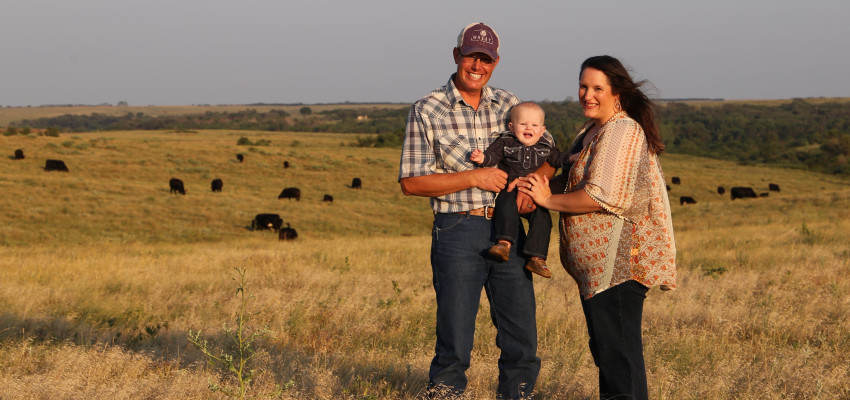
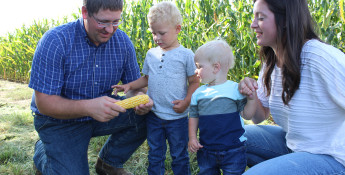
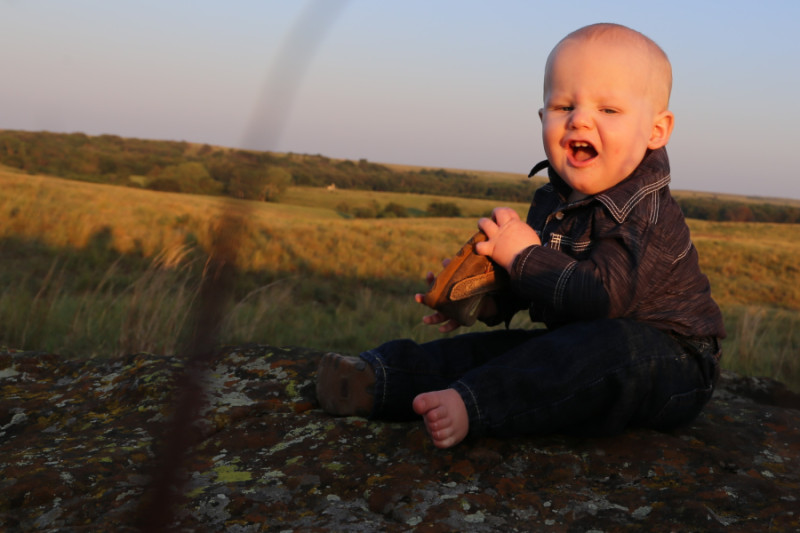
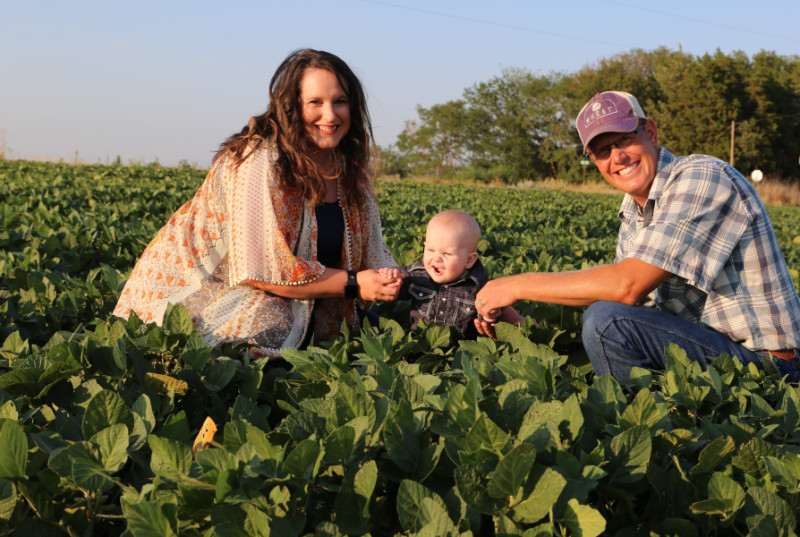
Jeremy and Kali Kootz and their two-year-old son, Walter, have a cow-calf operation and harvest wheat, soybeans, sorghum and various forages on their Ellsworth County farm. Jeremy is a fifth-generation farmer/rancher, and Kali is a family practice nurse. The couple has been married for almost five years, and they feel fortunate to raise their son on the farm.
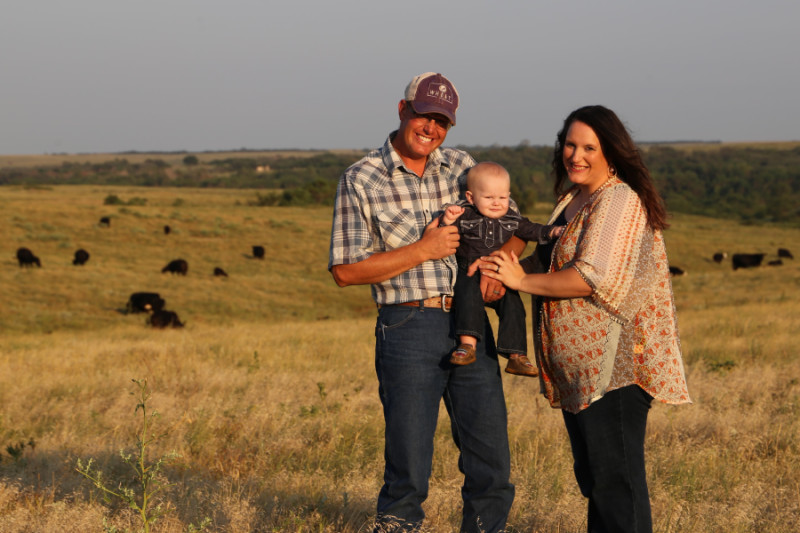
What does fall look like on your operation?
Fall is an exciting time for us! Summer-planted cover crops are hopefully getting big, wheat is going in the ground and the soybeans and milo are being harvested. Spring-born calves are getting weaned, and cows are coming off summer pastures.
What is the hardest and best part of your job
as a farmer/rancher?
The hardest and best part of this job is working with Mother Nature. You get to see beauty and the birth of spring, but you also see destruction and loss at times. We have witnessed storms, wildfires, drought and animal loss through our farm and ranch life, but we also get to see new babies, amber waves in the wind and inspiring sunrises and sunsets that might make one envious of this life.
How do you balance tradition with innovation in your operation?
We are able to balance it by trial and error. I feel like my dad has been very receptive to trying new things and change, so we have been able to become more innovative and make improvements in the way we do things. We will try it on a small number of acres before we fully adopt it. Tradition doesn't always mean “doing it the way things have always been done.” Tradition can be keeping the legacy alive by making the farm better than it was before.
What’s one thing you’ve changed on your operation since you started?
Since starting on our own in 2010, each year, more of our focus has shifted to saving our soil and being better stewards of the land than we were the year before. We have been utilizing cover crops, decreasing our use of herbicides/pesticides, soil and plant testing and grazing our cover crops to provide more nutrients back into the soil.
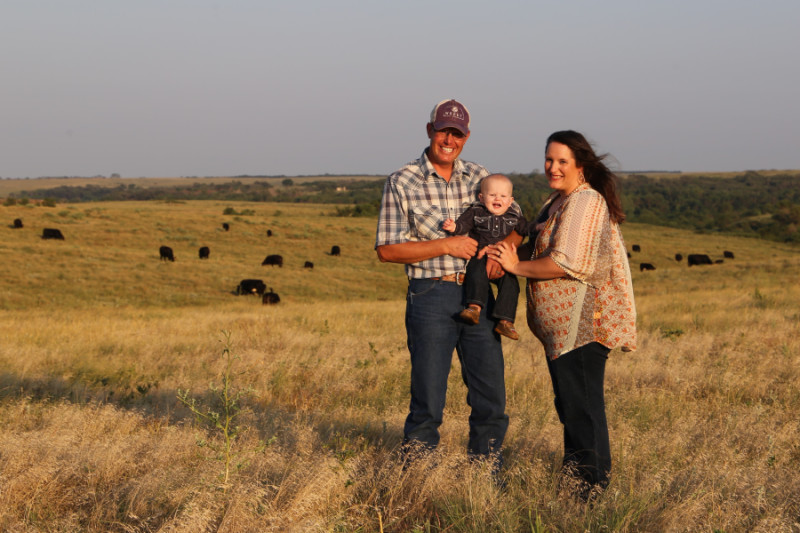
What’s one myth about agriculture you’d like to bust?
Farmers and ranchers have little say in the prices set when products are marketed commercially. The price that producers are paid is a fraction of the cost of what you might see chicken thighs or a ribeye sold for in the grocery store. We are often the price takers and not the price makers.
What made you want to become farmers/ranchers?
As a child, I was fortunate to tag along with my dad and became hooked at a young age. Working alongside him and learning from him instilled in me a passion for farming that led me to pursue a degree in animal science in college.
What three things matter the most to you as a farmer/rancher?
Stewarding the land for the next generation, raising a safe product for the supply chain and passing along what we've learned and mistakes we've made.
How do you teach your son about farming/ranching and the value of hard work?
We want him to learn by doing and seeing. Let him experience as much as he can as he grows and trust him with responsibility that instills a strong work ethic. We want him to witness the circle of life, even when it’s not so beautiful, and to understand that not everything is easy, but it can still be a valuable lesson.
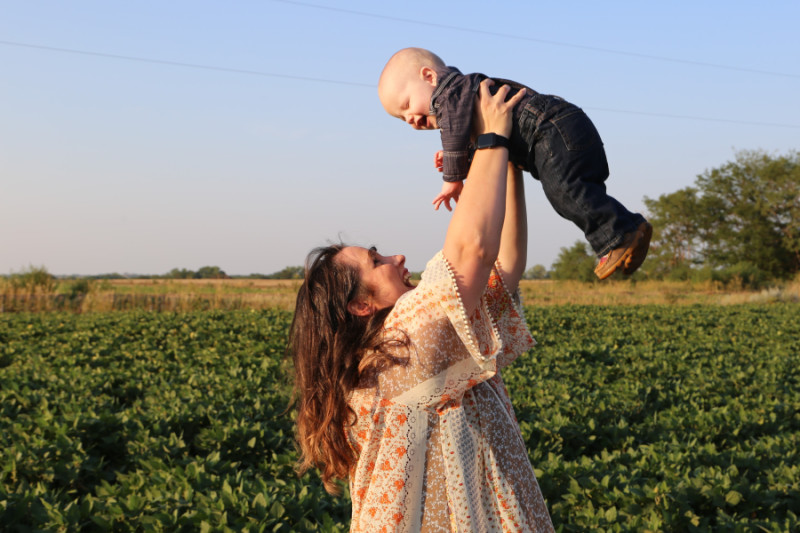
How do you handle extreme weather — droughts, floods, blizzards, etc.?
There sure isn't a playbook for us. It seems as though each event is different, but I suppose the mentality is similar. There's no use worrying about things out of your control, but you can prepare the best you can with what you know and try to make the best of what you're given. Farming comes with a rare and amazing community that's there to help each other through tough times.
What’s the best advice you’ve ever received about ranching or farming?
I think I have heard it from several people one way or another: never underestimate the power of observation. Observe what the land is doing, what the animals are doing, what the earth is doing, and realize the most important thing you can apply to the land is yourself.
What does sustainability mean to you?
To us, sustainability means staying the same. We want to do more than be sustainable and make more improvements with our precious resources. Regenerate them from where they are.
What methods do you utilize to protect the environment?
We use no-till practices, incorporate cover crops into our crop rotations and rotational grazing. We are trying to follow the six soil health principles.
The Six Principles
- Know Your Context - Your land's specific climate, ecology, and geography dictate how you apply these principles. No single approach works everywhere; your strategy should align with your resources, financial goals and local environment.
- Minimize Soil Disturbance - Reduce physical (tillage), chemical (synthetic fertilizers, pesticides) and biological damage to the soil. Excessive disturbance destroys beneficial fungi, accelerates carbon loss and degrades soil structure. No-till or low-till methods protect the soil's natural architecture.
- Keep the Soil Covered - Always maintain surface "armor" (mulch, crop residues or cover crops) to protect bare soil from the elements. Coverage prevents wind and water erosion, suppresses weeds, regulates soil temperature and locks in moisture.
- Increase Diversity - Integrate a wide variety of plant species, beneficial insects, pollinators and wildlife. Moving away from monocultures helps break pest cycles, improves nutrient cycling and mimics the complexity of natural ecosystems.
- Maintain Living Roots - Keep living roots in the ground year-round whenever possible. Root systems act as a direct feeding mechanism for soil microbes. They exude sugars that build soil aggregation, prevent erosion and absorb excess water.
- Integrate Livestock - Return grazing animals to the land. Adaptive grazing mimics the historical relationship between grasslands and herbivores. Animal impact (manuring, trampling) recycles nutrients efficiently and accelerates the breakdown of organic matter into fertile soil.
Where do you see the future of your operation going?
As one generation moves away from farming/ranching, we hope the next generation of farmers becomes more involved and wants to learn this way of life. We hope to do more on the same land base without being bigger than we can manage. We want to be more profitable by making wise decisions with investments that include our crop production and cattle/land management. We also would like to decrease our usage of chemical and create a more resilient farm for environmental, political and ethical events that may be out of our control.
How do you care for your animals?
We try to let nature be the primary force to let us know how things are going to go. The less interference we have, the better it is for our animals. We still doctor our animals if they appear to be unwell and work our livestock so they can perform at their best and in the end, provide a safe, healthy meal for our family and others.
What is one thing you wish consumers knew about your operation?
We eat what we raise. The eggs from our free-range chickens go right to our counter. The beef from our cattle goes into our freezer. The grain we grow gets fed to our animals. We take pride in caring for our land and our livestock so it can provide for our own family as well as theirs.
What is your family’s favorite protein?
BEEF! It is a versatile protein that can make both inexpensive, tasty meals but also be transformed into a juicy, delicious steak. One of our favorite recipes is Salisbury steak. I usually double the steak recipe and freeze half my pre-made patties.
The Kootz Salisbury Steak Recipe
Steaks: 1 pound of ground beef, ½ cup of unseasoned bread crumbs, 3 tablespoons minced onions, 2 teaspoons ketchup, 1 teaspoon mustard, 1 teaspoon Worcestershire sauce, ½ teaspoon garlic powder, and ½ teaspoon onion powder.
Gravy: 2 packets of brown gravy mix, 2 cups hot water, 1 teaspoon ketchup, 1 teaspoon Worcestershire sauce.
Combine all patty ingredients in a large bowl. Divide into four balls and flatten into patties. Heat 1 tablespoon of your choice oil in a pan. Once the oil is hot, add patties to the pan and cook until no longer pink (3-4 minutes per side).
Mix all gravy ingredients in a large measuring cup. Lower the pan heat to medium-low and add gravy to pan with the patties. Bring gravy to a simmer and let thicken to desired consistency. We serve ours over mashed potatoes with a side of carrots.
YOU MAY ALSO ENJOY: