By Sheridan Wimmer on July 14, 2026
Simon Sheep in Gove County innovates to grow the sheep industry in Kansas
Stephen and Sarah Simon are "ewesing" technology, tradition and experimentation to improve the future of Kansas’ sheep production
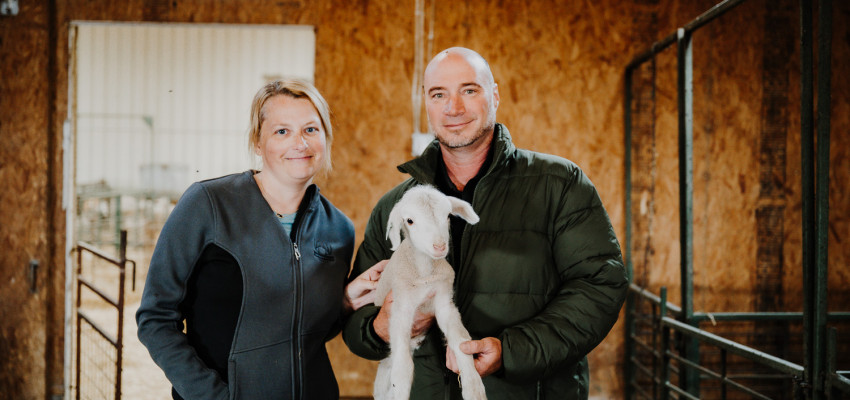
From biblical references and Precious Moments cameos to providing diversification opportunities for Kansas farmers, sheep are both cute and practical. For some farmers, taking the practicality (and the cute factor to a degree) aspect to drive growth on their farm is the right route.
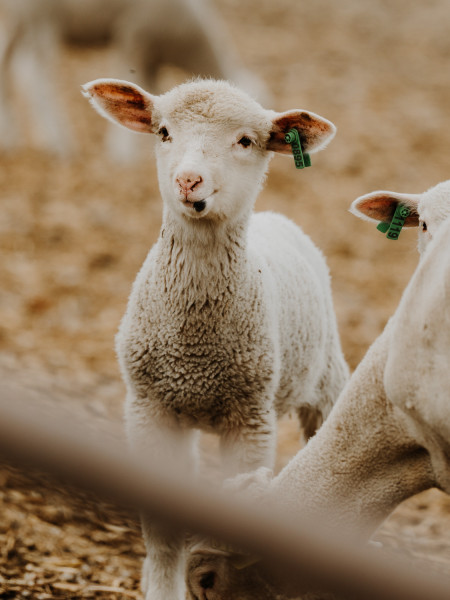 Stephen Simon of Simon Sheep in Gove County wants to be a self-sufficient sheep operation. From lambing to lean cuts, Simon wants to create a full circle of sheep production on his farm.
“My eventual goal with sustainability and everything here is that we will eventually be putting a harvesting facility on this property,” Simon says. “Everything will be born here, we’ll produce all of our own feed and then compost manure to be spread on fields, and everything is right here so we’ll have complete control of disease, have control of everything.”
Growth in time
Getting to that point came from simpler beginnings. The Simon farm has been in the family since 1920. Stephen is the fifth generation on the farm, and he and his wife, Sarah, hope their children will be the sixth.
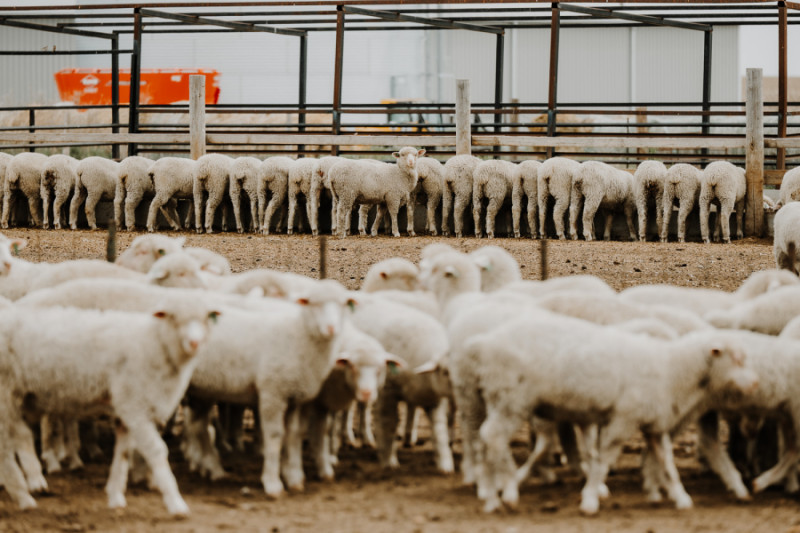
“When my parents were here before I moved back from Colorado in 2013, they would run about 600 to 800 head, kind of depending on the year, but we are now at about 1,500 head of ewes that we lamb out,” Stephen says. “It’s kind of like a cow-calf operation with sheep. The only difference is instead of raising them to feeders, we raise them all the way to fat and they go directly to markets.”
The Simons ship their “fats” — meaning the sheep that are market weight and ready to go to the processor — to Superior Farms in Denver, the largest lamb harvest facility in the U.S., but some of Simon’s sheep are processed locally and sold directly to consumers.
“We do sell a little bit here,” Sarah says. “We have some for direct-to-consumer marketing — in Quinter at the farmers market and here on the farm.”
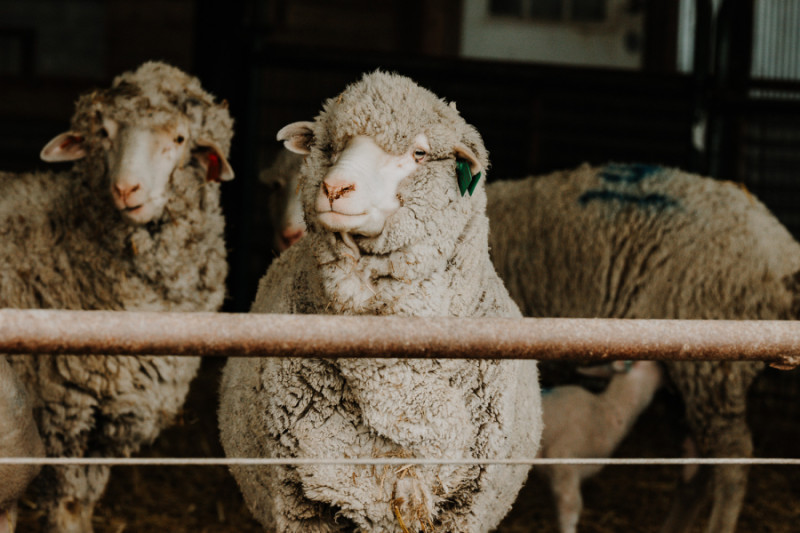
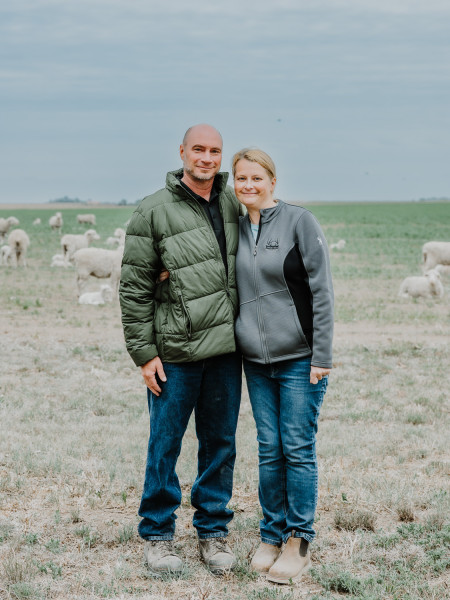 On the Simon farm, they raise wool sheep, which have to be sheared annually to prevent heat stress, disease and to help the animals move easier.
“All of our sheep are wool sheep,” Stephen says. “We have shearers come in one time a year and shear the entire ewe flock, usually in September. We produce about 15,000 pounds of wool out of those ewes and their lambs.”
The Simons send their higher-quality wool to locations in New Mexico and South Dakota to wool buyers, but utilize the rest of the wool as wool pellets.
"The wool pellets are mainly used for nurseries, greenhouses and gardens," Stephen says. "They provide plants with nutrition and also use one-third less water since they hold moisture close to the plant roots."
Wool pellets are part of the Simons' full-cycle plan. They just installed pellet equipment on their farm and will be marketing the pellets soon.
Teaching to improve the industry
The Simons are dedicated to the sheep industry, serving on the Kansas Sheep Council and Association and being part of Kansas Farm Bureau’s sheep and goat advisory committee for several years. They want to extend the knowledge they’ve gained through years of stewardship to grow not only their own operation but also the entire American sheep industry.
“A big piece of what I’m trying to do here is have a learning center and hopefully teach people how to raise sheep,” Stephen says. “It’s an internship through Kansas State University but open to anyone that starts in the fall where a student can get credit hours to work out here.”
“We provide them housing and they’d get paid to work a few hours a day,” Sarah says. “They could do other classes online and Stephen would be like a professor.”
The opportunity offers both a fall and a spring semester internship with no experience required. Stephen and Sarah simply want students to explore the sheep industry through hands-on immersive experiences.
 Advocating for the sheep industry doesn’t stop in Quinter or in the state. In addition to offering the internship, the Simons talk about the sheep they raise when they travel.
“When we go to big cities, one of the things we save up for is dinners at nice restaurants,” Sarah says. “There’s usually lamb on the menu and we always ask where they get it from and most of the time, it’s not American lamb. I’ll give them my card and tell them if they’re ever looking for American lamb, to reach out.”
The demand for lamb isn’t a problem for the United States, but there aren’t a lot of producers. For the Simons, growing the industry means providing an American product to meet that demand.
“Having sheep on my property is a tradition and legacy,” Stephen says. “There are so few sheep in the United States and we import 70 percent of the lamb consumed here. It’s something that, if people started producing lamb in this country, would be used here. It’s absolutely always in demand in some type of product.”
Dishing out lamb
Regional food distribution is something the Simons have been interested in pursuing. With their intention of building a full production facility, that would be attainable.
“My vision with having the full cycle here, all restaurants for 100 miles should be aware of me and partner with me until all my lamb is gone, and then there should be another sheep farm somewhere else, and they should be helping distribute in their area,” Stephen says.
Lamb can sometimes have various connotations, depending on the person and cultural background. At Simon Sheep, encouraging people to try lamb is part of its mission.
“People seem to be scared to try lamb,” Sarah says. “There are some assumptions that when you eat lamb, you’re eating mutton. But most of the time, that’s not the case.”
“I’ve never even had mutton myself,” Stephen says with a laugh.
Knowing how to cook lamb is an integral part of making sure the product shines. Of course, the cooking method depends on the cut, but for steaks and chops, leaning into medium-rare is the sweet spot.
“You don’t want overcooked lamb,” Sarah says.
Feeding the sheep with innovation
The Simons know what it takes to raise sheep and feeding them the right nutrition is part of that commitment.
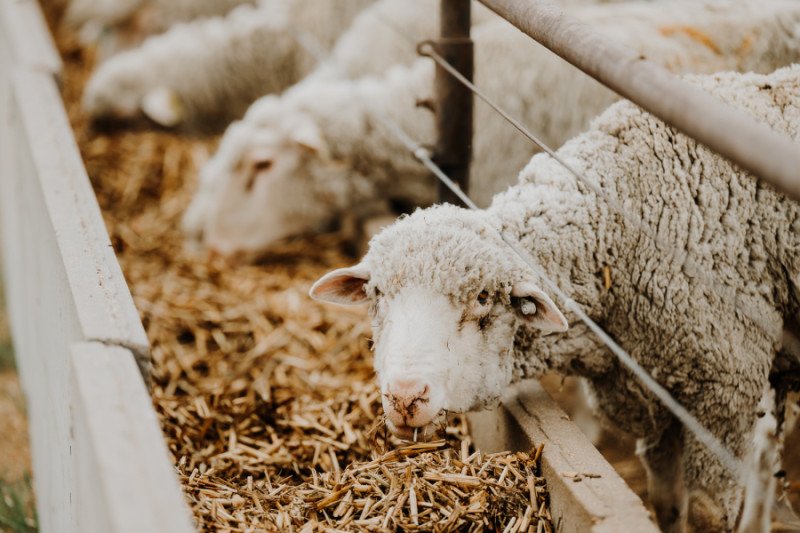
The Simon Sheep flock graze native pasture, wheat and barley stubble in the summer and during the fall and winter, are fed a combination of milo and barley plus minerals and nutrients. They’re typically ready to harvest in five to six months. Part of the goal to be self-sustaining means growing barley themselves — but at Simon Sheep, it’s not your typical field. It’s a slab of concrete.
“A big piece of what we do out here is raise barley,” Stephen says. “It’s an old grain that a lot of people don’t really raise as much anymore. Most of it is wheat anymore.”
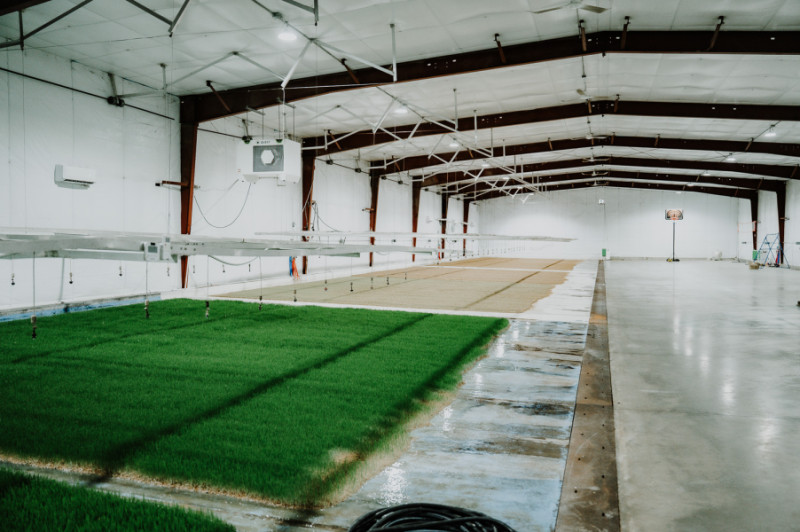 Stephen is being humble when he talks about his barley system, but it is innovation at its finest. Stepping inside a large metal shed with concrete floors seems like a typical farm experience at first. Then you turn a corner and see bright green sprouts coming out of the concrete. This is the Simon Sheep’s revolutionary barley-growing system they call, “Infinity Pasture.”
To infinity and beyond
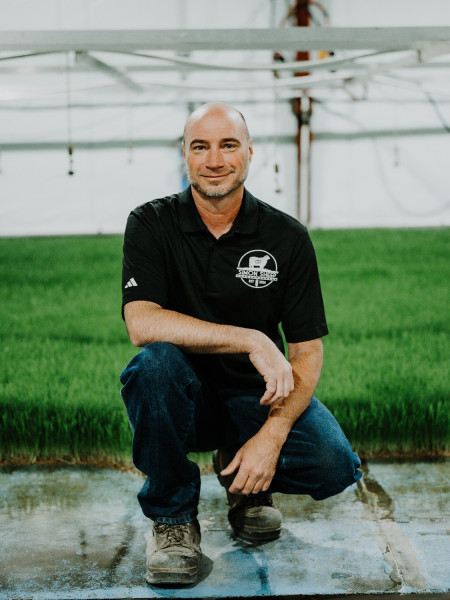
Stephen Simon loves his sheep to the point of invention. The sprouting system they’ve developed provides consistent, high-quality barley for their flock’s diet, no matter the season.
The building is maintained below 70 degrees, which can be difficult to keep up with during the hot summer months, with the mini-split air conditioners working overtime. If it gets too warm in the building, the barley roots suffer.
“The roots don’t hold together as well and get almost mushy if it gets too warm,” Stephen says. “It doesn’t stay together very well in that case. I’m working on that and getting my temperature controls figured out.”
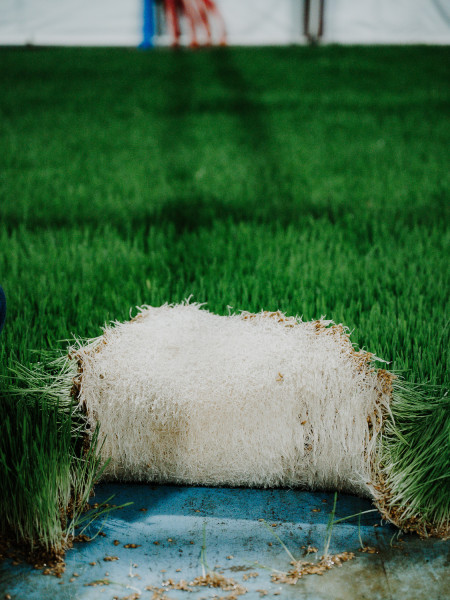 Experimenting seems to be a strong suit of Stephen’s, making sure elements in the Infinity Pasture are performing as best as they can be. From the air conditioning to how the concrete is sealed, every detail matters.
“After about six or seven months, I noticed the concrete under the sprouts started to get rough and more porous like the roots were eating at the concrete,” Stephen says. “I tried a paint to see if that would help but hasn’t lasted after a few years. Another section, I tried epoxy and it’s almost worse since it’s chipping up. I’m figuring things out for the floor, but it’s all trial and error.”
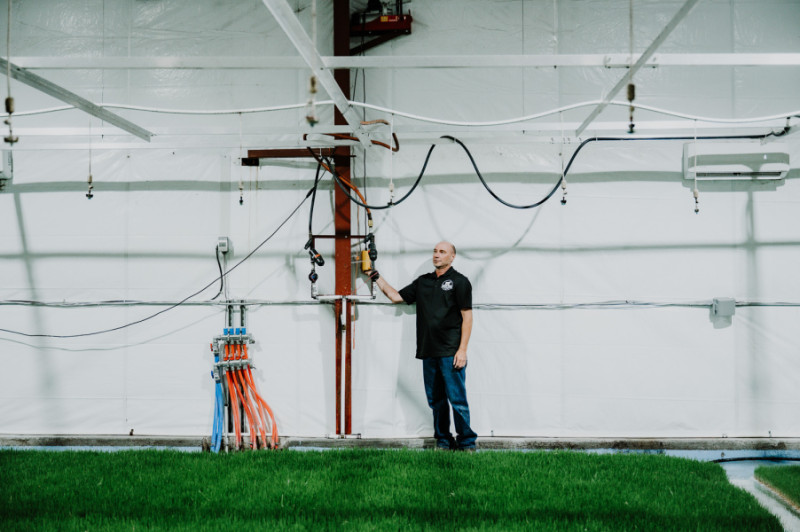
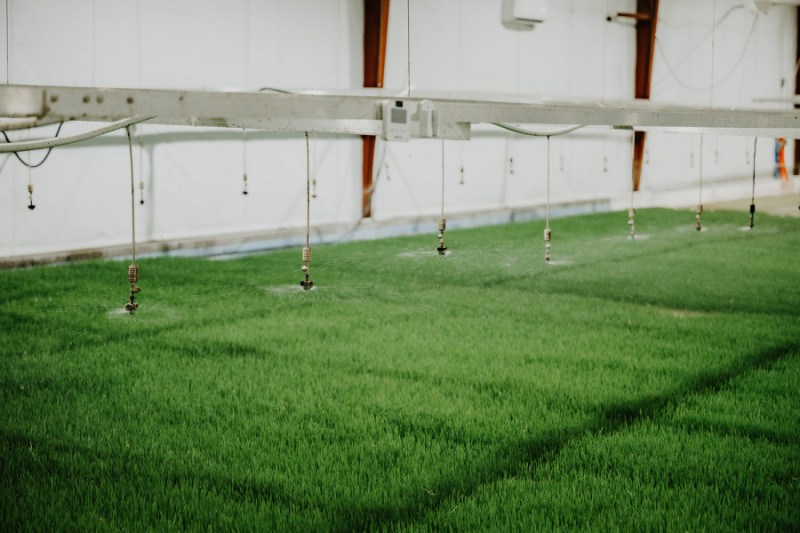
The racks that water the barley are on an electric winch system that can be lowered or raised. The racks were also created by Stephen, and he’s tested the best results for height of sprinkler, pounds per square inch (PSI) of the water and even down to the diameter of the hoses that lead to the sprinklers. What makes it even better is the products he uses are things accessible to anyone.
“I can go to a Home Depot or my local lumber yard for these materials,” Stephen says.
“He’s really good at planning,” Sarah says. “He can visualize things in his brain then implement them.”
Perks of the pasture
Knowing the nutrients given to his sheep flock is important to Stephen. He says he knows what’s going into the animal and it is the exact same nutrition profile every time, every single day.
“It gives a very stable diet for our animals,” he says. “They thrive off that consistency. Plus, the barley raised here is very digestible. As a seed, it’s 40-45 percent digestible, but when it comes in this form, it’s now 75-80 percent digestible. In terms of greenhouse emissions, the more a diet can be used in the animal’s body, the less manure it’s going to have and therefore, fewer greenhouse gases. There’s a lot of good reasons to feed this feed, but it’s a different type of vision.”
Even when the sheep are on outside, in-the-elements pasture in the summer and not utilizing the indoor Infinity Pasture, Stephen has a plan. He wants to get the most out of the investment they’ve put into the building that houses the bright green barley on concrete — so he’s thinking of ways to keep it in production and storing silage for lambing season.
“When we have extra that the sheep aren’t eating while they’re on pasture, we can utilize the extra as silage and store that away until the middle of the winter when we’re in the full swing of lambing season,” Stephen says.
Not only is Stephen thinking of his sheep in his innovate mind, but he’s also considering environmental inputs and natural resources. For the production level of his invention, water resources are minimal and land needs are reduced. The racks with the sprinklers water the barley every two hours for a minute to a minute and a half. The six-day process is showcased in each “plot” of barley seed — from just being laid out using yet another rig Stephen invented — to the one resembling a well-maintained lawn.
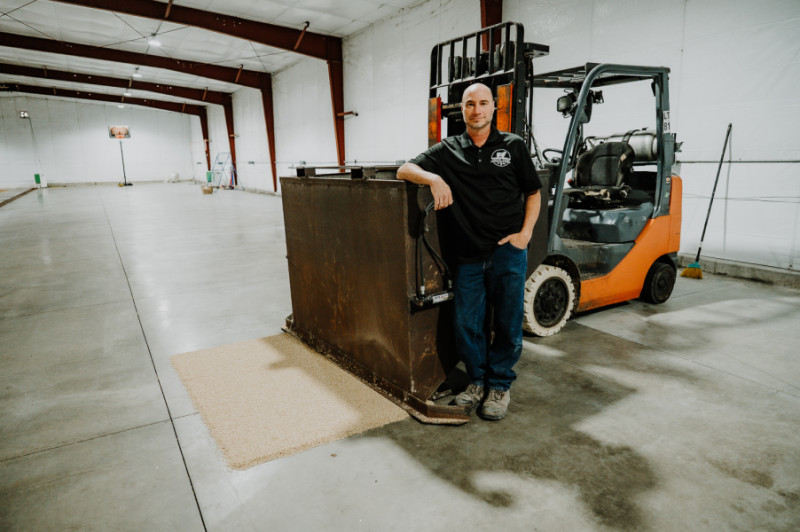
“This patch right here will be about 5,000 pounds and I produce this daily,” Stephen says of the plot ready to be harvested. “The water this requires is only about 11 gallons of water. To put that in perspective, we’ll use less water than the average American uses to water their lawn. With the drought in our area, water conservation is a huge factor for us.”
 Land use is another resource Stephen points to as a perk of the system. In Kansas, a section is a land measurement that is one square mile or 640 acres. Growing barley the way Stephen is with the Infinity Pasture will save the majority of a section to be utilized differently.
“Ultimately, my goal is to expand this building in the future to be able to feed up to 2,000 ewes and their lambs,” he says. “This building, when it’s done, will produce basically what an entire section of alfalfa would produce. Even though we don’t grow alfalfa because we are 100 percent dry land farming, this allows me to produce a protein source in a different manner. It’s a different type of feed, but you could grow the barley on a quarter of that section. That leaves you three‑fourths of a section of ground that did not have to be planted.”
From having the largest ewe flock in Kansas to inventing the Infinity Pasture, Stephen Simon and his family are putting the sheep industry on the map. His goal is to make jobs better when they’re initially the worst.
 “For me, it’s always been about taking the worst job and making it the best job,” he says.
He didn’t have to invent cats catching the mice on his farm, at least.
You can learn more about Simon Sheep and request a tour of their farm at www.simonsheep.com.

Sheridan Wimmer
Born and raised in Kansas, Sheridan Wimmer has an appreciation for the state’s agricultural diversity. Representing the best interests of Kansas farmers and ranchers is Sheridan’s jam (or jelly, no discrimination). Great food and wine are at the top of Sheridan’s sustenance list and she knows it wouldn’t be here... Read more