By Brandi Buzzard on July 2, 2026
Rain: Too Much (or Not Enough) of a Good Thing is a Bad Thing?
Too much of something is bad enough; too much of nothing is just as tough
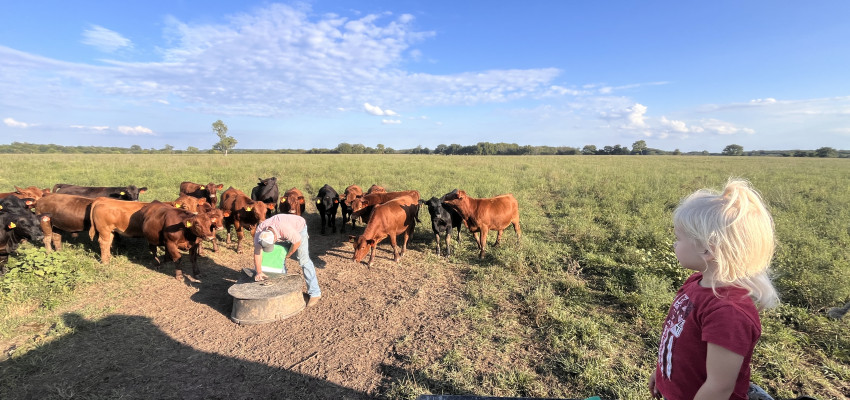
You’ll never hear me complain about mud, because I have prayed for rain far more times than I’ve ever prayed for it to stop raining.
But… this spring and early summer have been quite the test for that personal mantra.
In my little corner of the world here in southeast Kansas, we’ve had roughly 20 inches of rain from April to June and fewer than five days during that timeframe where my arena wasn’t muddy. Again, I’m not complaining about the mud or rain, because I don’t want heat or a drought, but the mud boots have been getting quite the workout.
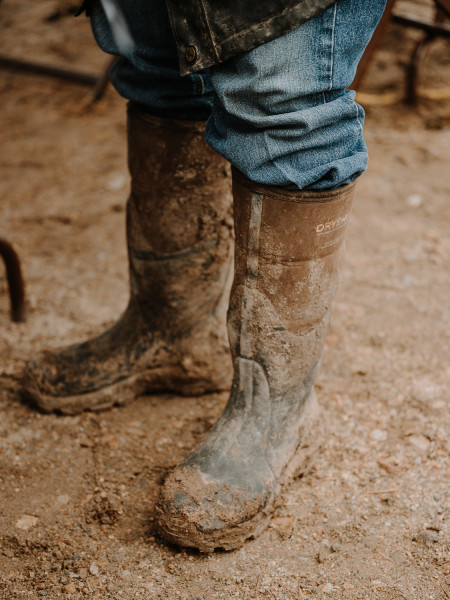 Rain is a blessing. It refills ponds and creeks, grows grass and feeds crops. There’s no doubt we are thankful, but I’ve been noticing some of the side effects of so much rain over a prolonged time on farms and ranches.
We’re a few days into hot hay season, and I’ve noticed a lot of weeds in some of the hay put up in the past week. Rain is great for grass, but it’s also great for weeds. We, just like other farmers and ranchers, do our best to mitigate weed pressure by spraying, but our big-wheeled sprayer and tractor can only do so much when the ground is soggy. We don’t want to risk getting stuck, so the last two weeks, which have been a touch drier, have meant overtime for spraying to make up for lost time.
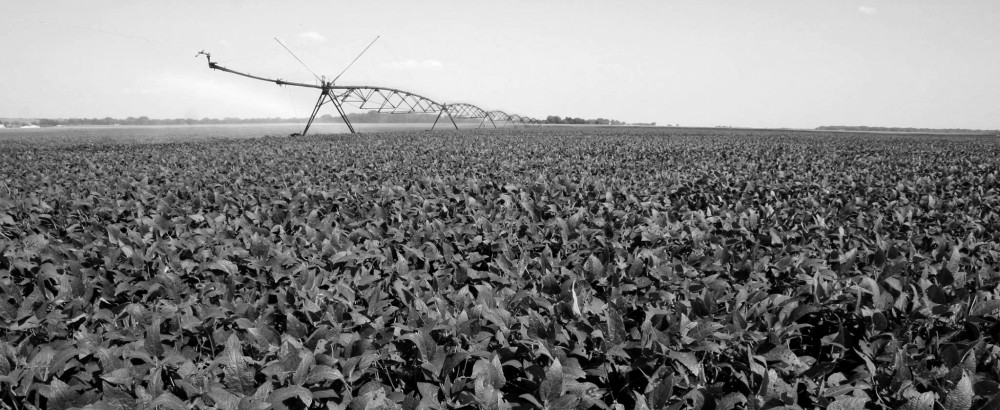
Today, while driving to town with my family, I saw corn that will miss the “knee high by the Fourth of July” measuring stick, which is a very old adage used by corn farmers to determine a successful crop. However, with the technological and genetic advancements seed companies and farmers have implemented over the last several decades, corn is usually knee-high before June! The cornfield I saw today was no doubt planted later than typical due to rain and is now trying to play catch up and get some ground cover to protect precious soil moisture as we head into a hot summer.
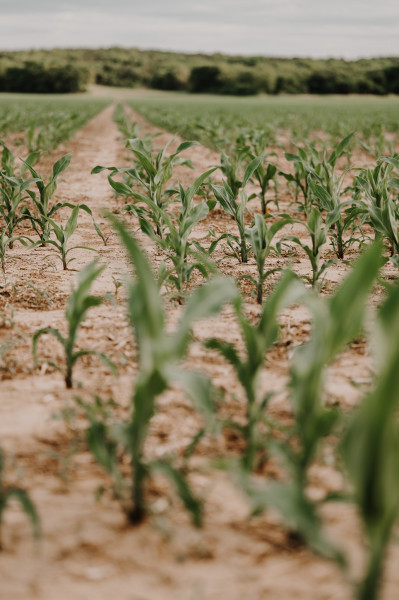 In the past, we have had to replant our tiny silage field because the seeds were washed out from a flood. It’s a chance we take every time we plant with rain in the forecast and I’m sure we aren’t alone. The business of agriculture is a risky one, at best.
Am I annoyed by rain? No. But I could see how someone would be concerned at the effects of unexpected, excess moisture on their farm or ranch operations.
OK, I’ve spent all this time talking about rain, but what about drought?
As of June 23, which is the most recent data available, 44 percent of the U.S. is experiencing some level of drought, and if you study the U.S. drought monitor, you’ll see there are a lot of cattle being grazed and raised in the yellow, orange and red areas. Thankfully, we are in the clear from drought for the time being but there is a wise old saying, “You’re never more than a week away from a drought,” and it lurks in the back of my mind from July through September every year.
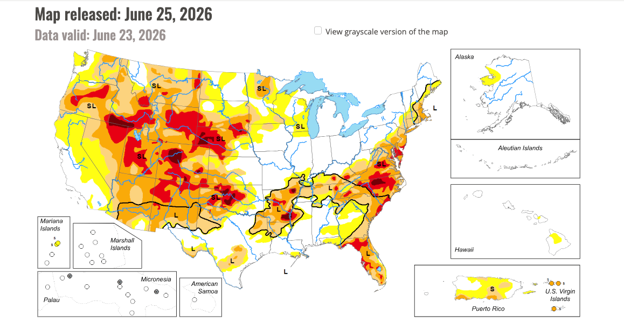
The harsh realities of drought show up on farms and ranches in the form of lighter grass loads in pastures and fewer hay bales in the shed. A lack of rain leads to shallow ponds, dry creeks and lots of algae. Drought creates smaller crop yields, higher feed inputs and tougher conversations around the supper table.
In an already high cattle market, extended drought usually leads to ranchers selling some cows simply because there isn’t enough hay or grass to feed them. Some of those cows might be bought and inserted into other cow herds for neighboring ranches. But many will make their way to the beef supply chain, lending to the overall decline in the nation’s cow herd size and further prolonging the rebuilding of the beef supply.
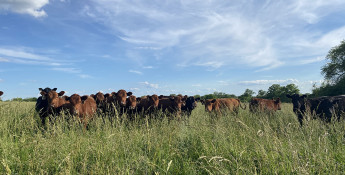
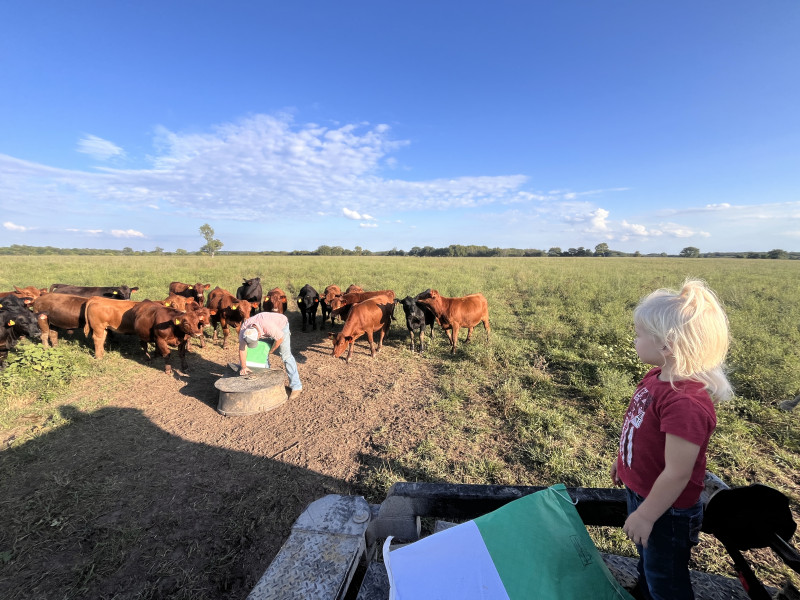
As with most other issues in agriculture, precipitation needs are complex and can’t be summarized or solved in a brief article. As you drive through rural America, keep an eye on the crops in the fields and the cows in the pastures — those should give you some good insight into the mood of your neighboring farmers and ranchers.
YOU MAY ALSO ENJOY: