By Sheridan Wimmer on June 4, 2026
Rokeyroad Creamery in Nemaha County Builds Dairy from Scratch
A first-generation dairy farm in Nemaha County milks Holsteins to build a legacy
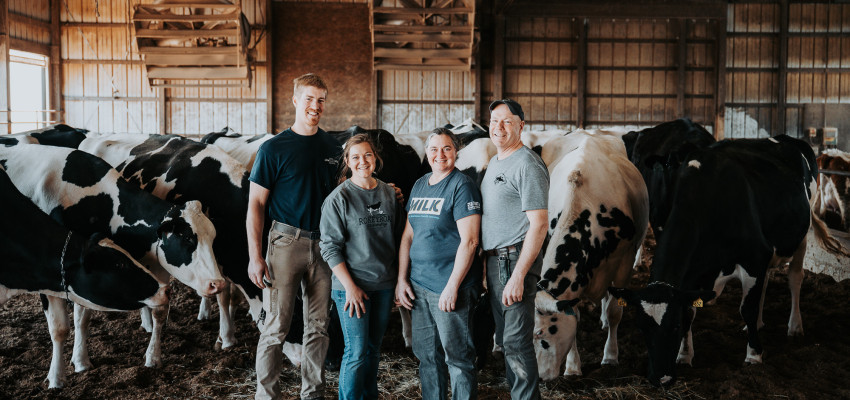
Some of us prefer routine — our alarm clock sounds at the same time each morning, the baristas at your favorite coffee shop have your order ready before you walk in the door and a certain spot on the couch basically has a reserve sign on it for you.
That’s not all that different from dairy cows, and the Holsteins at first-generation Rokeyroad Creamery in Nemaha County are sticklers about their routine. The rhythm of the cows means there’s consistency in their care and in the product they provide.
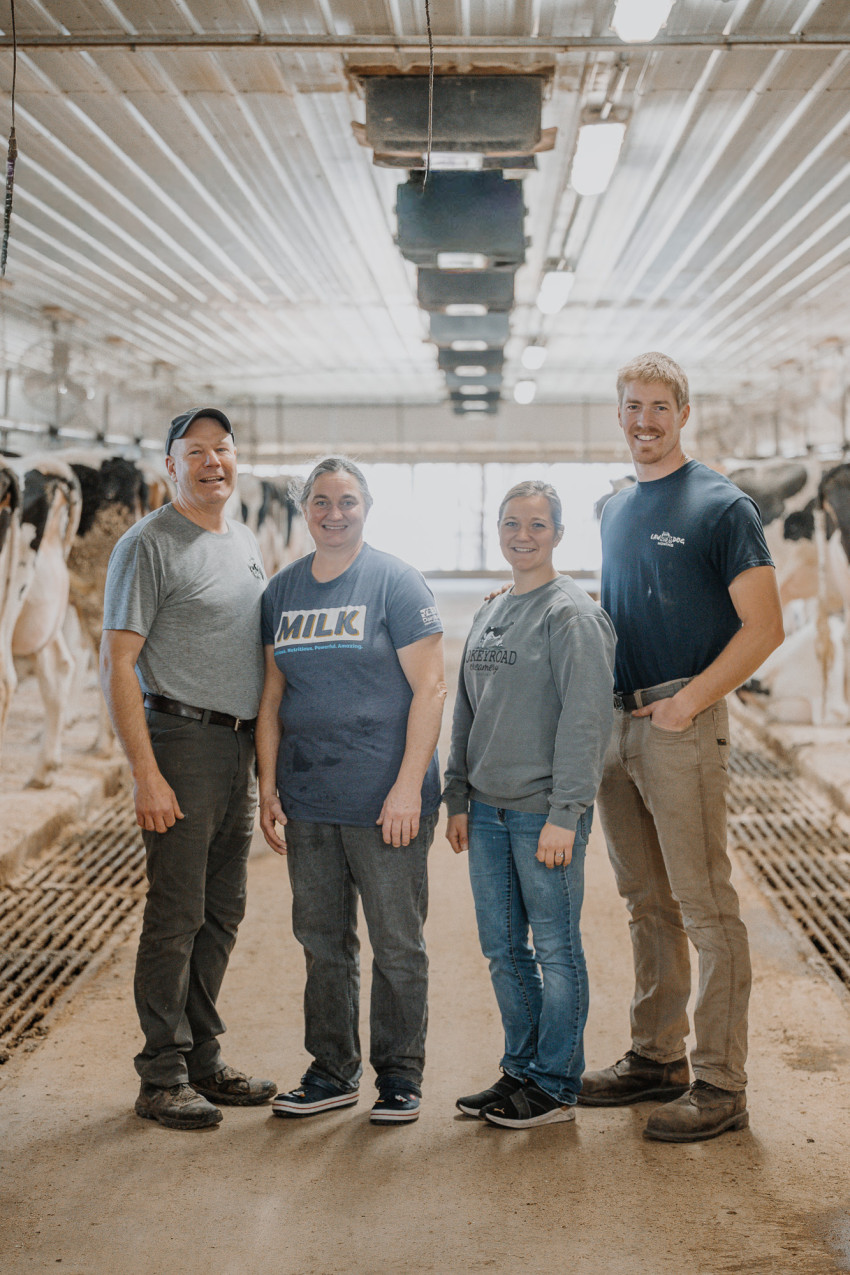
Dwight and Anita Rokey stand with their daughter Leigha and her husband, Jason, in the milking parlor at Rokeyroad Creamery in Sabetha.
Part of the routine and consistency of raising dairy cattle is also what marries you to the job. Many dairy farmers are up before the sun to milk their cows, then still up after the sun sets to milk again every day. At Rokeyroad, lunchtime is another milking.
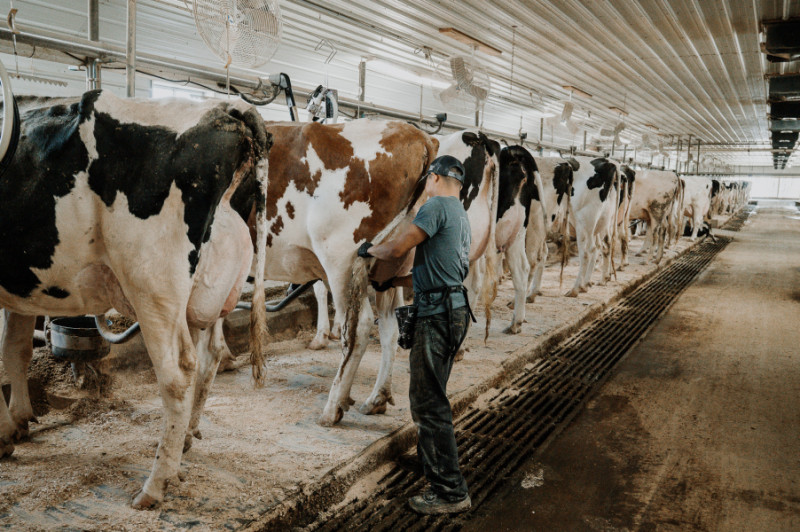 “We’re on a three-time per day milking,” Dwight says. “We milk at 5 a.m., 1 p.m. and 9 p.m. Each time takes around two hours. Milking three times a day is about a 10 to 15 percent increase in production, and it’s easier and healthier on the cows.”
A well-cared for Rokeyroad
Caring for their cows is the No. 1 priority at the dairy farm. The Rokeys are quick to laugh but even quicker in defending their devotion to their herd. The Rokey family says Dwight would do anything for his cows.
“He’ll nearly kill himself to take care of a cow,” Anita says. “I remember once when he was trying to pull a calf and he worked so hard trying to help that he was sore the next day.”
“That’s my dad’s pride and joy — his cows,” one of Dwight and Anita’s daughters, Leigha says.
Dwight confirms his wife and daughter’s testaments of his mentality toward his cows.
"The better we take care of them, the better they take care of us,” Dwight says. “Everything starts with the cows. And we can evaluate how content they are by knowing how they’re producing.”
The Rokeys take animal care from just something they do to something they actively monitor. Innovation in agriculture has exponentially grown in recent years through technological advancements that help enhance efficiency and improve systems. The dairy industry’s innovations help produce milk safer, faster and easier all while caring for the cows’ health.
For instance, an innovation on the Rokey farm they’ve recently adopted is a large white “pill” that is given to the cows. This white capsule sits in their stomach and tracks important health indicators and doesn’t harm the cow. Similar to how our smartwatches track our sleep patterns, activity levels and water consumption, these capsules help farmers understand how their cattle are feeling and performing.
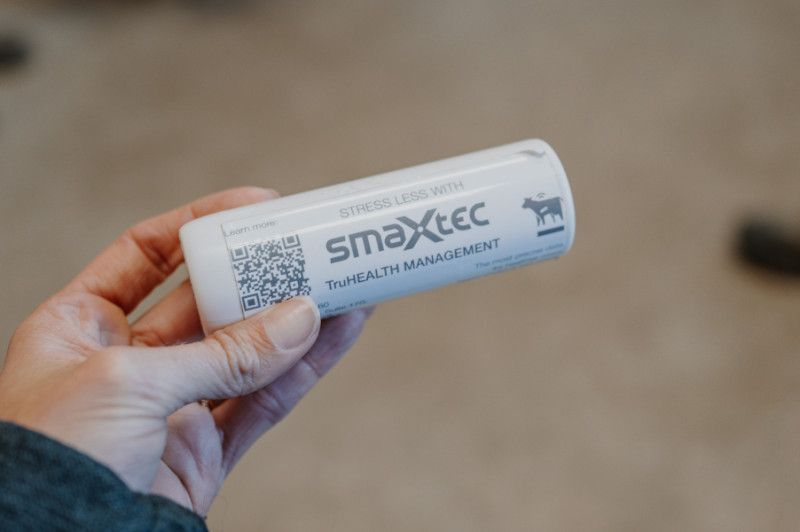 “It’s a big bolus pill that sits in their rumen and tracks their body temperature, their rumination, their heat cycles and more. And it's all connected to Bluetooth,” Dwight says. “All of that information goes directly to our computer, and it’ll alert us on our phones if their body temperature changes, which would indicate a sickness. It can also tell us if they’re starting to eat less. Then we can take action to care for them appropriately.”
Even without the bolus pill, care for their girls is their top priority.
Starting from scratch
As first-generation dairy farmers who started in the 1990s, sustainability comes with the added pressure of building a legacy. In an industry where margins are slim and lessons are often learned the hard way, building a dairy from the ground up means thinking not just about today’s success, but whether the farm will thrive decades from now.
The Rokeys didn’t inherit the dairy; they chose it. Their love of dairy farms started at a young age, especially for Dwight. He was 10 when he was on a family vacation to Wisconsin where his family members they were visiting had a small dairy herd.
“We walked in and I thought it was the neatest thing I’d ever seen,” Dwight says. “That was when I knew this is what I wanted to do when I got big.”
Anita got her start working for a dairy out of high school.
“I got a job after high school with a local dairy farm and fell in love with dairy,” she says. “Then Dwight and I got married and started our own. The rest is history.”
"We started from scratch,” Dwight says. “I remember when we bought this farm and typically, you inherit a lot of tools and land and buildings from your parents who previously owned the farm. But the first time I'm like, ‘I need a hammer,’ I didn't have a hammer. So I had to go to town and buy a hammer. Something as simple as that."
The time and financial commitment to sustainably keep and grow their dairy operation takes risk, and the Rokeys have the mentality the reward will be worth the risks they take when they’re thought out and researched.
"We were spending up to $3,000 a month on electricity because you have to get milk from 100 degrees to 38 degrees as fast as possible,” Anita says. “Four years ago, we put in solar and that, for the next generation, is going to be a huge help. It’ll knock $20,000 off our electric bill.”
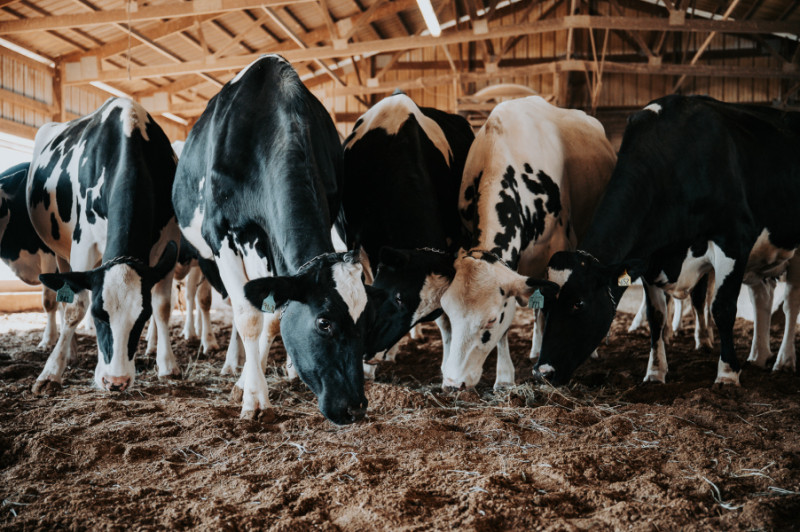
Sustainability and efficiency go hand in hand on any farm or ranch. Whether it’s being more efficient with electricity, feeding or milking, Dwight gives most of the sustainability credit to the Holstein herself.
"I think the Holstein cow is probably one of the most sustainable animals on the planet,” Dwight says. "If you look at the amount of milk she produces for her size, the amount of meat she produces as well, the calves she produces … all that protein going into our food system from just one animal is huge."
Embracing a different kind of product
Milk and protein aren’t the only products coming from the Rokey’s Holsteins. Dwight, Anita and their oldest of seven children, Leigha, decided to open a creamery in August 2025.
"We thought, OK, we’ll make some cheese, make some ice cream. It’s not that big a deal,” Anita says. “Well, it's kind of a big deal. A lot more has to go into it than what you realize."
After a disappointment from not receiving a competitive grant seemed to almost stop the construction of the creamery, Leigha still pushed it forward.
“Leigha told us, ‘God wants us to do this. We’re going to do it,’ Anita says. “And look at us now — with a creamery.”
The products sold in the creamery include their A2 whole milk, cheese, cheese curds, cheese quark and ice cream. The Rokeys take pride in their products, ensuring food safety and quality with each step and final product.
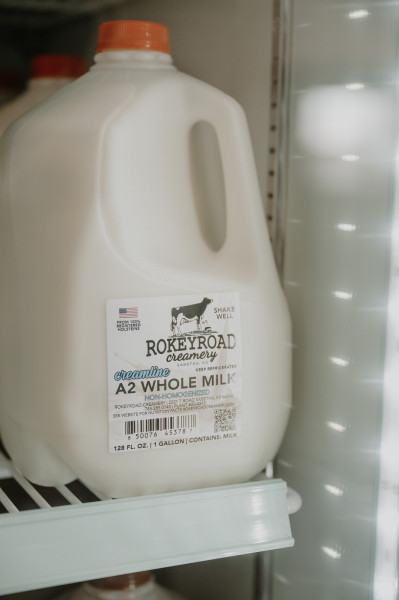 "One of our big focuses in the creamery is the most all‑natural, clean ingredients as possible,” Anita says. “There's no stabilizers, there's no dyes, there's no high fructose corn syrup in any of our products."
"It's like the shortest ingredient list you can find,” Leigha says.
Most milk you buy in the grocery store has a fat content of about 3.2 percent fat and has been homogenized to break down fat globules to prevent the fat from separating and rising to the top. At Rokey Creamery, they embrace a little more fat in their milk products and don’t homogenize, so the cream of the crop — well, it rises to the top.
“Our milk is at about 4.2 percent fat so it’s really creamy,” Leigha says. There’s more science coming out that says the A2 milk is more digestible when compared to A1 milk, which is what you typically get from the grocery store because of the different proteins and peptides. The type of milk we produce may be a suitable option for people who have a milk sensitivity.”
Speaking of sensitivities, if you like heat, the mango habanero cheese curds will bring the flavor full force.
Whatever your routine is, you might consider adding in supporting the dairy industry — one spoonful of ice cream or a handful of cheese curds at a time. You can rest easy knowing the dairy cattle at Rokey Creamery are enjoying their cud, their designated stall with fresh bedding and their three milkings each day.
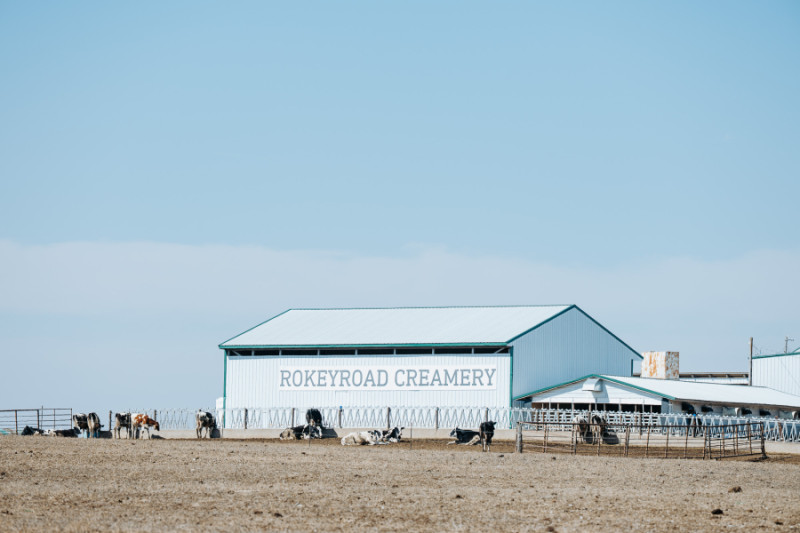 For more information about Rokey Creamery, visit www.rokeyroadcreamery.com.
Rokeyroad recipes
Be sure to check out some of the recipes on Rokey Creamery’s website, www.rokeyroadcreamery.com/recipes. Dwight and Anita’s son, Brandon, who now lives in Atlanta, went to culinary school and has developed some of the recipes like a quark cheesecake, vanilla pudding and ice cream cakes.

Sheridan Wimmer
Born and raised in Kansas, Sheridan Wimmer has an appreciation for the state’s agricultural diversity. Representing the best interests of Kansas farmers and ranchers is Sheridan’s jam (or jelly, no discrimination). Great food and wine are at the top of Sheridan’s sustenance list and she knows it wouldn’t be here... Read more