By Sheridan Wimmer on April 20, 2026
Leavenworth County Beekeepers Work to Protect Bees and Produce Honey
The business of bees is buzzing with importance
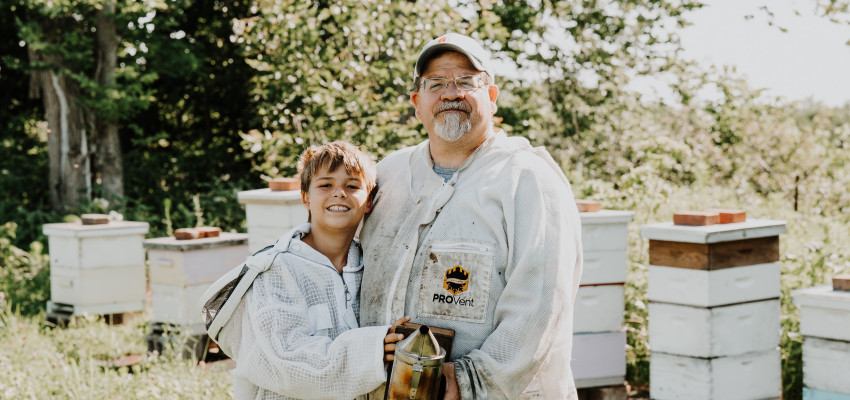
There’s a gentle hum in the humid Kansas air as a father and son put on appropriate attire to handle the inevitable increase in both noise and danger. Approaching the white boxes in rural Leavenworth covered head to toe in white suits with a metal contraption in hand, smoke billowing from its nozzle, the pair directs each other to be gentle yet quick. The hum increases and yellow and black insects begin to fly around the boxes while the smoker helps keep the insects calm.
Chad and Garrett Gilliland work in tandem to keep their bees from getting too angry so they can check their honey loot, housed in slats in white wooden boxes. The metal smoker, an invention that dates back to 1873, masks a pheromone called isopentyl acetate released by bees from a gland near their stingers when they sense danger. As it’s released, other bees are alerted and are poised to attack, but where there’s smoke, there’s no harm to the bees, and no foul is incurred by humans (mostly and hopefully). Win, win.
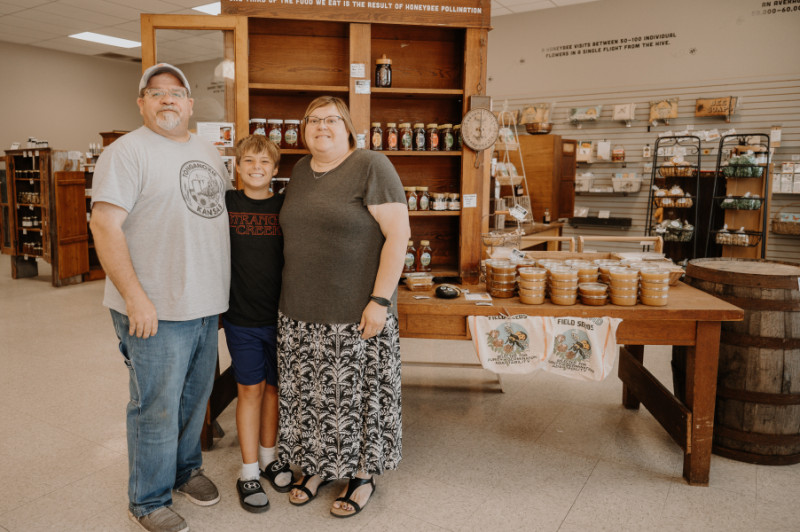
Chad and his wife, Megan, along with son, Garrett, raise bees and produce honey on their farm while their storefront sits among cafes and bars in downtown Leavenworth. The bright yellow awning featuring their logo for their business, Next to Nature Farm, welcomes visitors to try their products — from raw honey, creamed honey and beeswax products to candles and even beekeeping equipment.
For the love of bees
The infatuation with bees began in 2012 when Chad started raising bees to pollinate apple trees where the Gillilands lived. What started off as two hives quickly grew to 25 by 2016. Today, they operate 130 hives — all for the love of pollinators.
"Chad put a couple hives on our land for pollination, and then he fell in love with bees because they are such fascinating creatures,” Megan says. “The number of hives we got quickly progressed.”
Bees are a vital part of our lives — from pollination to producing honey, these tiny but mighty creatures are integral to the production of food.
“Honeybees are the only insect we’ve domesticated,” says Raymond Cloyd, a Kansas State University professor and extension specialist in horticultural entomology/plant protection in the Department of Entomology. “Honeybees are of value because of their importance in agriculture. They pollinate more than 300 crops, most of which are vegetables and fruits that you buy at the grocery store. Without honeybees, our diet would be very well repressed.”
Cloyd points out the importance of bumblebees and solitary bees, too — indicating bumblebees pollinate tomatoes and other produce inside hoop houses and solitary native bees pollinate crops like alfalfa.
“Honeybees get a lot of the limelight,” Cloyd says. “But the other pollinators are just as important.”
Survive and protect the hive
Speaking of limelight, the honeybee is Kansas’ state insect, but like other states, factors like parasites, disease, certain pesticides and urban sprawl have caused honeybee populations to decline.
According to the USDA’s honeybee colonies report in 2022, Kansas experienced the highest average quarterly colony loss rate between 2015 and 2022, losing one-fifth of the state’s honeybee colonies each season. There are several contributors to the issue — one being the harsh winters Kansas experiences.
Where bumble bees and carpenter bees hibernate over the winter, honeybees don’t; they stay active inside their hives. Typically, when temperatures fall below 50 degrees, they’ll cluster together for warmth. Worker bees make sure to protect the queen by placing her in the middle of the cluster. But Kansas winters can get brutally cold, and some bees can’t acclimate as well.
“This year, I think we saw about an 80 percent loss over the winter, which is the highest we’ve ever seen,” Cloyd says.
“Normally, it’s 13 to 15 percent. The cause of that is still unknown, but it could be weather, it could be colonies weren’t strong going into winter and were more susceptible to some of the pests and pathogens that can affect hives during that time period.”
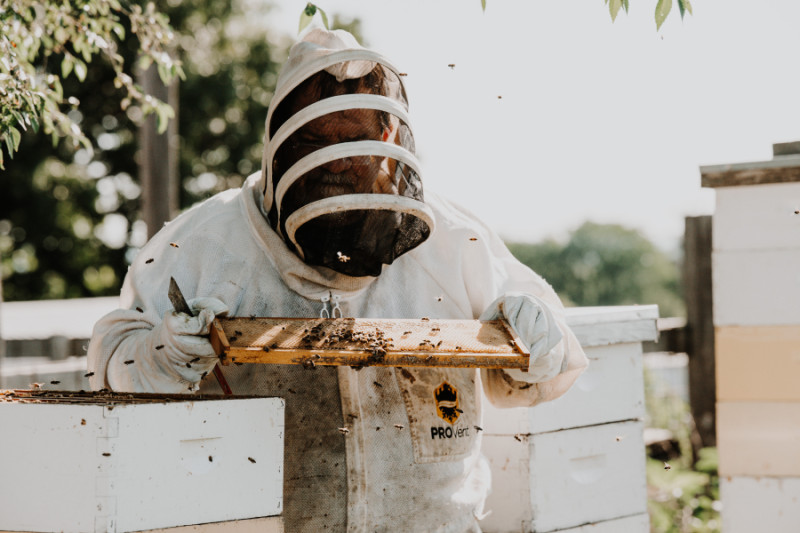
“The amount of loss experienced by commercial beekeepers last year is huge,” Chad says. “We saw about a 25 to 30 percent loss over the 2024-25 winter, which is, unfortunately, about average for us. We have to replace a lot of hives just to start where we were the previous year.”
Winter is hard on honeybees (our joints understand) but there’s also a specific pest causing the reduction in honeybee populations — the varroa mite.
Recent reports from United States Department of Agriculture says varroa mites were the No. 1 stressor for operations with five or more colonies across the U.S. during all four quarters of 2024. From April through June 2025, varroa mites affected 27.3 percent of the country’s colonies.
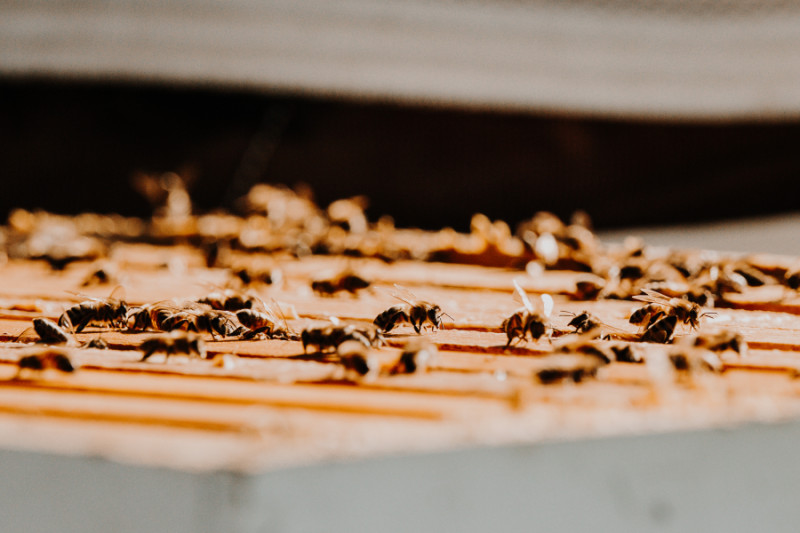
Female adult varroa mites have a similar appearance to ticks, but miniscule (yes, even smaller) and make their way into brood cells, which is wher
e the baby bees are within the hexagon shapes of a honeycomb.
“When a female honeybee lays an egg, the nurse bees take care of the larva and they’ll eventually cap it with wax,” Cloyd says. “But the varroa mite can get into that uncapped brood and damage developing bees but also cause direct damage by feeding on the adults. The mites carry viruses that negatively impact the bees like Deformed Wing Virus and Chronic Bee Paralysis Virus. These kinds of issues impact the ability for the worker bees to go out and forage.”
Cloyd says it’s important for beekeepers to treat for these pests going into the fall months and monitor their hives to make sure they don’t have varroa mites going into the winter.
“There were some insecticides that helped with varroa mites, but they’re not as effective anymore because of resistance,” Cloyd says. “Beekeepers that I’ve been talking to have been going to using oxalic acid or formic acid treatments early to reduce, mitigate and prevent varroa mite populations from getting too high.”
Colony Collapse Disorder and its nuances
Honeybee colonies lost with Colony Collapse Disorder (CCD) symptoms on operations with five or more colonies was 148,410 colonies from January through March 2025. This represents a 110 percent increase from the same quarter in 2024.
Some experts, however, say there’s some nuance when it comes to CCD. The Environmental Protection Agency calls the disorder a “phenomenon,” and the “why” is continuously researched. The disorder can be described as: not the death of bees, but instead the disappear
ance of bees.
While CCD is hard to pinpoint, Cloyd says the main issue he’s seeing in the industry is the lack of successors. While the Gillilands are fortunate to have the passion of their son, Garrett, many beekeepers across Kansas and the country aren’t so fortunate.
“Several issues causing the decline of bees is that as beekeepers age, we’re not seeing people replace them,” Cloyd says. “The need for pollinators isn’t going away, and in fact, it’s increasing because the demand for pollination of crops is increasing. As beekeepers retire or get out of the business, we’re not getting new people to replace them.”
The lack of interested future beekeepers is just as concerning as varroa mites — without bees, our global food structure would face a crisis. Honey may be something considered expensive for many families but imagine the cost if bee populations continue to decline — not only to our wallets, but also to our ecological structure.
Honeybees represent an irreplaceable pollinator so researchers across the nation are working to improve populations. Just in the U.S., honeybees pollinate $15 billion in agricultural products each year. The honey they produce is worth approximately $3.2 million.
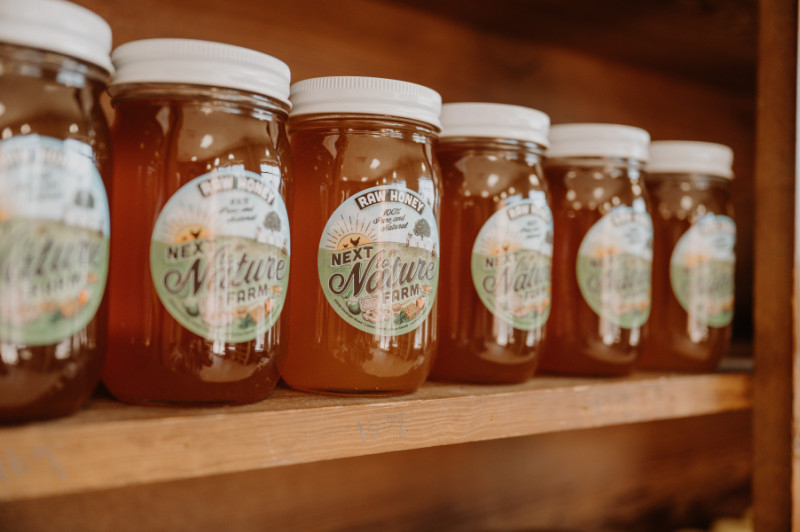
“Without beneficial insects like bees, we don't have our food system, and that's critical,” Chad says.
Not everyone has the means to become a beekeeper. That’s why it’s important to support people like the Gillilands and their passion to protect bees and to continue the industry in the future.
"I think this is probably like a mission for us in a lot of ways,” Megan says of the Next to Nature Farm business. “We are not just trying to save bees and have a natural product and build these relationships with people, but it's also our mission to show people how to do these things."
There are also other ways to help pollinators — like considering certain types of plants to attract pollinators.
“I always suggest incorporating plants in garden landscapes that attract pollinators like echinacea (coneflower), butterfly bush, asters and so many more,” Cloyd says. “Provide a viable pollen and nectar source. And be careful when spraying pesticides to avoid application when pollinators are active. Exercise jurisprudence when using these types of products.”
Sting like a bee
Next to Nature Farm represents a portion of the bee and honey industry in Kansas — a vital cog in the wheel of our food system. Their work at farmers markets opened their eyes (and bee boxes) to the opportunities to produce quality products they can be proud of.
"We were working at a farmers market when we got started and what we realized is people were starting to want to understand where their food came from,” Megan says. “We’re fortunate something that started out as a hobby has grown into a business.”
Garrett is growing into a business-savvy young man, himself. His parents say he has an entrepreneurial spirit, thinking up new ideas all the time and creating meaningful relationships with customers. But what Garrett loves most about his family’s business is zipping up that white suit, even in the humid Kansas summer days and hearing the increasing hum of the incredible creatures around him.
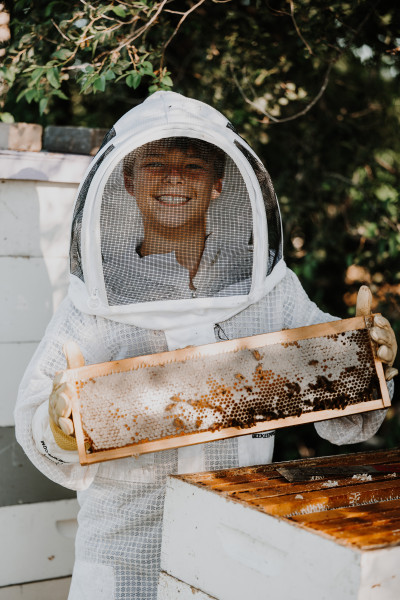
“Getting into the hives is definitely my favorite part,” Garrett says. “But it's always fun just to get out there and learn more about the bees and the environment."
As Garrett billows the fire chamber of the bee smoker, the bees calm. The creatures are used to the pair working around them but they still have a job to do: protect their hive, work for the queen and produce honey we all enjoy; hopefully sans a sting.
For more information and to buy products from Next to Nature Farm, visit www.nexttonaturefarm.com.
Sidebar:
The Buzz of the Bees: Fun facts
• A single honeybee produces only about 1/12 of a teaspoon of honey in its lifetime.
• Bees can recognize human faces, like we recognize each other. Maybe be friendly to them.
• Honey never spoils — archaeologists found honey in Egyptian tombs that was still edible after thousands of years. We still might pass on that taste-test.
• Bees communicate by doing the “waggle dance” to show hive-mates where to find food. New song dropping soon.
• A hive’s queen bee can lay up to 2,000 eggs per day during peak season.
• Honeybees flap their wings about 200 times per second, creating that familiar buzz.
• There are more than 20,000 species of bees worldwide — not all of them make honey.
• A colony can travel the equivalent of three times around the world to produce just one pound of honey. Jet-setters!



Sheridan Wimmer
Born and raised in Kansas, Sheridan Wimmer has an appreciation for the state’s agricultural diversity. Representing the best interests of Kansas farmers and ranchers is Sheridan’s jam (or jelly, no discrimination). Great food and wine are at the top of Sheridan’s sustenance list and she knows it wouldn’t be here... Read more