By Greg Doering on October 29, 2026
Campaign School Provides Candidates Nonpartisan Support
Kansas Farm Bureau’s Campaign School provides candidates knowledge, confidence to serve
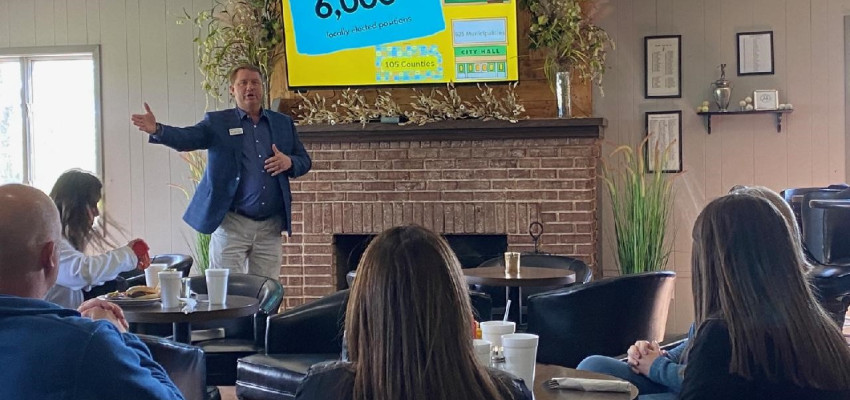
Political campaigns are similar to other initiatives like advertising or military strategies. They’re all concerted efforts to achieve an outcome: raising awareness of a product, being victorious in battle or winning political office.
From the outside, these campaigns can look like chaos, but ideally they are organized to achieve a singular goal. As such, best practices can be replicated from one initiative to the next.
That’s the driving force behind Kansas Farm Bureau’s (KFB) Campaign School, which was originally designed for campaign managers but has evolved to include training for aspiring candidates and elected officials.
An earlier version of the program was discontinued before being revived after the COVID-19 pandemic, which changed how the public views elected officials up and down ballots.
“We did an informal survey of county clerks across Kansas and heard several stories of school boards that weren’t full,” Brenden Wirth, KFB director of political affairs, says. “We found just a complete lack of interest in public elected service across the state.”
Wirth, who is a school board member, has also worked with political staff at the American Farm Bureau Federation who have spent years compiling the guiding principles, proven methods and recommended procedures that can help candidates run effective campaigns.
Campaign Basics
Wirth says one of the first insights gleaned from the informal survey was that plenty of people want to serve on their school board, city council or county commission, but they don’t understand the process of running a campaign.
“For those of us in the political world, it’s not all rocket science, but if you’re just a person who just wants to serve your community, where do you start?” Wirth asks. “It’s pretty simple to get your name on a ballot. Beyond that, campaigning is different from governing, and there’s a difference in approaching your campaign in that context.”
KFB offers two different options for Campaign School. The first is a two-day course offered once a year to provide a deep dive into setting up and executing a campaign. The second option is to attend one of several four-hour mini sessions held across the state. While learning is the primary objective, Wirth says the sessions also boost confidence for attendees.
“People just appreciate being able to receive some guidance on developing their own plan and then come out with the confidence to execute it,” he says.
First Impressions
Every campaign involves making a series of strategic decisions and executing them, and each one begins with an announcement.
“We don’t publicize who attends Campaign School,” Wirth says. “The announcement is so important, we want the candidates to have control over timing. The announcement can also set the tone for the campaign.”
One of the first lessons of Campaign School was valuable for Brenda Chance and her successful bid for the Phillips County Commission. The former government administrator decided to run thinking others would talk her out of the idea. When they supported her, she attended the last Campaign School Mini Session of the year to learn what she didn’t know.
“I didn’t think about announcing my campaign,” Chance says. “It’s a big deal when you get that free advertising by doing an event to announce your candidacy. I hadn’t thought of it that way. People were glad I did it. The paper covered it. It’s not something normally done (in Phillips County), but it made people very aware of my campaign.”
Unbiased Education
Sedgwick County resident Leslie Bates says she signed up for a school board race with little knowledge about how to actually win the election, and at first, she was reluctant to sign up for a mini session because she was worried it would be too political.
“I did not want to go to a training session that was partisan,” she says. “I just wanted to learn the information. I wanted to understand in an unbiased way.
“I was just running for a seat on the school board,” she says. “I wanted to know how to do it. I’m making decisions for a lot of people. I want them to think I’m capable of doing the job, not what letter is beside my name.”Wirth says the training is designed that way because the elements of a winning campaign aren’t partisan.
“What’s unique about Campaign School is it’s not focused on politics, it’s focused on voters,” he says. “No matter what race you’re running in, no matter what political ideology you or your voters have, you have to define yourself as a candidate. And our Campaign School gives you the best opportunity to help you define yourself to the voters.”
Retail Politics
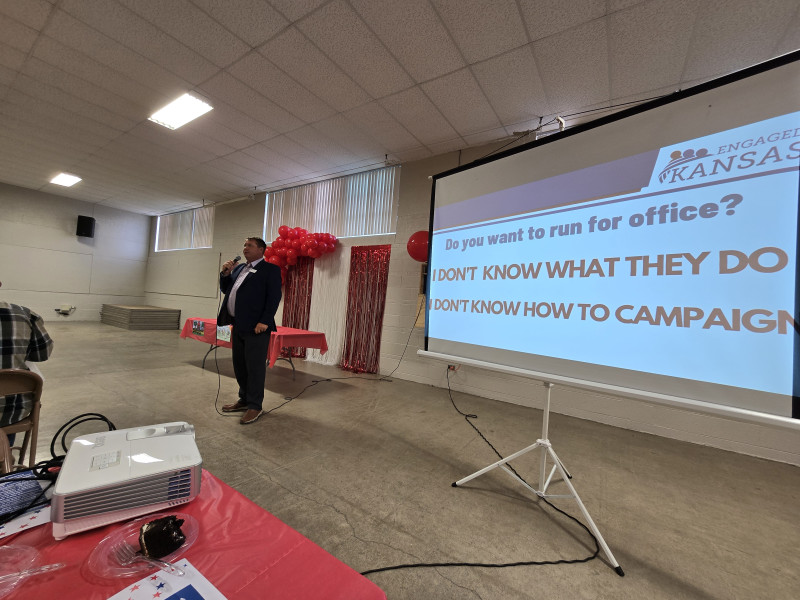
Bates says the learning environment provided her with the best practices for developing a palm card to hand out to voters while campaigning. It also served as a roadmap for her campaign that was as much literal as it was figurative.
“I covered every single street in the city of Clearwater over the summer,” she says of her efforts to meet voters directly. “Obviously I didn’t reach every person, but I got to a lot of them.”
For Bates, the interactions with voters stayed with her after she became the top vote-getter in the election.
“Now that I’m on the school board, I can rely on the conversations I had while going door to door during the campaign,” she says.
In addition to helping her create campaign fliers, Bates says one of the key lessons helped her define the issues she’d highlight in running for a seat on the school board.
“It really focused my attention on the why,” she says. “I didn’t just learn how to campaign — it helped me identify why I’m running for school board.”
Putting it to Work
Chance says attending the mini session gave her a big boost in confidence after she’d decided to run because none of the tasks outlined were daunting.
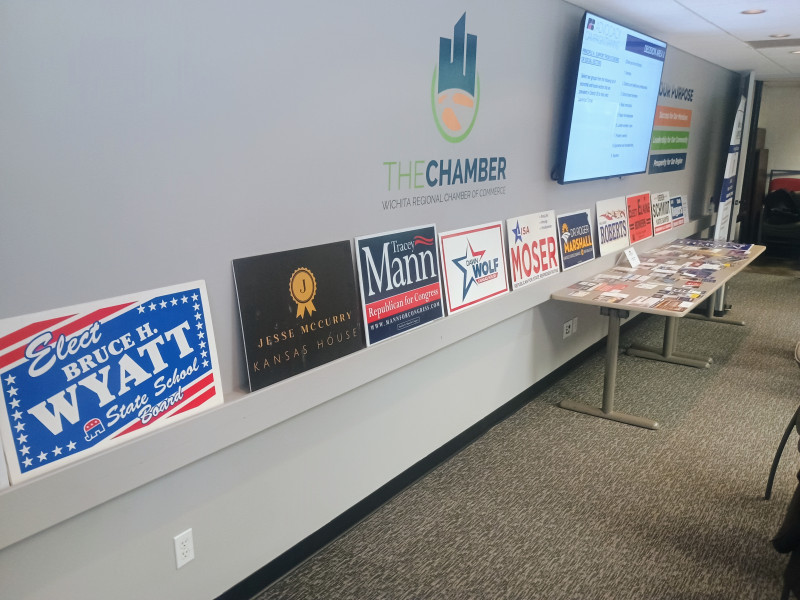
“We just went through the basics like what a good campaign sign looks like,” she says. “It was so obvious how simple you need to keep it. It helps you understand it’s the little things that make the big difference.”
Chance says her only regret is not attending one of the earlier Campaign School Mini Sessions, which would have given her more time to plan her run for office.
“Start early; don’t wait until the very last one of the year,” she says. “Everybody should serve their community in one way or another. If you decide to run, Campaign School can help make it easier.”
Evolving Curriculum
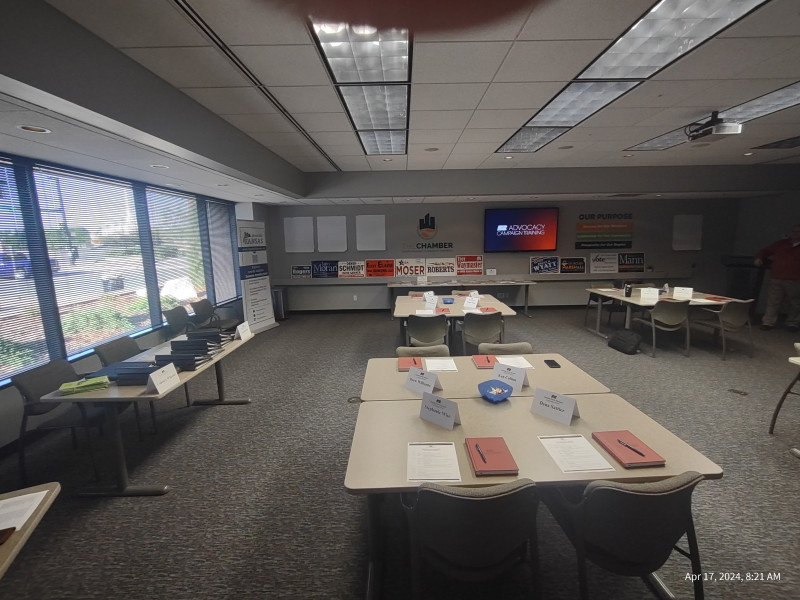
The curriculum for Campaign School changes as candidates and managers adopt new practices and technology to identify and target voters. Wirth says the curriculum is reviewed after every election to ensure it will meet the needs of hopeful
candidates.
The mini sessions were added after Wirth received feedback that two days for Campaign School was too much time for some candidates seeking local offices.
“Not all campaigns require the same amount of resources,” Wirth says. “For the mini sessions, we reduced the amount of time spent on campaign fundraising and the budgeting process. We still cover it, but not to the same extent.”
Campaign School also features a multiquestion campaign simulation that gives candidates a sense of the decisions they’ll have to make throughout the campaign, often with limited information and short timeframes. Mock media interviews that are recorded and provided to candidates with feedback are another bonus of the full Campaign School.
In addition to keeping the curriculum current, Wirth says he’s tweaked the cost over the years to accommodate candidates who want to bring a campaign manager or even a spouse. Campaign School is $300 for Farm Bureau members in Kansas and $350 for nonmembers. An additional campaign member can be added for $100. Mini sessions are $60 for members and $85 for nonmembers. Wirth says the small difference in cost hasn’t been a deterrent for nonmembers, and Campaign School has served as a foundation for building bridges between KFB and candidates for every kind of race across the state.
“My favorite part really is about 80 percent of those who show up to Campaign School have no established relationship with Farm Bureau,” Wirth says. “That’s really fun, to work with folks who want to serve their community and then start developing relationships between them and Farm Bureau.”
Learn more at engagedkansas.org.