By Meagan Cramer on August 7, 2026
Kansas Farm Bureau Builds Programs to Strengthen Tomorrow's Leaders
KFB ensures education offerings remain relevant, intentional and accessible

For more than a century, Kansas Farm Bureau (KFB) has treated education as a core part of its mission. Primarily by helping farmers improve production and business practices, and just as importantly, by building leaders and connecting Kansans to the people and processes behind their food and fiber. From county meetings and issue briefings to structured leadership cohorts and consumer-facing resources, education shows up in nearly every corner of the organization’s work. But as the needs of members, communities and agriculture evolve, KFB leaders also recognize that a long history is not the same as a long-term plan.
With a look toward the future, KFB partnered with Vivayic, Inc., a learning-strategy consulting company, to take a comprehensive look at member development and education programming across the organization. The review was designed to answer practical questions: Which programs are working well and why? Where are there gaps in the leadership pipeline from early engagement through experienced leaders? How consistently is program impact measured? And how can KFB streamline efforts while still expanding what members and consumers value most? Vivayic’s work included interviews with staff and members, focus groups, and a curriculum and resource review intended to capture both the lived experience of participants and the structure behind the scenes.
“Education is a pillar of our work at Kansas Farm Bureau,” Terry Holdren, KFB CEO and general counsel, says. “We want to ensure we have our best foot forward when it comes to leadership programming and our consumer education work.”
After collecting and evaluating input from members, alumni and staff, Vivayic delivered a report that affirmed the strength of KFB’s existing offerings while also calling for clearer connections between programs, more intentional follow-up with participants and stronger tools to evaluate outcomes. The report outlined seven recommendations intended to guide decisions about what to refine, what to better integrate and what to build next. They included:
1. Strengthening the leadership development pipeline
2. Optimizing the Casten Fellows Program for sustainability and clarity
3. Strengthening mid-career and alumni engagement
4. Improving evaluation and measurement systems
5. Refining educational and public outreach resources
6. Streamlining specialized skill trainings
7. Enhancing internal coordination and staffing efficiency
Rather than treating the recommendations as a checklist, KFB leaders view them as a roadmap for sustained member engagement. One that spans first-time participants, emerging leaders, mid-career members and long-time advocates. Implementation is already underway, including internal coordination work and new staff members focused specifically on leadership program design, measurement and agriculture education.
BRINGING EXPERTISE ON BOARD
To help lead the next phase of this work, KFB created a new position, assistant director of leadership programs, and hired Stephanie Gfeller in May. The role is designed to bring more structure and continuity to leadership development, including clearer learning objectives, stronger facilitation and consistent evaluation across programs. In short, it aligns directly with several of Vivayic’s recommendations, especially strengthening the leadership pipeline, improving measurement systems and enhancing internal coordination so programs don’t operate in silos.
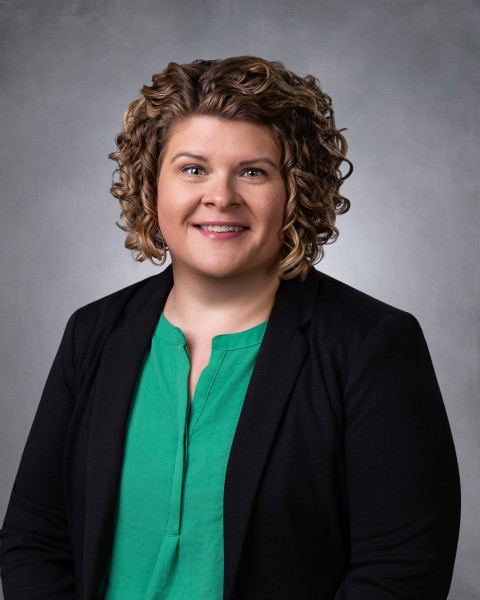
Gfeller brings experience in adult learning and leadership development, with a skill set that spans program design, facilitation, instruction and outcomes evaluation. For seven years she worked for LeadingAge Kansas, an association of more than 160 not-for-profit and mission-driven aging services providers. There, she built educational programming in both in-person and virtual formats, assessed member needs, tracked learning outcomes and utilized a large member database that supported communications, engagement and data analysis. That combination of strong relationship-building paired with practical measurement tools will be central as KFB takes a more intentional approach to how it recruits, develops and supports leaders over time.
“My career has always focused on helping others learn and grow,” she says. “This role brings all of those experiences together, giving me the chance to build on successful programs while creating new opportunities for leaders within the organization.”
Since stepping into the role earlier this year, Gfeller has focused on listening. She has been interviewing members who have participated in KFB leadership programs along with staff and county leaders who help identify and encourage future participants to better understand what motivates people to say “yes” to additional service and what barriers can keep them from staying engaged. Those conversations are helping her identify the strengths members consistently name including relationships, advocacy skills and a deeper connection to agriculture as well as opportunities to make expectations and next steps clearer for participants at every stage.
“There’s real enthusiasm among members for continued growth opportunities that fit within the realities of life,” she says. “They want to build their knowledge and sharpen their skills to make a difference in their communities.”
Continuing to build their networks is also important.
“Alumni of the leadership programs clearly explain the impact the program experiences had on them, and many are eager to stay connected,” Gfeller says. “They are interested in strengthening their network of fellow leaders and finding meaningful ways to support those currently participating in the programs.”
In parallel, she has begun developing a shared framework that connects KFB’s leadership programs so each experience intentionally prepares current and future leaders to serve, advocate and create lasting impact for agriculture and their communities. The framework will clarify how members move from one opportunity to the next, identify common leadership competencies such as effective communication, grassroots advocacy, policy literacy and community engagement, and ensure programs build on one another rather than repeating content. Over time, the work will be measured through growth in leadership skills, participation in Farm Bureau roles, community involvement and applied service outcomes members can point to back home.
A STRONG FOUNDATION
KFB is also strengthening its capacity for agriculture education and outreach through the Kansas Farm Bureau Foundation for Agriculture. The organization hired Kyler Langvardt as the foundation’s manager, with responsibilities that include agriculture education initiatives, farm safety outreach and support for resources used by members and educators. Langvardt previously served as an agriculture and natural resources agent for Geary County Extension for four years, and his familiarity with KFB runs deep: he served on the Geary County Farm Bureau board and is a graduate of KFB’s Castens Fellows Program. That blend of local relationships, education experience and firsthand knowledge of KFB leadership development positions him to help expand the foundation’s reach and relevance.
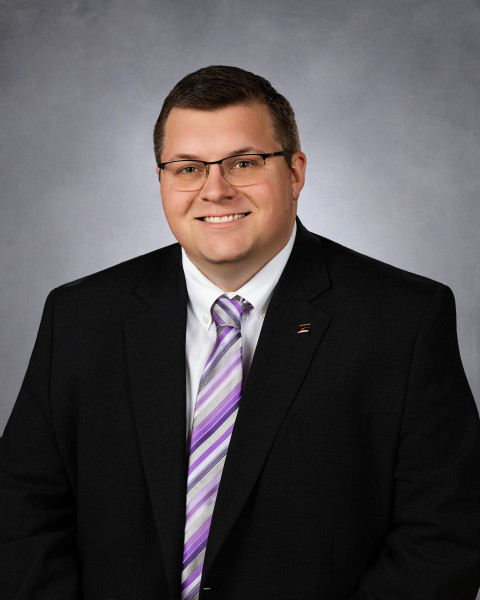
“Kyler’s knowledge about KFB and his passion for people makes him a perfect fit for this role,” Holdren says. “He’s well versed in the work we do and has benefited from that work through a scholarship when he was at K-State and completing our capstone leadership program, Casten Fellows.”
“I’m honored to work for an organization that has played such a meaningful role in my development and in the lives of Kansans,” Langvardt says. “Through my work with the Foundation for Agriculture, I look forward to celebrating the legacies of families and organizations who have invested in future generations of agricultural and rural leaders, while expanding opportunities for agricultural education across all ages and backgrounds.”
Together, the leadership program work and the foundation’s education focus represent a coordinated investment in KFB’s next 100 years. One that aims to develop confident advocates, strengthen community connections and provide trustworthy resources for Kansans who want to learn more about agriculture. As the recommendations are implemented, KFB will continue gathering feedback, refining content and measuring outcomes so programs remain relevant for members at different stages of life and career.
“This review built a roadmap for success and we’re excited to see it move forward,” Holdren says. “Our organization, our way of life and our state are stronger when our members are learning, growing and building networks.”
To read the full Vivayic report and recommendations, go to https://bit.ly/4eFHE4r.
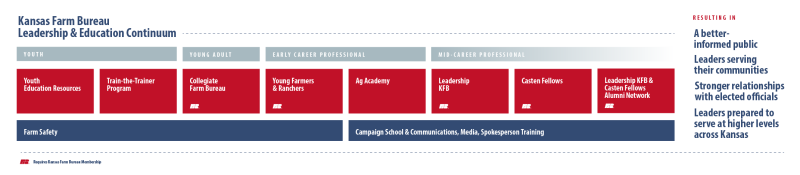
Vivayic’s recommendations also underscore an important theme: the value of connecting programs that have grown over time into a more visible continuum. For members, that clarity can make it easier to see what comes next after an initial experience. For the organization, it helps align staffing, budgeting and communications so leadership development and education resources reinforce one another and can scale sustainably.
“As staff, we knew there was a continuum of programming, but we never clearly communicated that to members,” Holdren says. “We took for granted they just understood the process.”
As KFB builds out that continuum and makes the pathway more visible, the goal is simple: help more members see themselves in the future of the organization and communities and give them the tools to step into it. With clearer connections, stronger follow-up and more consistent measurement, KFB isn’t just preserving a legacy of education, it’s also shaping the next generation of leaders who will speak for agriculture, serve their communities and keep Kansas Farm Bureau strong for the century ahead.
The review of KFB’s existing member development and education programming and subsequent plan included six recommendations. They are:
Recommendation #1: Strengthen the Leadership Development Pipeline
KFB should formalize and visualize a clear, strategic leadership pathway that connects early-, mid-, and advanced-level programs into a cohesive continuum. A well-defined pipeline strengthens recruitment, improves alumni retention, and clarifies program progression for members at different life and career stages.
Recommendation #2: Optimize the Casten Fellows Program for Sustainability and Clarity
Casten Fellows is highly valued, but participants and staff noted the need for clearer objectives, stronger facilitation and more sustainable funding. The program should be redesigned with intentional structure and consistent delivery.
Recommendation #3: Strengthen Mid-Career and Alumni Engagement
KFB’s leadership ecosystem would benefit from a more intentional approach to re-engaging alumni and supporting members during the mid-career years, currently the largest “gap” in the pipeline.
Recommendation #4: Improve Evaluation and Measurement Systems
KFB’s long-term success requires more consistent evaluation across programs. Establishing shared tools, metrics and reporting structures will help quantify impact and inform decision making.
Recommendation #5: Refine Educational and Public Outreach Resources
Educational offerings are high-reach assets for KFB but require modernization, improved evaluation and strategic alignment.
Recommendation #6: Streamline Specialized Skill Trainings
Standalone trainings like Campaign School and Communications, Media and Spokesperson workshops would have a greater impact if integrated into broader leadership programming.
Recommendation #7: Enhance Internal Coordination and Staffing Efficiency
KFB programs sometimes operate in silos due to staffing constraints and overlapping responsibilities. A clearer internal structure will improve delivery, visibility and collaboration.

Meagan Cramer
Meagan Cramer is a homegrown Kansas girl who loves connecting the farm with foodies. She enjoys seeing the light bulb come on when someone steps foot on farm soil and hears directly from Kansas farmers and ranchers. Her favorite thing is celebrating farmers and food.