By Shelley Rich on May 11, 2026
From Field to Cafeteria: Working Together to Get Food in Schools
Kansas State Department of Education and the Sedgwick County Harvest Hub work to bring farmers to the lunchroom table
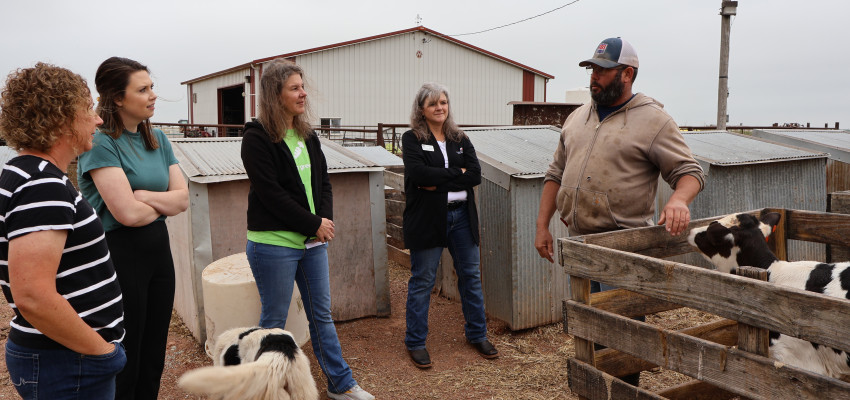
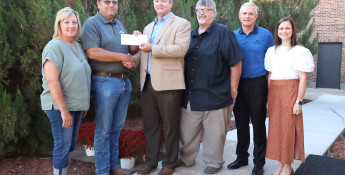
On a cloudy April morning just outside Cheney, a group of farmers, educators and food system leaders gathered at Lucky W Dairy with a shared goal: bringing more Kansas-grown food to Kansas kids.
The setting couldn’t have been more fitting. Surrounded by open pasture and the steady rhythm of a working dairy, the conversation was grounded in exactly what it aimed to strengthen — connection. Not just between farms and schools but between the people who grow food and the communities they nourish.
The meeting, hosted by Byron and Heidi Wells, brought together partners from the Kansas State Department of Education and the Sedgwick County Harvest Hub (SCHH), along with several local farmers. While the group represented different corners of the food system, their conversations quickly revealed a common thread: everyone is working toward more opportunities for farm to plate.
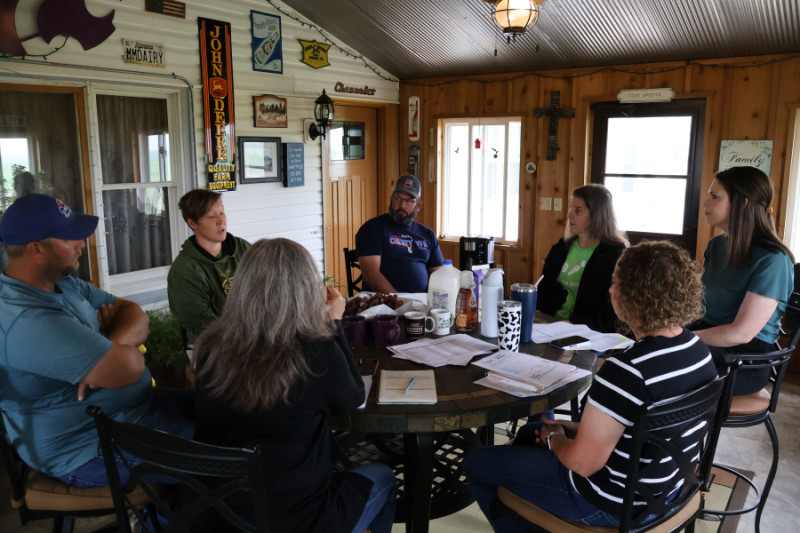 Shelley Rich and Steph Eckroat shared how the Sedgwick County Harvest Hub is building that network from the ground up. With support from the Kansas Health Foundation, SCHH is developing a digital hub designed to connect local farmers with buyers, elevate grower visibility and offer tools that help farms grow sustainably, both in crops and in business. At its core, the effort is about making it easier for communities to access the food already being grown nearby.
A major focus of the discussion centered on farm-to-school connections. An idea that’s simple in theory but complex in practice. Eryn Davis, Farm to Plate Project Director with Child Nutrition and Wellness, is working to better understand both sides of the equation: what farmers can supply and what schools are ready to buy. Through surveys and conversations like this one, she’s helping identify gaps and opportunities, from product availability to communication challenges.
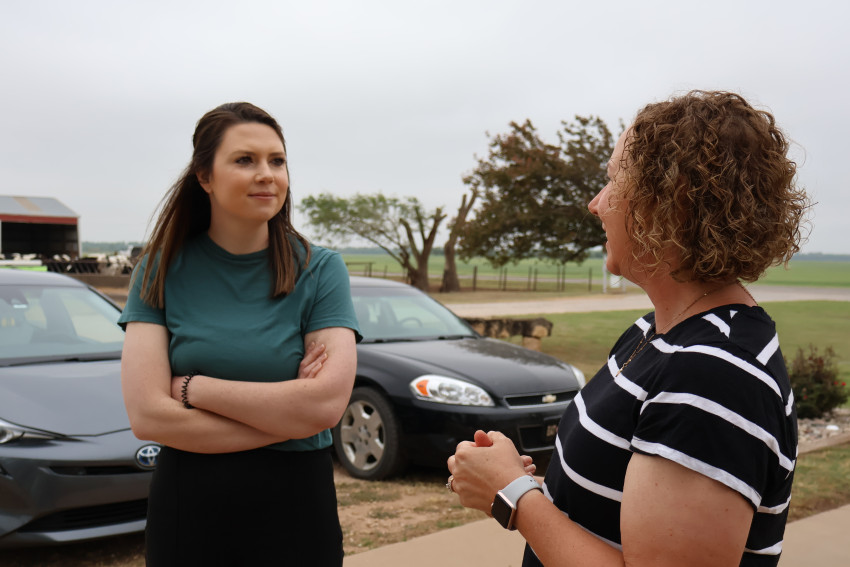
Eryn Carter with KSDE and Heidi Wells, a dairy farmer, visit about ways to bring local products to local schools
Beyer and Foster shared how they’re already engaging with schools in small but meaningful ways. Some sell directly through roadside stands or local grocery stores. Others are beginning to field inquiries from school districts eager to incorporate fresh, local produce into their menus. But scaling those connections requires coordination.
Farmers emphasized the importance of early communication. Unlike other suppliers, they can’t simply “order more” mid-season. Planting decisions are made months in advance, often in the dead of winter. For schools, that means thinking ahead and committing early. Consistency matters, too. Reliable purchasing agreements and fair pricing help farmers plan with confidence, ensuring they can meet demand without taking on unnecessary risk.
Beyond procurement, the group explored a deeper opportunity: using local food as a teaching tool. There was strong interest in weaving agricultural education into child nutrition programs to help students understand where their food comes from and why it matters. Ideas ranged from incorporating seasonal lessons into classrooms to leveraging FFA greenhouses as a source of fresh produce for school kitchens.
For districts like Cheney and Renwick, where Heidi Wells oversees food service and prioritizes scratch-made meals, the connection between education and nutrition is already taking shape. When kids see, taste and learn about fresh ingredients, it creates a ripple effect that extends well beyond the lunchroom.
Of course, bringing local food into schools isn’t without its challenges. The group discussed practical barriers like delivery logistics, aggregation of products from multiple farms and the varying capabilities of school districts. Some cook meals from scratch, while others rely on contracted food services with less flexibility.
These are exactly the kinds of challenges the Sedgwick County Harvest Hub hopes to help solve. By acting as a connector through linking producers, buyers and resources, SCHH is working to streamline the process and build a system that works for everyone involved.
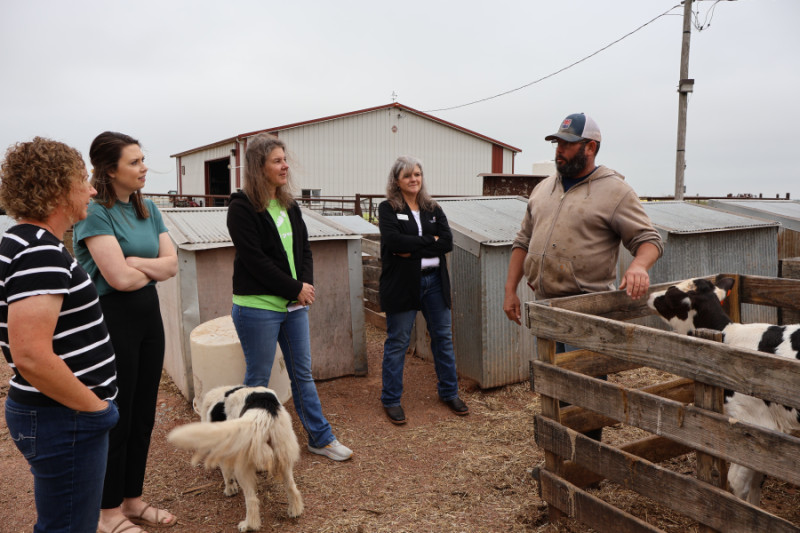 Before the morning wrapped up, one idea gained particular momentum: a fall gathering for school food service directors. The goal would be simple but impactful: bring decision makers out to the farm. Help them understand growing cycles, see firsthand what local producers can offer and build relationships that make future collaboration easier. Because in agriculture, timing is everything. And sometimes the best way to understand that is to stand in the field where it all begins.
The meeting concluded with a tour of Lucky W Dairy, where Byron and Heidi offered a behind-the-scenes look at their operation. It was a reminder that every gallon of milk, every head of lettuce, every watermelon starts with people who are deeply invested in their work and their land.
And as the group dispersed, one thing was clear: strengthening Kansas’ local food system isn’t about a single program or initiative. It’s about building relationships season by season, conversation by conversation. Because when farmers and schools work together, the result is more than just a meal. It’s a community that feeds itself, thoughtfully and well.
Photos by Emily Kerschen
YOU MAY ALSO ENJOY: